Dead stock
Dead stock is inventory that hasn't sold and likely won't, whether due to overordering, shifting demand, seasonal expiry, or product obsolescence. It ties up working capital, consumes warehouse space, and usually gets liquidated at a loss.
Every Ecommerce founder has stared at a pallet of unsold inventory and done the math: how much cash is sitting in that corner of the warehouse, and how much of it will ever come back. That pallet is dead stock — product that came in, never moved, and now drains margin every month it sits. Dead stock is the most expensive symptom of a supply chain built on long lead times, container-sized commitments, and forecasts made six months before the first sale. The legacy model practically guarantees it.
What counts as dead stock
Dead stock isn't just unsold inventory. It's inventory that has lost its path to a profitable sale. A few common patterns:
- Seasonal product that missed its window and now has to wait nine months for the next one
- Trend-driven SKUs that peaked while the goods were still on a ship
- Overproduced units from a forecast that overshot real demand
- Discontinued variants, broken size runs, or packaging refreshes that orphaned the previous version
- Products with regulatory or shelf-life expiry that makes them unsellable past a certain date
The distinction matters. Slow-moving stock can still recover with the right campaign or price. Dead stock won't — the only paths left are liquidation, donation, or write-off.
What dead stock actually costs you
The unit cost is only the surface. According to IHL Group research, inventory distortion — the combined cost of overstocks and stockouts — costs retailers roughly $1.7 trillion globally each year. For a DTC brand, the costs stack like this:
- Cost of goods locked in unsellable units
- Warehouse storage and handling fees that keep accruing
- Duties and freight you already paid on product that won't generate revenue
- Markdown margin loss when you finally liquidate
- Opportunity cost of capital you can't redeploy into winners, ads, or new SKUs
A simple way to size it: (landed cost per unit + monthly storage per unit) × months held = the real drain. Multiply across SKUs and the number gets uncomfortable fast. For a deeper walkthrough, see our breakdown on turning overstocks into cash flow wins.
Why the legacy model creates dead stock by design
Bulk ocean freight forces brands to commit to container-scale orders months before they have demand data. By the time goods clear customs and land in a domestic 3PL, the market has shifted, the trend has cooled, or the SKU has been outperformed by a competitor.
The math is brutal:
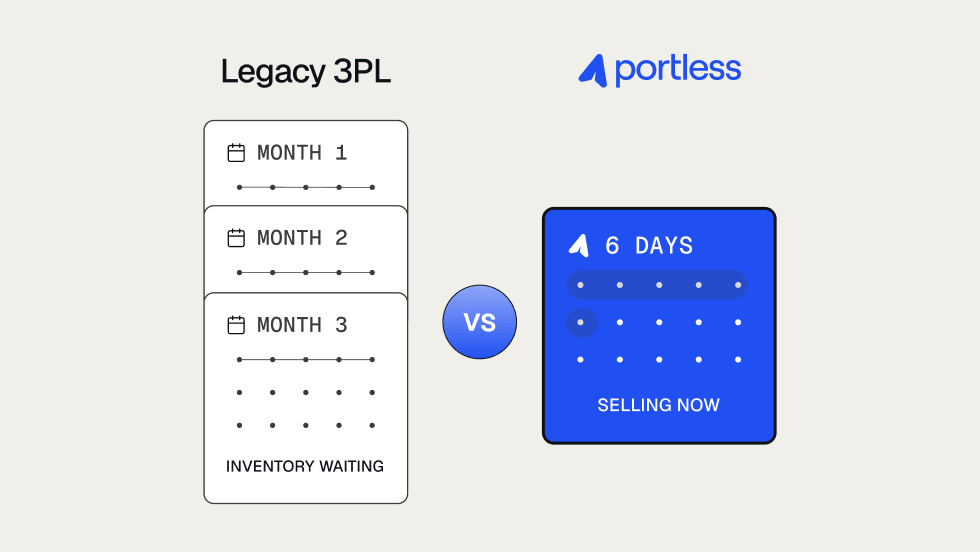
- 60-90 day lead times mean you're forecasting twice — once at the PO and once when the goods arrive
- Container minimums (2,000-3,000 units for a 20-foot container) force conservative bets toward proven SKUs, not tests
- Quality defects discovered in a domestic warehouse are too expensive to return, so they get scrapped or shipped anyway
- Capital stays locked for the full ocean-plus-storage cycle, so you can't react when the data tells you to
This is why brands following the legacy 3PL model end up with dead stock as a recurring line item rather than an occasional miss.
How to prevent dead stock
Most dead stock prevention strategies focus on better forecasting. Better forecasting helps, but it doesn't fix the structural problem: you're still committing capital before you have demand signal. The brands that prevent dead stock attack it from both sides.
Tighten the demand side:
- Segment SKUs by role: core heroes, seasonal bets, and tests. Treat each one differently.
- Use ABC analysis to focus working capital on the SKUs that actually drive revenue.
- Pull trend signals from real channels (TikTok, search, sell-through velocity) instead of last year's spreadsheet.
Shorten the supply side:
- Move from one large seasonal order to smaller, rolling production runs.
- Test new SKUs at 100-300 units before committing to thousands. Shein and Temu built their models around this principle.
- Shrink the gap between production and sale so you can read demand before you double down.
The shorter your replenishment cycle, the less you have to bet on a forecast. The less you have to bet, the less dead stock you create.
How direct fulfillment cuts dead stock risk
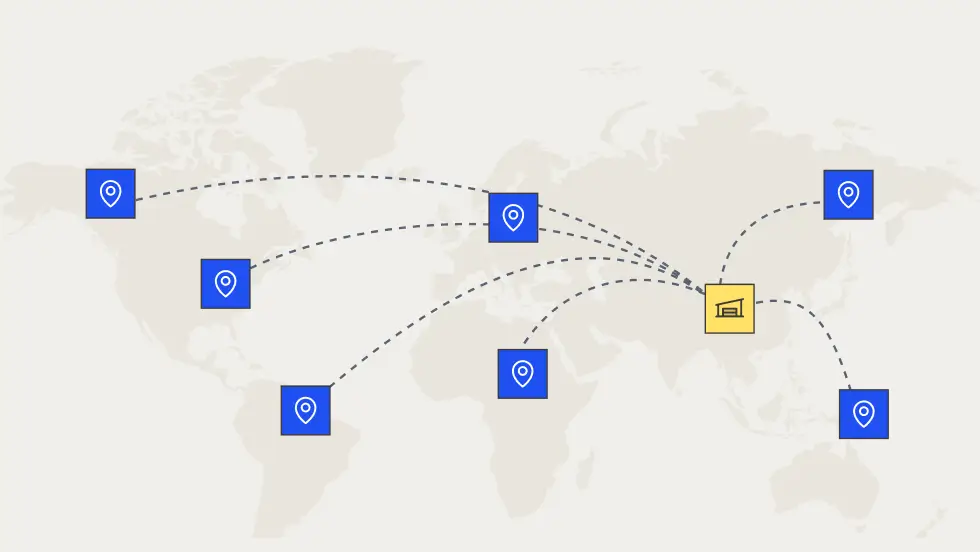
Direct fulfillment changes the structure of the bet. Instead of producing 5,000 units, paying duties and ocean freight, and warehousing them domestically for months, you stage inventory near the factory and ship orders as they come in.
What that means in practice:
- You commit later. Smaller initial runs become viable because you're not paying to fill a container.
- You see risk earlier. Slow movers show up in real-time sales data while inventory is still upstream — not months later in a 3PL receiving report.
- You recover cash faster. Production capital turns into revenue in days, not quarters, which means you can fund the next batch from the last one instead of stockpiling.
- You catch quality issues at the source. Defective units go back to the factory the same day, not into a write-off pile six weeks later.
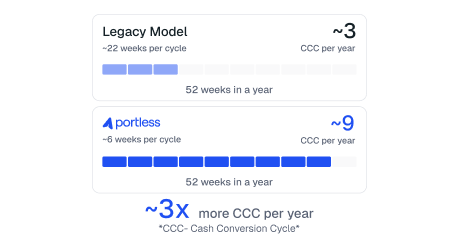
Craft Club rebuilt their model around this approach and cut their cash conversion cycle by 3x while tripling growth. The same inventory pool now serves multiple regions, which means dead stock from a regional bet that doesn't pan out becomes almost impossible — units that don't move in one market can ship to another.
Cut dead stock by changing how you commit inventory
Dead stock isn't a forecasting failure. It's a structural outcome of committing capital before you have demand. The legacy supply chain forces those commitments. Direct fulfillment doesn't. If you're ready to stop writing off unsold inventory and start running a leaner inventory model, contact Portless to see how factory-direct fulfillment fits your brand.
← Back to the Ecommerce supply chain glossary