ABC analysis
ABC analysis is an inventory categorization method that splits SKUs into three tiers based on their contribution to revenue or profit. A items are the high-value few, B items are moderate, and C items are the low-value many — letting you concentrate planning, capital, and attention where it actually moves the business.
Most DTC brands carry too much of the wrong inventory and not enough of the right inventory. ABC analysis is the simplest framework for fixing that. It applies the Pareto principle to your SKU list: roughly 20% of your products generate 80% of your revenue, and treating every SKU as if it deserves equal forecasting effort, equal safety stock, and equal warehouse space is how cash gets trapped in slow movers while bestsellers go out of stock.
The method itself is straightforward. The hard part is what you do with the output — and whether your supply chain can actually act on it fast enough to matter.
How ABC analysis works
You rank every SKU by annual revenue contribution (or gross profit, if you want a sharper read on what's actually funding the business), then sort them into three buckets:
- A items: the top ~20% of SKUs that drive ~70-80% of revenue. Tight controls, accurate forecasts, frequent cycle counts, and priority replenishment.
- B items: the next ~30% of SKUs that drive ~15-25% of revenue. Moderate controls, less frequent reviews.
- C items: the remaining ~50% of SKUs that drive ~5% of revenue. Minimal investment, larger reorder intervals, candidates for delisting.
The exact percentages vary by category. A beauty brand with 40 SKUs will look different from an apparel brand with 400. What stays constant is the principle: most of your revenue comes from a small subset of products, and your operating model should reflect that.
Why ABC analysis matters for DTC brands
If you manufacture in Asia and sell into the US or EU, every SKU you produce in bulk represents weeks of locked capital — production time, ocean transit, customs clearance, and domestic warehousing before that inventory becomes available for sale. Treating a slow C item like a fast A item means you're paying carrying cost, tariffs, and storage on a product that won't pay you back for months.
ABC analysis gives you a defensible answer to three questions every operator faces:
- Where should working capital go first when reordering?
- Which SKUs deserve safety stock, and which can run lean?
- Which SKUs are quietly draining cash and should be cut?
The brands that get peak season right tend to be the ones that already know their A items cold. &Collar, for example, used a similar SKU prioritization framework before BFCM 2025 to concentrate capital on high-velocity, high-margin styles and stopped overcommitting to slower lines.
How to run an ABC analysis
The process takes an afternoon if your data is clean:
- Pull 12 months of sales data by SKU. Use revenue or gross profit, not units — a $5 SKU selling 10,000 units isn't the same as a $80 SKU selling 1,000.
- Sort SKUs in descending order by contribution.
- Calculate each SKU's percentage of total revenue, then a running cumulative percentage.
- Draw the lines: A items hit the first ~70-80% of cumulative revenue, B items take you to ~95%, C items fill out the tail.
- Review the output with merchandising, finance, and ops. Tag any SKUs that need different treatment despite the math (new launches, strategic loss leaders, brand-defining items).
Refresh quarterly. SKU velocity shifts with seasonality, marketing pushes, and product lifecycle.
Where ABC analysis falls short
ABC analysis is a snapshot of the past. It tells you what sold, not what will sell. A few common failure modes:
- It misses new SKUs. A product launched two months ago has no annual data. Don't bury it in C because the math says so.
- It ignores margin. A high-revenue, low-margin SKU may be less valuable than a moderate-revenue, high-margin one. Run the analysis on gross profit if margins vary widely.
- It treats SKUs in isolation. A C item that's part of a bundle, or a halo SKU that drives discovery for an A item, has value the spreadsheet won't show.
- It assumes you can act on the output. This is the biggest one for brands shipping bulk from Asia.
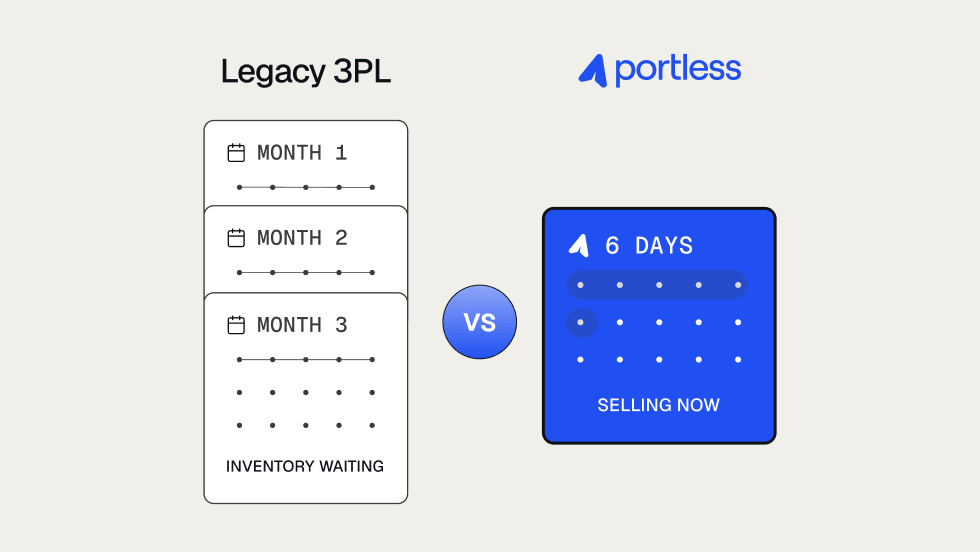
That last point is the trap. You can know exactly which SKUs are A items, but if your replenishment cycle is 90-120 days of ocean freight plus domestic warehousing, by the time your reorder lands, demand has already moved. According to IHL Group research, inventory distortion — the combined cost of overstocks and stockouts — costs retailers about $1.7T globally every year. ABC analysis surfaces the problem. It doesn't solve it.
Pairing ABC analysis with faster replenishment
The frameworks work better when your supply chain can actually keep up with them. If your A items are restocked on the same 90-day cycle as your C items, you're either overordering A's to cover the gap or stocking out during demand spikes. Neither is good for cash flow or LTV.
Two things change the equation:
- Shorter lead times. When replenishment moves from 60-90 days to under 10 days, you can hold less safety stock on A items without risking stockouts. Capital stays liquid.
- Smaller, more frequent orders. Instead of one container of an A item every quarter, you produce in smaller batches and ship as demand confirms — what we've written about as rolling-wave replenishment.
This is where direct fulfillment from the point of manufacture changes how ABC analysis actually pays off in your P&L.
Make your ABC analysis worth running
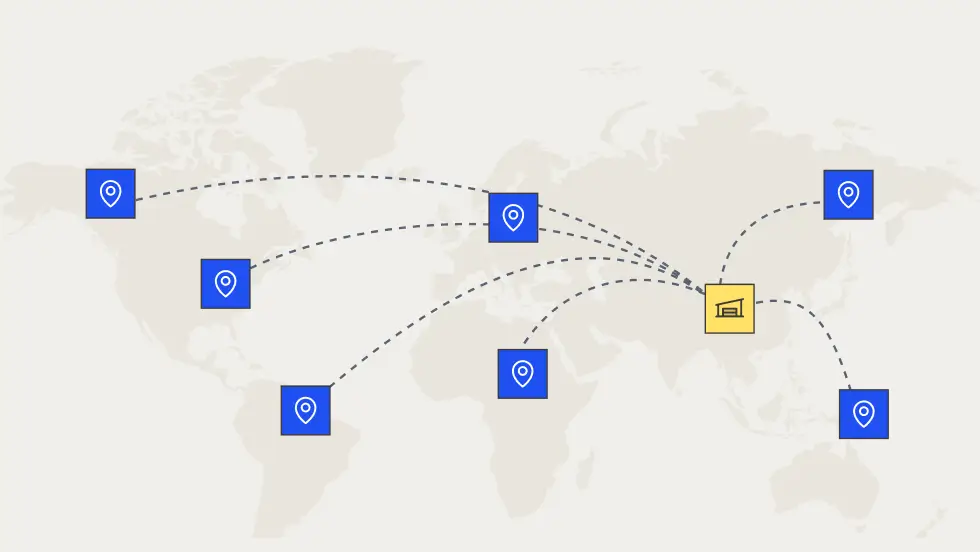
Categorizing SKUs only matters if you can act on the result. Portless ships orders directly from manufacturers in Asia to customers in 85+ countries in five to eight days — which means your A items can be replenished in days instead of months, and your C items don't need to sit in a domestic warehouse burning working capital waiting to sell. Contact us to see what your numbers look like under a direct fulfillment model.
← Back to the Ecommerce supply chain glossary