Carrying cost
Carrying cost is the total expense of holding inventory over a period of time, including warehousing, capital, insurance, taxes, shrinkage, and obsolescence. It's typically expressed as a percentage of average inventory value, and for most brands it lands between 20% and 30% per year.
Most Ecommerce founders look at their inventory and see an asset. The accounting team sees the same thing. But every day that inventory sits on a shelf, it's costing you money — in rent, in insurance, in capital you can't deploy elsewhere, and in the quiet risk that some of it won't sell. Carrying cost is the line that captures all of it. According to the Institute of Supply Chain Management, carrying costs typically run 20–30% of average inventory value annually, which means a brand sitting on $500,000 of stock is bleeding $100,000–$150,000 a year just to hold it.
For brands manufacturing in Asia and shipping to customers worldwide, carrying cost is one of the most under-examined drains on margin. The legacy model — bulk ocean freight, domestic warehousing, months of inventory sitting in a 3PL — was built around the assumption that carrying cost is just the price of doing business. It isn't.
What carrying cost includes
Carrying cost is not a single line item. It's the sum of four categories that most brands track separately, if at all:
- Capital costs: the opportunity cost of cash tied up in unsold inventory, including financing costs if you borrowed to buy stock
- Storage costs: warehouse rent, utilities, labor, racking, and any per-cubic-foot fees from your 3PL
- Service costs: insurance, taxes on inventory holdings, IT systems, and inventory management overhead
- Risk costs: shrinkage, theft, damage, obsolescence, markdowns, and write-offs on stock that doesn't sell
Capital and risk costs are the ones most brands underestimate. Storage shows up on a 3PL invoice. The cash you can't spend on ads, new product development, or hiring doesn't — but it's just as real.
How to calculate carrying cost
The standard formula is straightforward:
Carrying cost (%) = (Total annual inventory holding costs ÷ Total average inventory value) × 100
Sum the four cost categories above for a 12-month period, divide by your average inventory value over that same period, and multiply by 100. The result is the percentage of your inventory value you spend every year just to keep stock on hand.
A worked example: a brand carries $400,000 in average inventory. Over a year, it spends $40,000 on warehousing, $20,000 on insurance and taxes, $30,000 on capital costs (interest plus opportunity cost), and $20,000 on shrinkage and obsolescence. Total carrying cost is $110,000, or 27.5% of average inventory value. That's in line with industry norms — and it's also the number that should make any founder reconsider how much stock they're holding.
Why carrying cost matters for DTC brands
Carrying cost shows up in three places that directly affect how fast a brand can grow:
- Gross margin compression. Every dollar spent holding inventory is a dollar that doesn't reach the bottom line.
- Cash flow constraint. Capital locked in stock is capital you can't deploy on customer acquisition, product launches, or working capital reserves.
- Inventory risk. The longer goods sit, the higher the odds of markdowns, obsolescence, or trend misses — especially in fashion, beauty, and consumer electronics.
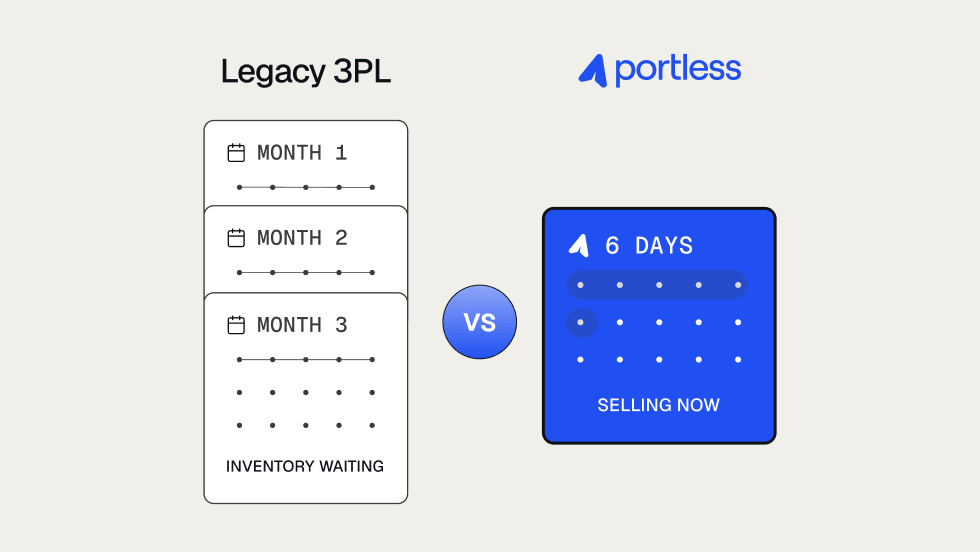
The legacy import-and-warehouse model amplifies all three. You forecast demand three to six months out, commit cash to a container, wait 45–60 days for ocean freight, pay duties on arrival, then hold the inventory in a domestic 3PL until it sells. The carrying clock starts the day you pay your supplier and doesn't stop until the cash comes back. For a deeper look at how this cycle traps capital, see the 2026 inventory model and why 3PL location matters.
How to reduce carrying cost
Most advice on cutting carrying cost focuses on the margins: negotiate better warehouse rates, tighten demand forecasting, run leaner safety stock. These help, but they don't change the structure. The bigger lever is the operating model itself.
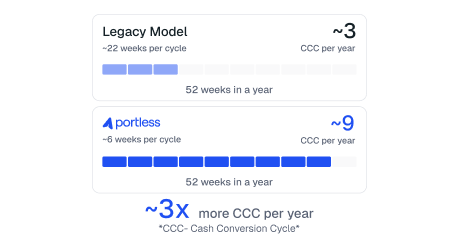
- Shorten the cash conversion cycle. The less time inventory sits between production and sale, the less carrying cost accumulates.
- Reduce safety stock through faster replenishment. Shorter lead times let you hold less buffer without increasing stockout risk.
- Test products in smaller runs. Lower MOQs mean less capital exposed to demand uncertainty.
- Eliminate warehousing layers. Every storage point between factory and customer adds carrying cost.
This is where direct fulfillment changes the math. When inventory ships from a factory-adjacent center directly to the end customer in five to eight days, you skip the domestic warehousing leg entirely. Storage costs drop. Capital cycles faster. Risk shrinks because you're not committing months of stock to a forecast. To model what this looks like for your business, the direct fulfillment ROI calculator breaks down the cash flow impact in detail.
Carrying cost vs. landed cost
These get confused often. Landed cost is the total cost of getting a product from the manufacturer to your warehouse — product cost, freight, duties, insurance, handling. It's a per-unit number. Carrying cost is what you pay to hold that product once it arrives. It's a time-based number expressed as a percentage of inventory value. Both affect margin. Both should be modeled before any sourcing or fulfillment decision. To calculate the first half of that equation, use What's My Landed Cost.
How Portless reduces carrying cost at the structural level
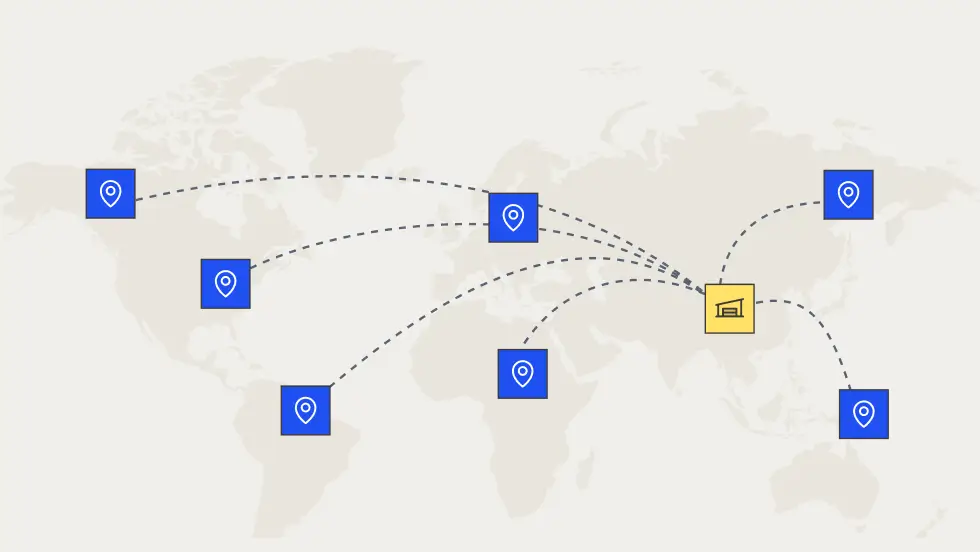
Carrying cost is a symptom of how your supply chain is built. If you import in bulk and hold inventory in a domestic 3PL, you'll always be paying 20–30% of your inventory value every year to keep it there. Portless ships orders directly from manufacturers in Asia to customers in 85+ countries, which collapses the warehousing leg and the cash cycle behind it. Less stock held, less capital locked, less risk on the books.
If you want to see how this would change your carrying cost specifically, contact us.
← Back to the Ecommerce supply chain glossary