Gross margin
Gross margin is the percentage of revenue left after subtracting the cost of goods sold (COGS). It measures how much money each sale generates to cover operating expenses, marketing, and profit — and it's the single most important profitability metric for an Ecommerce brand.
Gross margin is calculated as (Revenue − COGS) ÷ Revenue, expressed as a percentage. COGS includes every direct cost tied to getting your product ready to sell: manufacturing, raw materials, inbound freight, duties, and inspection. For DTC Ecommerce brands manufacturing in China or Vietnam, gross margin is where supply chain decisions show up on the P&L. Every dollar spent on ocean freight, domestic warehousing, or duty on unsold inventory comes directly out of this number.
The formula looks simple. The reality is that most brands miscalculate it by leaving freight, duties, or 3PL receiving fees out of COGS — which inflates the number and hides the real cost of their supply chain model.
How to calculate gross margin
The basic formula:
Gross margin (%) = (Revenue − COGS) ÷ Revenue × 100
If you sell a product for $50 and your fully loaded COGS is $20, your gross margin is 60%. That $30 has to cover marketing, fulfillment, overhead, and profit.
What belongs in COGS for an Ecommerce brand:
- Manufacturing cost (FOB price from your supplier)
- Inbound freight (ocean, air, or direct fulfillment shipping)
- Import duties and tariffs
- Inspection and quality control
- Packaging materials included at the factory
What does not belong in COGS (these sit below the gross margin line):
- Marketing and customer acquisition spend
- Salaries for non-production staff
- Software subscriptions
- Customer service costs
For a deeper breakdown of what goes into the COGS calculation, see our guide on calculating product landed costs.
Why gross margin matters more than revenue
Revenue tells you how much money came in. Gross margin tells you how much of it you actually get to keep before paying for ads, salaries, and rent. A brand doing $5M at 60% gross margin has $3M to work with. A brand doing $5M at 30% gross margin has $1.5M — half the room to invest in growth, half the resilience when ad costs spike.
Investors and operators benchmark gross margin because it dictates everything downstream:
- CAC payback period. Higher gross margin means you recover acquisition costs faster.
- Ad spend efficiency. More margin per order means you can outbid competitors on the same keywords.
- Cash flow. Stronger margins generate more cash per unit sold, which funds the next inventory order.
- Scalability. Mercury notes that gross margin is a primary driver of startup scalability and burn multiple.
For DTC Ecommerce brands, healthy gross margins typically sit between 50% and 70%. Below 40%, the model usually breaks at scale.
What erodes gross margin in Ecommerce
The legacy supply chain quietly chips away at gross margin in ways that don't show up on a single invoice. Most operators only see the damage when they reconcile at the end of the quarter.
Duties on unsold inventory. When you import in bulk, you pay duties upfront on every unit — including the ones that never sell. Those duties get absorbed into your average COGS, dragging margin down across the entire SKU.
Domestic warehousing fees. Storage, receiving, pick-and-pack, and long-tail surcharges add 10–20% to fulfillment costs that should be sitting at the gross margin line. Our analysis of hidden 3PL costs breaks down zone premiums and storage drag in detail.
Ocean freight volatility. Container rates move unpredictably. A spike on a single shipment can compress margin on an entire production run.
Markdowns and dead stock. Inventory that doesn't sell at full price gets discounted. Every markdown is a direct hit to gross margin on units you've already paid to manufacture, ship, and store.
Quality issues caught late. Defects discovered after goods land in a domestic warehouse force you to choose between scrapping units, returning them at high cost, or shipping them and absorbing returns. The 1-10-100 rule applies: fixing issues at the source costs $1, fixing them in fulfillment costs $10, and fixing them after delivery costs $100.
Gross margin vs. net margin vs. contribution margin
These three terms get used interchangeably, but they measure different things.
- Gross margin: Revenue minus COGS. Excludes operating expenses, marketing, and overhead.
- Contribution margin: Revenue minus all variable costs per order, including COGS, shipping, payment processing, and returns. A more accurate view of per-order profitability.
- Net margin: Revenue minus every expense, including taxes and interest. The bottom line.
For DTC brands, contribution margin is often the more actionable number day-to-day — but gross margin is the headline metric investors and operators benchmark first.
How direct fulfillment protects gross margin
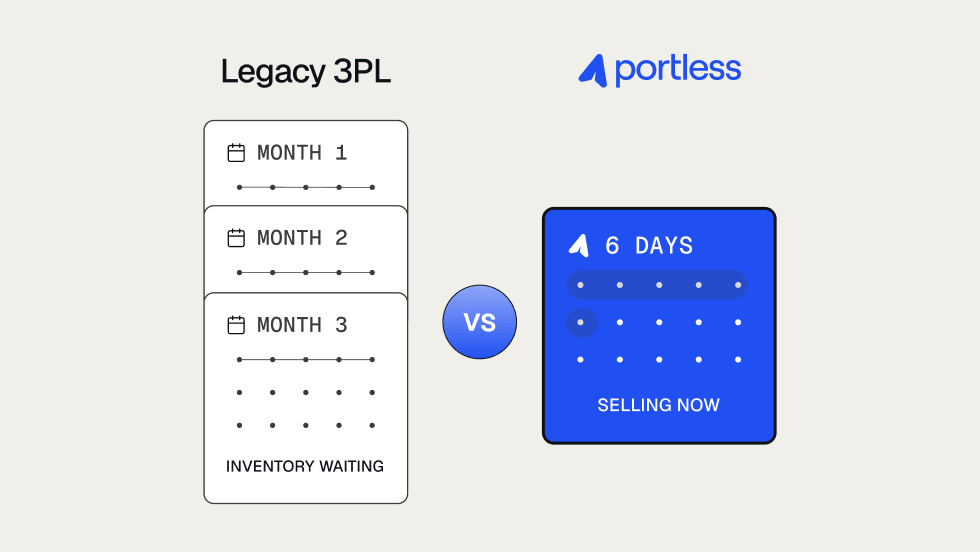
The legacy model — bulk ocean freight, duties paid upfront, domestic 3PL, slow inventory turns — was built for a different era. It locks up capital, adds layers of cost between manufacturer and customer, and forces brands to absorb fixed warehousing fees regardless of sales velocity.
Direct fulfillment changes the math:
- Duties are paid per shipment at the point of sale, not on unsold inventory sitting in a warehouse
- Domestic warehousing costs go to zero
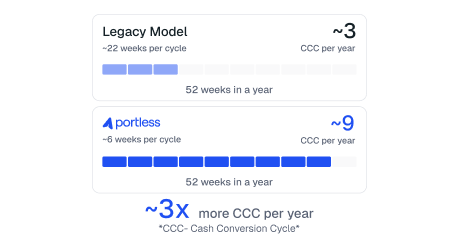
- Inventory turns 4–14x faster, freeing cash that would otherwise be trapped in stock
- Smaller production runs reduce dead stock and markdown risk
For a brand operating at 50% gross margin under a legacy 3PL model, switching to direct fulfillment can recover 5–10 percentage points by eliminating storage fees, reducing duty exposure on unsold units, and cutting handling costs. See the fulfillment model ROI breakdown for the unit-economics comparison.
Protect your gross margin by fixing the supply chain underneath it
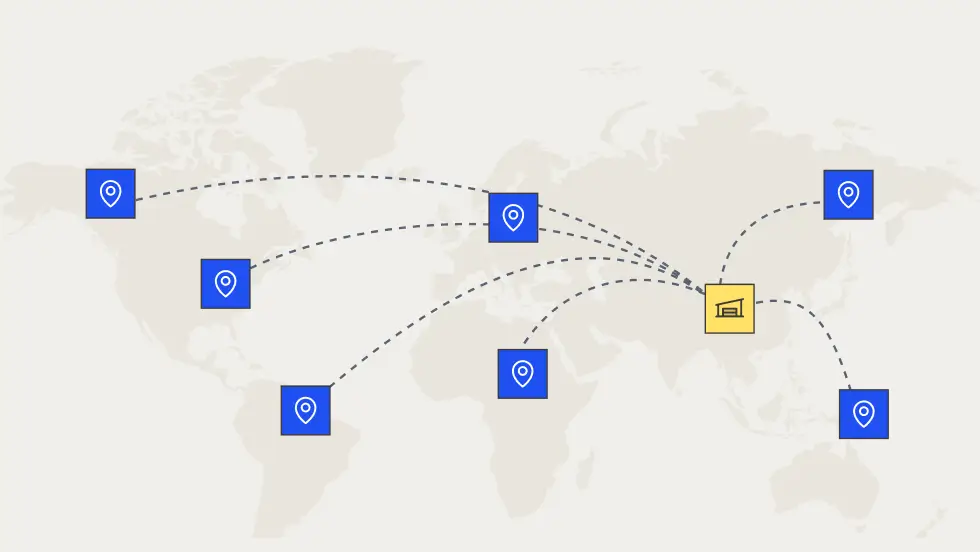
Gross margin is the report card. Your supply chain model is the input. If you're manufacturing in Asia and selling to customers globally, Portless ships orders directly from production to your customer in five to eight days — no domestic warehouse, no duty on unsold inventory, no capital trapped in pallets. The result is more margin per order and faster cash conversion, on the same products you already sell.
Contact us to see how direct fulfillment changes your gross margin math.
← Back to the Ecommerce supply chain glossary