Contribution margin
Contribution margin is revenue minus all variable costs tied to fulfilling an order — including COGS, shipping, pick-and-pack, payment processing, and returns. It tells you how much each sale actually contributes to covering fixed costs and generating profit.
Gross margin gets most of the attention in board decks, but contribution margin is the number that tells you whether your business model works. Gross margin stops at COGS. Contribution margin keeps going — pulling in every variable cost it takes to get a product from your supplier to your customer's door, plus the costs of acquiring that customer and processing the transaction. For DTC brands shipping from Asia, those variable costs are where the model usually breaks: freight, duties, 3PL fees, and ad spend can quietly turn a 70% gross margin product into a break-even order.
How to calculate contribution margin
The formula is simple. The discipline is in defining "variable cost" honestly.
Contribution margin = Revenue − Variable costs
Variable costs for a typical DTC order include:
- Cost of goods sold (product cost, inbound freight, duties)
- Outbound shipping to the customer
- Pick-and-pack and 3PL per-order fees
- Payment processing fees (typically 2.9% + $0.30)
- Returns processing and refund costs
- Variable customer acquisition cost (the ad spend attributable to that order)
You can express contribution margin two ways: as a dollar figure per unit, or as a percentage of revenue. Both are useful. Per-unit tells you what each order kicks toward fixed costs. Percentage tells you how the structure scales.
Contribution margin vs gross margin
The two get confused constantly. Here's the difference:
- Gross margin subtracts only COGS from revenue. It's a product-level profitability view.
- Contribution margin subtracts every variable cost from revenue. It's a unit economics view.
A brand can have a strong gross margin and a terrible contribution margin. According to Harvard Business Review's breakdown of contribution margin, this is exactly why operators use contribution margin for decisions about pricing, product mix, and which channels to scale — gross margin doesn't capture the cost of actually delivering the product.
Why contribution margin matters for DTC brands
If you're doing $1-15M in revenue and shipping from Asia, contribution margin is the metric that determines whether you can afford to grow. Here's why:
- It sets your CAC ceiling. Your contribution margin per order is the most you can spend on acquisition before that order loses money. Brands that don't model this end up scaling ad spend into negative unit economics.
- It exposes the real cost of legacy fulfillment. Bulk ocean freight, domestic warehousing, and 3PL surcharges all live inside contribution margin. When peak season 3PL surcharges spike 15-30%, the hit lands here — not in gross margin.
- It tells you which SKUs deserve marketing dollars. Two products with the same gross margin can have wildly different contribution margins once you factor in shipping weight, return rates, and dim weight pricing.
How the legacy supply chain compresses contribution margin
The traditional model — bulk ocean freight, domestic 3PL, duties paid on landing — adds variable costs at every step:
- Storage fees of $15-$40 per pallet per month
- Pick-and-pack at $2-$5 per order
- Zone-based shipping premiums (a two-pound USPS Priority package costs 52% more to Zone 8 than Zone 2)
- Peak season surcharges
- Duty paid upfront on inventory you haven't sold yet
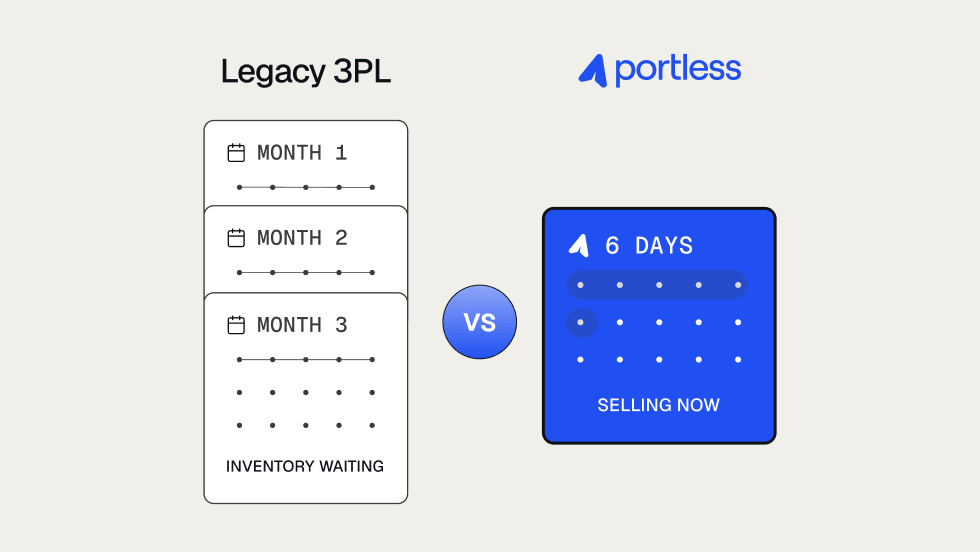
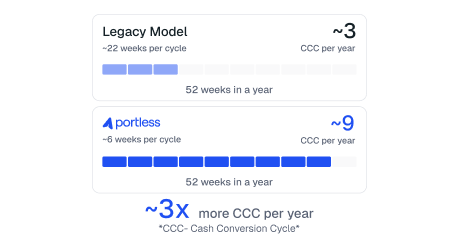
- Carrying costs on 60-120 days of capital locked in stock
Each of these is a variable cost that compresses contribution margin. None of them show up in gross margin. That's why brands with healthy P&Ls on paper still run out of cash — the costs of the legacy model live in the gap between gross margin and contribution margin, and they compound as you scale.
You can model the impact on your own numbers using our direct fulfillment ROI calculator or check what your actual product landed costs look like before they hit fulfillment.
How to improve contribution margin
There are three levers, and most brands only pull the first one:
- Raise prices. Easiest in theory, hardest in practice without losing conversion.
- Lower variable costs. This is where supply chain decisions show up. Cutting freight, eliminating storage, reducing duty exposure, and shortening the cash cycle all flow directly into contribution margin.
- Increase AOV. Bundling and upsells spread fixed per-order costs (payment fees, pick-and-pack) across more revenue, which lifts the percentage.
The supply chain lever is the one most operators leave on the table. According to Investopedia's breakdown of contribution margin, every dollar of variable cost you cut goes straight to contribution margin — and from there, straight to the bottom line once fixed costs are covered.
How Portless protects your contribution margin
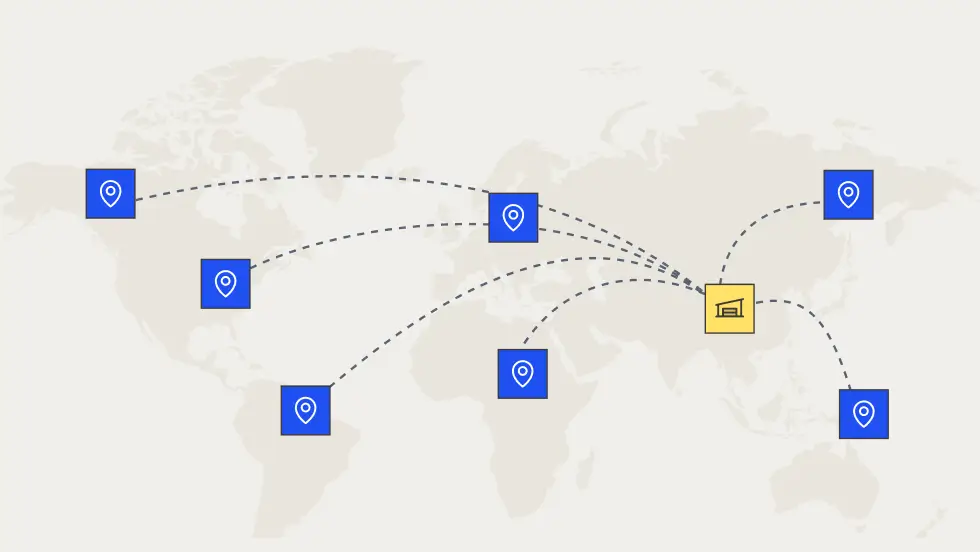
Direct fulfillment from the point of manufacture removes the variable costs that the legacy model treats as fixed. No domestic warehousing fees. No duty paid on unsold inventory. No 60-120 day carrying costs on capital locked in a 3PL. Orders ship from our facilities adjacent to your factories in Asia straight to customers in 85+ countries in five to eight days. The result is a leaner variable cost structure — and contribution margin that holds up as you scale, instead of compressing under peak surcharges and zone premiums. Contact us to see what direct fulfillment does to your unit economics.
← Back to the Ecommerce supply chain glossary