Last updated: May 2026
Landed cost is the total amount a business has spent on a product by the time it arrives at its final destination: the customer's door, not just the warehouse dock. Most operators still calculate margin by subtracting the FOB price from the retail price. That math misses everything that happens between the factory and the doorstep, which is usually where the margin actually lives or dies.
Understanding the full landed cost of a product is the only way to determine your real cost of goods sold (COGS) and set pricing that survives freight spikes, tariff changes, and inventory sitting longer than forecast. Here are the key components that make up total landed cost.
What is a fully landed cost?
Your fully landed cost is the total you pay to move a product from the factory to your customer's door — every fee, not just the FOB or product price. It captures the full cost of getting a unit into your customer's hands, which is where your real margin lives or dies. Calculate margin off the product price alone and you'll price against a number that was never real.
Purchase price
This is the actual amount you've spent on the product when you acquired it from the supplier or manufacturer. This can also include production costs. Use the purchase price as a base before you add any additional costs.
Shipping costs
To receive the products you're selling to the customer, you need to receive them from the supplier first. This involves transporting them, so you'll pay freight charges, container fees, and other related costs depending on the mode of delivery. Avoid the common mistakes that increase carrier costs — they compound fast at scale.
Customs duties and tariffs
Duties and tariffs are now one of the largest variable lines in landed cost for brands sourcing from China or Vietnam. Rates depend on the Harmonized System (HS) code of the product, the country of origin, and current trade policy, all three of which have moved repeatedly through 2025. Look up your product on the US International Trade Commission's HTS search tool to confirm your current rate, and model your landed cost at +10% and +25% scenarios before your next PO. Building a tariff-resilient supply chain starts with knowing those numbers cold.
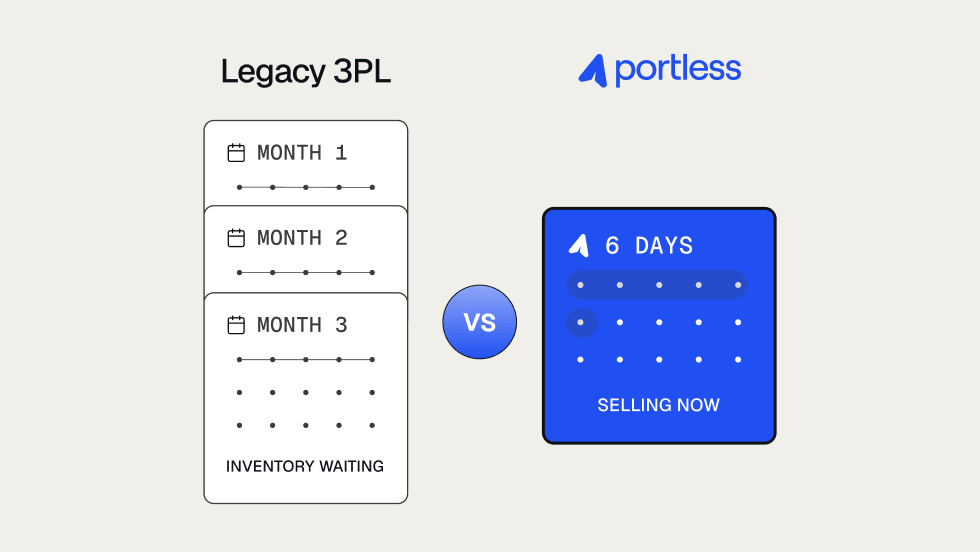
One detail most landed cost guides skip: when you pay each component matters as much as how much you pay. Under legacy bulk ocean freight, you pay duties on the full shipment at import, before a single unit sells. Under direct fulfillment, duties apply per parcel at fulfillment, matched to that order's revenue. Same total, different impact on working capital. See how tariff deferment strategies change the cash flow math.
Insurance
Insurance costs also apply when transporting the product from the supplier to the buyer, and again when sending it to the customer. It protects the product from potential losses or damages while it's being moved.
Handling fees
The total cost of your product also includes the various stages in the supply chain where it has been physically handled. This covers the cost of employing people to load and unload the product at the different stages.
Storage costs
Warehousing costs also make up a big part of landed cost. This includes any expenses generated when the product is stored in facilities or hubs before it reaches its final destination: racking, pick-and-pack labor, climate control, and the capital tied up in units that haven't sold yet.
If your inventory carrying costs are draining cash flow, the storage line is usually where it shows up first. Brands holding 90+ days of cover in a legacy domestic 3PL pay for the same unit twice: once at the duty window, again every month it sits on a shelf. A 3PL evaluation checklist helps you pressure-test whether your current warehouse partner is actually competitive on storage rates and throughput, or just convenient.
Other associated fees
You'll sometimes hit unexpected extra costs in the handling, storage, or shipping process. Add these to the total product cost when you calculate it.
Why landed cost decides your margins (and your cash flow)
As a business, you need to make a profit to meet your goals and grow. Brands that miscalculate landed cost typically discover the gap when margins compress on already-committed inventory. Inventory carrying costs alone run 20% to 30% of total inventory value per year, per APQC benchmarking data. Here are the main reasons it matters:
Pricing decisions stop being guesses
Most DTC brands set retail prices using a target multiple on COGS. That math falls apart when duties shift mid-shipment or carrier rates spike. Running landed cost per SKU at current and stressed scenarios tells you your real margin floor before the market forces you to find it.
You can kill the SKUs that are quietly losing money
A SKU with a 60% gross margin on COGS can have a 12% margin on landed cost once you add freight, duties, and the four months it sat in a legacy domestic warehouse. Landed cost is the only number that tells you which products are actually funding the business and which are draining it.
You can structurally reduce cost, not just track it
Tracking landed cost is the first step. Restructuring how you fulfill is the next one. Under legacy bulk ocean freight, you pay duties on the entire shipment at import, before a single unit sells. Under direct fulfillment, duties apply per parcel at fulfillment, matched to the revenue from that order. Same SKU, same factory, different cash flow profile. See how this works in our breakdown of direct fulfillment from China.
Budget properly
The problem many businesses make when calculating profitability is that they only include the initial product price and the shipping costs. When they do this, they don't see a clear picture of their actual profits. This means they might end up losing out at the end of the fiscal year. By knowing your true landed costs, you can budget properly and avoid this.
Better insights into your supply chain
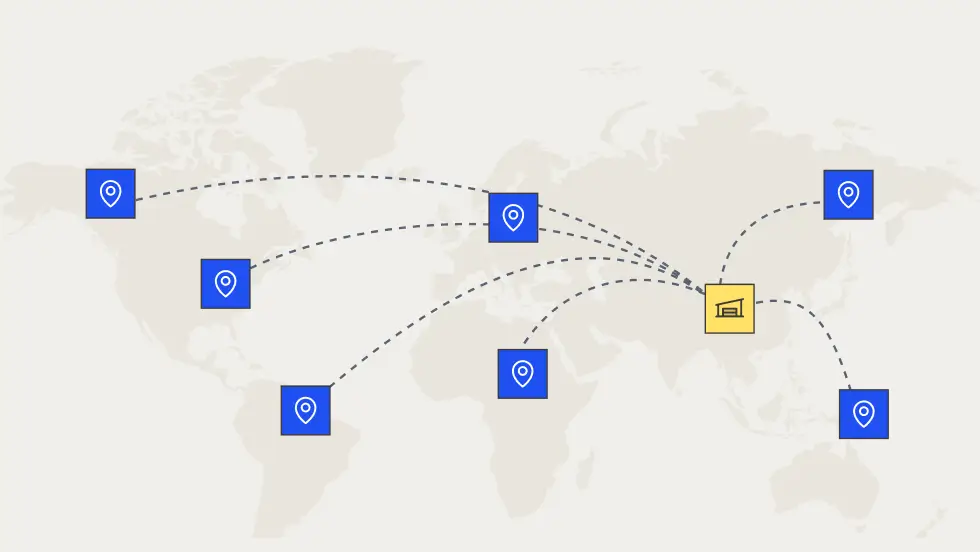
By going through every part of the supply chain and figuring out what each process costs your business, you get better insights into what you're spending. For example, you might find that you're spending too much on warehousing costs and want a different partner that delivers the same efficiency at a lower price. You can also restructure how you fulfill. Direct fulfillment with Portless ships individual orders from factory-adjacent hubs in China and Vietnam to customers in 75+ countries, which means duties hit per parcel at fulfillment instead of in bulk on inventory that hasn't sold yet. That structural shift reduces what you carry, what you store, and what you pay upfront. See how this works in our breakdown of direct fulfillment from China.
Make better business decisions
Say you have a large inventory of products that you sell within your business, but you want to reduce it. By figuring out the landed costs of each one, you get better insights into which ones are costing you too much and which ones are profitable. It can help you make better business decisions for your company and increase your bottom line.
How to calculate landed cost: the formula and a free calculator
The landed cost formula is straightforward. The hard part is running it per SKU at your actual volumes, not at an average.
Landed cost per unit = (product cost + freight + insurance + duties + handling + last-mile) ÷ units in shipment
Here's a worked example for a $9 FOB apparel SKU shipped from China to the US in a 5,000-unit order:
::table
Line item;Cost per unit
Product cost (FOB Shenzhen);$9.00
Ocean freight (apportioned);$0.85
Insurance;$0.10
Duties (assume 25% HTS rate);$2.25
Customs brokerage;$0.15
Legacy warehousing (two months avg);$0.60
Last-mile delivery (US zone 5 avg);$4.20
Landed cost per unit;$17.15
:table
Now run it again at a 35% tariff rate. Landed cost jumps to $18.05. If you're selling that SKU at $29.99 with a 50% gross margin assumption, you've just lost three points of margin on stock already in your warehouse with no way to reprice it without spooking your customers.
This is why brands selling into the US look up their product's classification on the US International Trade Commission's HTS search tool and model landed cost at +10% and +25% tariff scenarios before placing the next PO.
Plug your own numbers into the Portless landed cost calculator to see how your SKUs hold up under multiple scenarios. If you want to model the structural side too, run the direct fulfillment ROI calculator to see what changes when duties hit per parcel instead of per shipment.
Landed cost is the number that decides everything else
Pricing, SKU rationalization, cash flow, and inventory decisions all sit downstream of landed cost. If you're calculating margin off FOB price alone, you're flying blind on the line items that actually determine profitability. Run the formula per SKU, stress-test it against tariff scenarios, and if the structural cash flow side looks broken, talk to our team about what direct fulfillment would change for your specific cost structure.
FAQ
What is included in landed cost?
Landed cost includes the product cost, international freight, insurance, customs duties and tariffs, brokerage fees, handling, domestic last-mile shipping, and any storage costs accrued before the unit sells. Anything you pay between the factory floor and the customer's door counts.
How do you calculate landed cost per unit?
Add product cost, freight, insurance, duties, and last-mile charges, then divide by the number of units in the shipment. Run the calculation per SKU at your actual shipping volumes and current duty rates — averages hide where your margin is leaking.
What's the difference between COGS and landed cost?
Cost of goods sold (COGS) is the direct cost of producing the unit. Landed cost is COGS plus every logistics, duty, and handling fee required to get that unit to the customer. Landed cost is the number that determines real margin.
Why does landed cost matter more under tariffs?
Under bulk ocean freight, duties are paid upfront at import on inventory you haven't sold yet. If tariff rates shift mid-transit, your landed cost rises on stock already committed and your pricing assumptions are wrong before the container clears customs.
Can direct fulfillment reduce landed cost?
Direct fulfillment doesn't always reduce per-unit landed cost, but it changes when those costs hit your P&L. Duties apply per parcel at fulfillment, matched to order revenue, instead of in bulk at import on unsold stock. The structural impact on cash flow is what matters.







%20(1).avif)
.jpg)
.jpg)