Last updated: May 2026
You want to keep costs low, but easy-to-avoid shipping mistakes quietly inflate your carrier spend every month. Most operators don't see them until the invoice audit lands — and by then, the margin is gone.
Below are the seven most common mistakes that drive up carrier costs, and the specific fixes for each.
Why do carrier invoice errors keep slipping through?
Carrier invoice errors are the most common and most ignored source of overcharges in shipping. Industry audits routinely find that 3–8% of parcel invoices contain billing errors, including duplicate charges, incorrect dimensional weight, missed service guarantees, and accessorial fees that shouldn't apply.
The problem compounds when you ship through a legacy 3PL. Most domestic 3PLs pass carrier invoices straight through to you without auditing them. You pay the surcharge, the 3PL pays the carrier, and the error never gets caught. This is the same pass-through dynamic that shows up in how 3PLs handle returns and fulfillment — you're paying for a layer of service that doesn't actually advocate for your margin.
What to do:
- Run a weekly invoice audit against your contracted rates. Automated tools like Shipware, AuditShipment, or Refund Retriever flag discrepancies and file refund claims with the carrier.
- Check for late-delivery refunds. UPS and FedEx both offer money-back guarantees on services like Next Day Air and 2-Day, but you have to file within a tight window of delivery.
- Push your 3PL to share carrier invoices line-by-line. If they won't, that's a signal you're paying for visibility you don't have.
Are you paying dimensional weight on oversized packaging?
Packaging is where dimensional weight (DIM) charges quietly destroy your margin. Carriers bill the higher of actual weight or dimensional weight, and the DIM divisor used by UPS, FedEx, and USPS is 139 for domestic shipments.
Here's what that means in practice: a 12" x 12" x 12" box weighing two pounds gets billed as a 13-pound shipment. You pay for 13 pounds even though the product weighs two.
For lightweight DTC products like apparel, beauty, electronics, and small home goods, DIM weight is almost always higher than actual weight. Right-sizing your packaging is the single highest-leverage carrier cost reduction most brands can make, and it doubles as one of the simplest sustainable logistics practices for Ecommerce.
What to do:
- Measure your top 20 SKUs and match each to the smallest viable box or polymailer
- Switch lightweight, non-fragile SKUs to polymailers, since they're not DIM-billed the same way as boxes
- Pressure-test packaging on a sample run before committing to a full reorder
Brands fulfilling from China or Vietnam through Portless typically ship in right-sized polymailers or compact boxes by default, since air freight is priced on actual weight for parcels under 3.5 lbs.
Why does relying on one carrier inflate your carrier costs?
Many businesses believe they'll be fine relying on one carrier to move their freight, but this is a high risk, especially when it comes to your costs. It might seem like a simpler way of managing logistics, but it can lead to higher costs, limited flexibility, and increased vulnerability to service disruptions.
When you only use one carrier, you don't know if you're using the best or most cost-effective option on the market. The carrier industry is competitive, and many companies offer aggressive rates to win volume. Relying on just one carrier means they have little incentive to offer you lower rates, and you lose leverage in negotiations. You're also more exposed to service disruptions: if a strike, capacity crunch, or technical outage hits, your items don't ship and your customers feel it. Ocean freight is even more volatile; see the shipping fees from Chinese-built ships for a recent example of how single-lane exposure can blow up your unit economics overnight.
The fix is to diversify your carrier portfolio. Get quotes from multiple carriers and benchmark them against your current contract. Once you've chosen your primary, review and renegotiate on a regular cadence, and keep a backup carrier on standby so freight keeps moving when your primary doesn't.
What happens when you ship to the wrong address?
The whole point of a customer purchasing your products is that they receive them at the right address. When you place the wrong address on a package, two things happen: you get an unhappy customer who hasn't received their order, and carriers charge an address correction fee for every package that needs rerouting in transit — currently around $18–$23 per parcel for UPS and FedEx ground shipments. You may lose double in these cases, since you may have to compensate the customer and pay your carrier more.
Preventing this is simple. Use address verification software that automatically checks and validates addresses before shipping. By integrating this with your Ecommerce platform and order management systems, you drastically reduce the likelihood of errors in the future.
Customs documentation errors on cross-border shipments
For Ecommerce brands shipping internationally, the equivalent of a BOL error is a bad commercial invoice or incorrect HS code on a customs declaration. The cost of getting it wrong is higher than most operators realize: shipments get held at customs, duties get reassessed at higher rates, and the carrier bills you for the storage and re-clearance.
The most common errors:
- HS codes that don't match the product description
- Declared values that don't reconcile with the order receipt
- Missing country of origin
- Incorrect importer of record
Brands using a Delivered Duty Paid (DDP) model, where duties are calculated and paid upfront before the parcel ships, avoid most of these issues by design. Portless handles DDP automatically on every shipment.
Customs documentation exists to ensure smooth shipping operations and legal compliance, so inaccuracies can be detrimental to your carrier costs. Incorrect or missing information leads to shipping delays and complications, which means you may have to spend more with your carrier to fix the problems. Similarly, putting down the wrong classification of your goods can lead to regulatory issues and fines.
To avoid these inaccuracies, stay vigilant and double-check every piece of information before your shipment goes out. Build a review process and checklist to confirm all details are accurate and complete. You can also audit your shipping document processes on a regular cadence to see where the most mistakes happen, and fix them for future shipments.
Why are you overpaying for freight?
We touched on this when we covered how sticking to one carrier can affect your bottom line. A lot of the time, you end up overpaying for freight when you could get it for a better price elsewhere, sometimes with better service.
This often comes down to a lack of market knowledge: being unaware of current rates, and not doing the due diligence to find the best option. Weak negotiation also hurts, since brands fail to use volume discounts with their carrier. The result is higher operational expenses, inflated carrier costs, and reduced profit. The rise in container shipping costs over the past few years has made this even more punishing for brands locked into legacy ocean freight contracts.
Conduct regular market research on current carrier rates in your industry and stay informed on new trends and services so you can ensure you're getting the best deal. Always negotiate when you partner with a carrier, so you can use your shipping volume for discounts and build a stronger relationship over time. And before you sign anything, calculate your product landed cost. Freight is only one line item, and optimizing it in isolation can hide bigger inefficiencies in duties, storage, and last-mile delivery.
The carrier model is broken — direct fulfillment fixes the root cause
The seven mistakes above all share a root cause: the legacy fulfillment model. When you bulk-ship inventory across an ocean, store it in a domestic warehouse, and hand it to a single carrier for last-mile delivery, every one of these mistakes gets baked in. You're locked into one carrier's rates. You're paying DIM weight on packaging optimized for ocean freight, not parcel. Your 3PL has no incentive to audit invoices on your behalf.
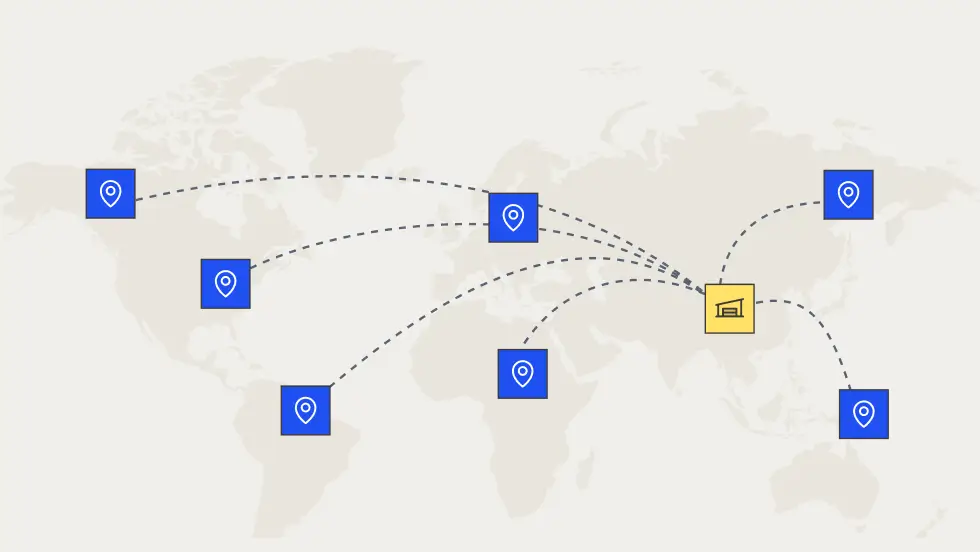
Direct fulfillment changes the math. When orders ship one at a time from the point of manufacture in China or Vietnam, you're not buying capacity from a single domestic carrier. You're routing each parcel through the cheapest qualified air freight and last-mile pairing. You're not paying to store inventory you haven't sold. You're not paying duties upfront on an entire container.
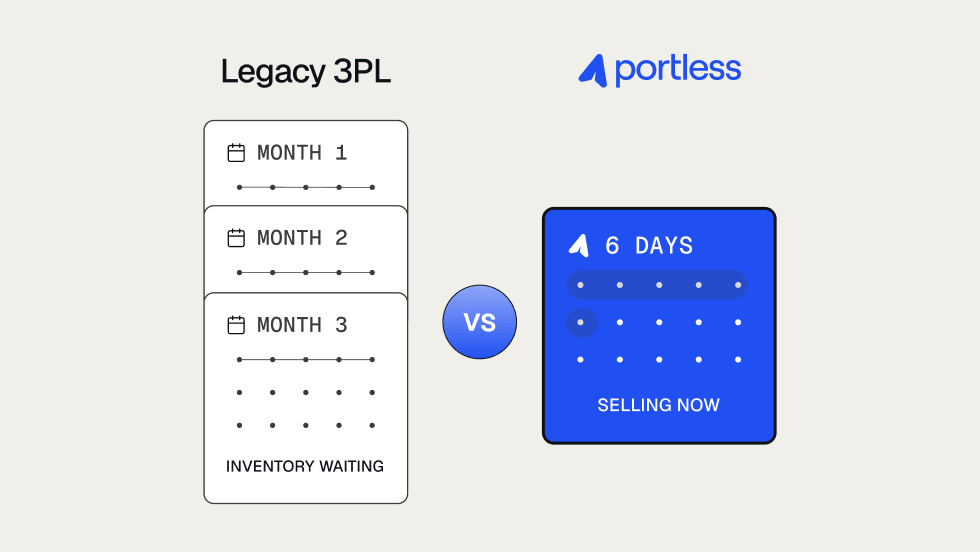
Portless fulfills orders directly from manufacturers in China and Vietnam to customers in 85+ countries, with delivery windows of five to eight days. Brands working with us cut lead times by up to 90%, free up cash flow tied up in domestic inventory, and route parcels across more than 20 last-mile carriers rather than one.
Cut carrier costs at the source
Carrier cost reduction isn't about squeezing one more percent out of your existing contract. It's about removing the layers of the legacy model that create the overcharges in the first place: pass-through 3PL billing, oversized packaging built for containers, single-carrier lock-in, and duty errors at the border. If those line items are draining your margin, it's worth talking to our team about what direct fulfillment would change for your specific cost structure.
FAQ
What are the main components of carrier costs?
Carrier costs break down into base rates, fuel surcharges, dimensional weight charges, accessorial fees (address corrections, residential delivery, redelivery), and zone-based pricing. Dimensional weight and accessorial fees are where most brands quietly lose margin.
What factors affect carrier pricing?
Carrier pricing is driven by package weight and dimensions, delivery zone, fuel costs, service level, shipment volume, and carrier capacity. Volume discounts and contract negotiation cycles also move pricing meaningfully.
Is using a single carrier cheaper than using multiple carriers?
No. A single-carrier strategy removes negotiation leverage and exposes you to rate hikes and service disruptions. Multi-carrier shipping routes each order to the cheapest qualified carrier per zone, which typically cuts last-mile costs by 10–25%.
How can Ecommerce brands reduce shipping costs without losing service quality?
Audit invoices weekly, right-size packaging to reduce dimensional weight charges, run a multi-carrier strategy, and validate addresses before label generation. Brands shipping from a single domestic warehouse also pay more in zone-based costs than brands fulfilling closer to the customer.







.jpg)