Port of entry
A port of entry is the officially designated airport, seaport, or land border crossing where imported goods legally enter a country and are processed by customs authorities. For Ecommerce brands, the port of entry determines where duties are assessed, how fast shipments clear customs, and when inventory becomes available to sell.
Every imported package crosses a border somewhere. That somewhere is the port of entry — the legal and physical checkpoint where a shipment is inspected, classified, assessed for duties, and either released or held by customs. In the US, Customs and Border Protection operates 328 ports of entry across air, land, and sea. Every shipment your brand imports passes through one of them.
For most operators, the port of entry is invisible until something goes wrong. A flagged container. A documentation error. A two-day hold that turns into a week. But the choice of port — and the model you use to move goods through it — has direct downstream effects on lead times, cash flow, and how quickly inventory becomes sellable.
What a port of entry actually does
A port of entry is where a shipment officially becomes an import. Until your goods clear customs at a port of entry, they're not legally in the country. That distinction matters because it's the moment duties, taxes, and compliance obligations attach to the shipment.
At the port of entry, customs authorities:
- Verify shipment documentation against the bill of lading, commercial invoice, and customs entry filing
- Confirm the Harmonized System code classification and assess applicable duties
- Inspect goods physically or via scanning when flagged
- Release the shipment to the importer or hold it for further review
In the US, this process is governed by CBP and runs through the Automated Commercial Environment (ACE) system. Filings happen electronically, often before the shipment physically arrives.
Types of ports of entry
Not every port handles every kind of cargo. The three main categories:
- Seaports: Process ocean freight containers arriving by ship. Los Angeles/Long Beach, New York/Newark, and Savannah are the largest US seaports by volume.
- Airports: Process air cargo and express parcels. JFK, LAX, ORD, and Memphis (FedEx hub) handle the bulk of US Ecommerce air imports.
- Land border crossings: Process truck and rail freight from Canada and Mexico. Laredo, TX is the largest land port of entry in the US.
The port that's right for your shipment depends on your fulfillment model. Bulk ocean freight moves through seaports. Direct fulfillment by air moves through airports. The choice affects transit time, clearance speed, and per-unit shipping cost.
Why the port of entry matters for Ecommerce brands
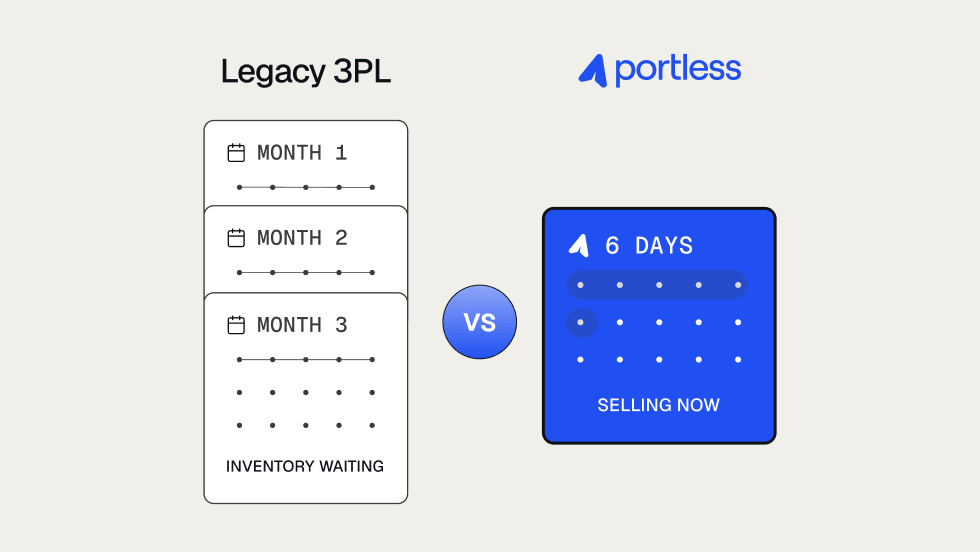
In the legacy bulk model, the port of entry is a bottleneck. A container arriving at the Port of Los Angeles can sit for days waiting for drayage, customs release, and inland transport before goods reach a 3PL warehouse. During peak season, those delays compound. Brands that planned around a six-week lead time end up at eight or nine.
The port of entry also dictates when you pay duties. In a traditional supply chain, the importer of record pays duties on the entire container the moment it clears customs — regardless of whether the goods sell next week or next quarter. With current US tariff rates, that can mean tens of thousands of dollars in upfront duty payments on inventory that may never sell through.
For brands selling internationally, every destination country has its own port of entry rules, duty rates, and clearance procedures. Selling into the UK, EU, Canada, and Australia means navigating four different customs regimes — each with its own thresholds, documentation requirements, and inspection protocols.
How direct fulfillment changes the port of entry equation
The legacy model treats the port of entry as a single, high-stakes event: a container arrives, duties are paid in full, and inventory enters the warehouse. Direct fulfillment breaks that into thousands of small, individual entries — one per customer order.
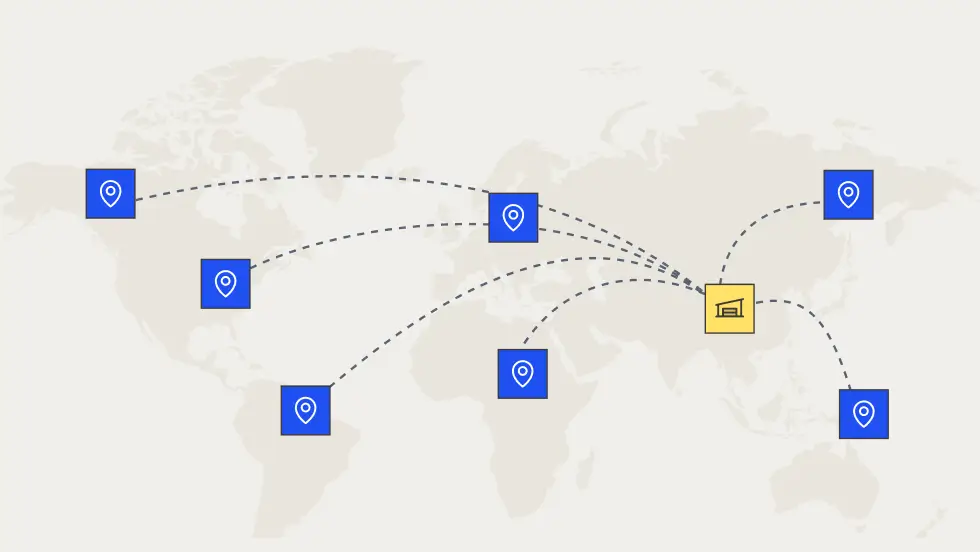
This is how Shein and Temu built their cost advantage, and it's the model Portless extends to mid-market DTC brands. Inventory stays at our fulfillment center near the factory in China or Vietnam. When a customer orders, that single package flies directly to a port of entry near them and clears customs individually, often under informal entry procedures like Type 86 where applicable.
The practical effects:
- Duties are paid only on sold inventory, not on speculative bulk orders sitting in a warehouse
- Clearance is faster because individual parcels move through express clearance channels rather than full container inspection
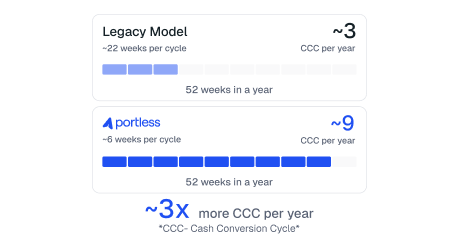
- Cash flow improves because there's no upfront duty payment on unsold goods
- Lead times drop from six to eight weeks to five to eight days
The port of entry doesn't go away — it just stops being a single capital-intensive chokepoint. It becomes a routine step in a continuous flow of individual orders.
Choosing the right port of entry for your supply chain
If you're running bulk freight, the port you use is usually dictated by your 3PL's location, carrier contracts, and West Coast versus East Coast cost trade-offs. Most brands optimize for proximity to their primary warehouse.
If you're running direct fulfillment, the port of entry is determined by the carrier's routing network and the customer's delivery address. You don't pick a port — the carrier does, based on where the package needs to land. This is one less variable you have to manage.
Either way, what matters is the documentation and compliance posture at the port. Accurate HS codes, correct declared values, and clean importer of record setup are what determine whether your shipments clear in hours or sit for days. The port of entry punishes sloppy paperwork far more than it punishes any particular route.
Skip the port of entry bottleneck
The legacy model makes the port of entry a chokepoint: bulk containers, upfront duty payments, and weeks of lead time before inventory becomes sellable. Portless replaces that with individual parcel clearance, tariff deferment until the moment of sale, and delivered duty paid handling across 85+ countries. Goods leave the factory, fly to the customer's region, clear customs as a single parcel, and arrive in five to eight days.
Contact us to see how direct fulfillment changes the math on customs, cash flow, and lead times for your brand.
← Back to the Ecommerce supply chain glossary