Tariff deferment
Tariff deferment is the practice of delaying payment of import duties and taxes — through bonded warehouses, foreign trade zones, direct fulfillment models, or government deferral programs — so you pay duties closer to (or after) the point of sale instead of at the time of import.
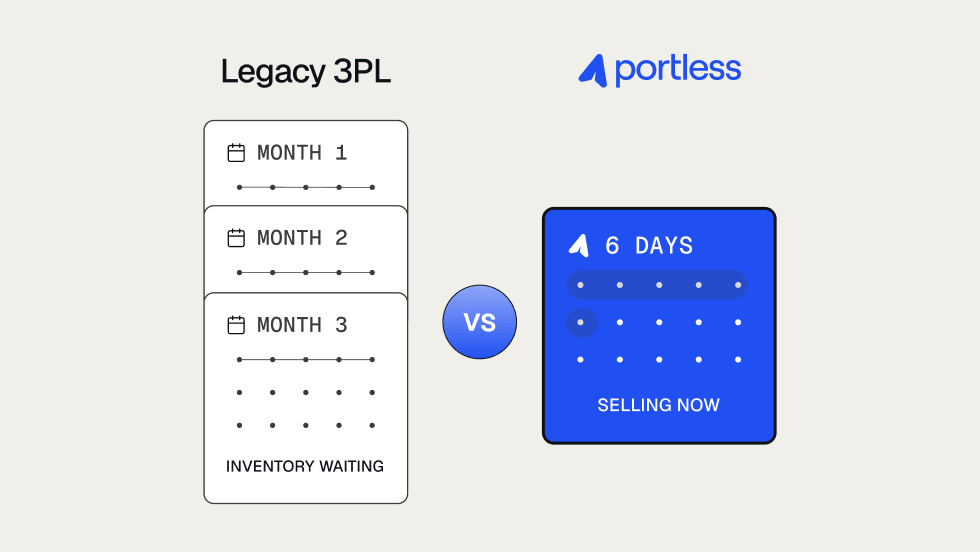
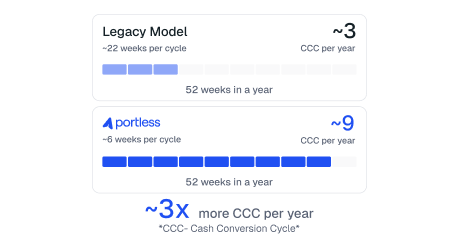
For most Ecommerce brands using the legacy supply chain, tariffs are paid the moment a container crosses the US border. That means duty hits your bank account weeks or months before the inventory in that container generates a single dollar of revenue. With current US tariff rates on Chinese-origin goods stacking well past 50% in many categories, that upfront payment can lock up six figures of working capital in inventory that may or may not sell.
Tariff deferment changes the timing. Instead of paying duty on every unit the day it lands, you pay duty later — sometimes after the goods are sold, sometimes after a set deferral window, sometimes only on units that actually leave a bonded facility. The obligation doesn't disappear. The cash flow profile does.
How tariff deferment actually works
There's no single "tariff deferment program." It's a category of structures that all share the same outcome: duty paid later, not at the port. The main mechanisms US importers use:
- Bonded warehouses. Goods sit in a CBP-licensed facility for up to five years without duty being assessed. Duty is paid when goods are withdrawn for US consumption.
- Foreign trade zones (FTZs). Designated areas where goods can be stored, manipulated, or manufactured without entering US customs territory. Duty is paid only when goods leave the zone for the US market.
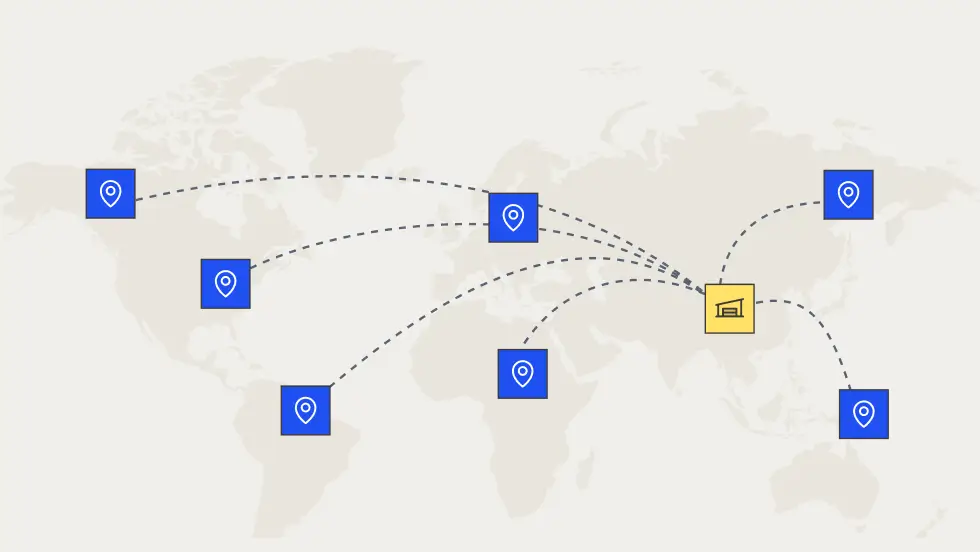
- Direct fulfillment from origin. Goods stay at a fulfillment center near the factory (usually in China) and ship individually to US customers as orders come in. Duty is assessed per shipment, after the customer has already paid.
- Periodic Monthly Statement (PMS). A CBP program that lets qualifying importers consolidate duty payments into a single monthly statement, deferring payment by an average of 30+ days versus per-entry payment.
Each mechanism has different cost, complexity, and eligibility profiles. Bonded warehouses and FTZs require significant overhead and are generally built for larger importers. Direct fulfillment shifts the timing automatically — no separate program, no separate filing.
Why tariff deferment matters more in 2025
The end of de minimis treatment for China and Hong Kong-origin goods, combined with stacked tariff increases under IEEPA and other authorities, has changed the math on bulk freight. When tariffs on Chinese imports were 7–10%, paying upfront on a full container was uncomfortable but survivable. At 50%+, paying upfront on goods that may sit in a 3PL for 90+ days is a working capital crisis.
Consider what that looks like on a $200K cost-of-goods container at a 50% tariff:
::table
Variable;Legacy bulk import;Deferred (direct fulfillment)
Duty paid upfront;$100,000;$0
Duty timing;Day of entry;Per order, after sale
Cash tied up in unsold tariffs;$100,000 for 60–90+ days;Near zero
Risk on unsold units;Duty already paid;No duty paid on dead stock
:table
The legacy model forces you to bet duty dollars on a forecast. Deferment lets actual demand drive duty spend.
Who can use tariff deferment
The mechanism you can access depends on your scale, your product, and your supply chain structure:
- Bonded warehouses and FTZs suit brands with high-volume, predictable SKUs and the operational maturity to manage CBP compliance overhead. Typically a fit at $20M+ in import volume.
- Periodic Monthly Statement is available to most importers of record with an ACH payment setup through CBP. Low lift, modest cash flow benefit.
- Direct fulfillment works for DTC brands with lightweight products (under 3.5 lbs), manufacturing in Asia, and selling to markets outside the country of origin. No CBP licensing required on the brand's end — the fulfillment provider handles entry logistics.
For most DTC brands in the $1–15M revenue range, the operational lift of standing up an FTZ doesn't pencil. Direct fulfillment is the structurally simpler path to the same outcome.
What tariff deferment isn't
A few common misconceptions worth flagging:
- It is not tariff avoidance or evasion. Duty is still owed and still paid — just later.
- It is not the same as duty drawback, which refunds duty already paid on goods that are subsequently exported.
- It is not the same as tariff engineering, which reduces the rate itself by reclassifying or redesigning the product. Deferment shifts the timing; engineering shifts the amount.
You can stack these strategies. A brand can defer duty through direct fulfillment, classify under the optimal HS code through tariff engineering, and use the first sale rule to lower the dutiable value — all at once, all legally.
How Portless builds tariff deferment into your supply chain
Direct fulfillment from Asia means your inventory doesn't sit in a US warehouse with duty already paid against it. Goods are stored at the point of manufacture, shipped to customers as orders come in, and duty is assessed on a per-shipment basis — after the customer has paid you. No bonded warehouse to license. No FTZ to operate. No six-figure check to CBP on the day your container lands.
To see how this changes your unit economics, run your numbers through the landed cost calculator or contact us to talk through what tariff deferment looks like for your SKU mix.
← Back to the Ecommerce supply chain glossary