Bonded warehouse
A bonded warehouse is a government-licensed facility where imported goods can be stored, handled, or manufactured without paying duties or taxes until the goods are released into the local market or re-exported. It's a working capital tool that lets brands defer tariff payments, sometimes for years, rather than paying duty the moment cargo clears the border.
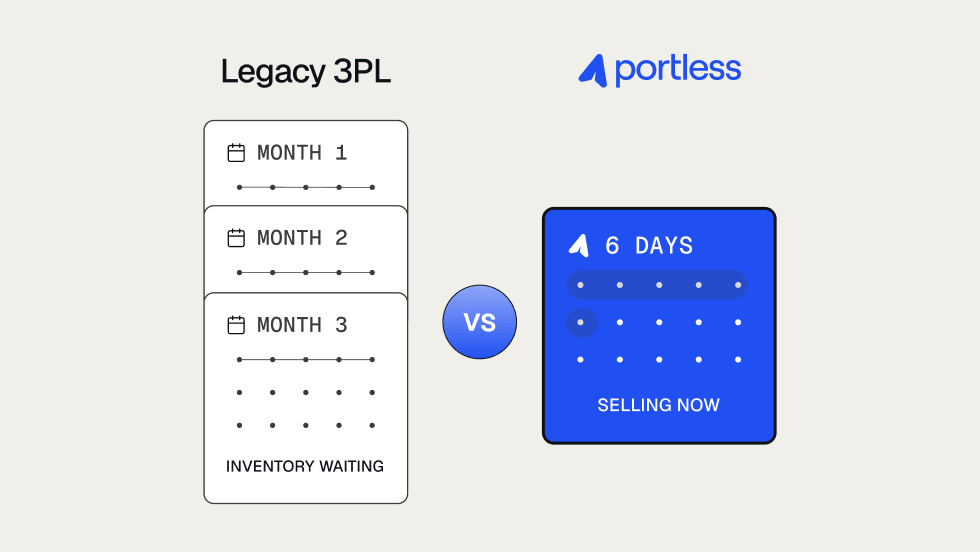
For DTC brands shipping cross-border, a bonded warehouse is one of the few legal mechanisms that lets you separate the act of importing from the act of paying duty. In the legacy model, you pay tariffs and taxes upfront on every container, whether the goods sell in a week or sit on a shelf for a year. A bonded warehouse breaks that link. You can hold inventory under customs supervision, defer duty until each unit ships, and in many cases re-export goods without ever paying duty at all.
The mechanics vary by country, but the core principle is consistent: goods inside a bonded facility are treated as still in transit, not yet entered into the local economy. That distinction has real cash flow implications, and for some product categories, it's the difference between a viable cross-border strategy and one that ties up working capital indefinitely.
How a bonded warehouse works
When goods arrive at a port, importers normally have two choices: pay duties immediately and release the goods into the domestic market, or move them into a bonded facility under customs supervision. Inside the bond, the goods are still considered "in transit" from a customs perspective. Duties aren't owed until the goods leave for the domestic market. If they're re-exported instead, no duty is ever paid.
According to U.S. Customs and Border Protection, merchandise can be stored in a U.S. customs bonded warehouse for up to five years from the date of importation. Within that window, you can sort, repackage, label, and in some cases manufacture goods, all without triggering duty obligations.
Types of bonded warehouses
Bonded warehouses fall into several operational categories depending on the country and the activities permitted inside the facility. In the U.S., CBP defines 11 classes of bonded warehouses, but the most common distinctions for Ecommerce brands are:
- Public bonded warehouse: a shared facility open to multiple importers, with lower commitment but less operational control
- Private bonded warehouse: leased or operated by a single company for exclusive use, with full control over inventory, security, and processes
- Manufacturing bonded warehouse: allows imported components to be assembled or processed in bond, with duty owed only on the finished product if it enters the domestic market
The right type depends on your volume, the nature of your goods, and whether you're holding inventory or transforming it before sale.
Bonded vs. non-bonded warehouses
The tradeoff between bonded and non-bonded warehouses comes down to cash flow versus operational simplicity. Bonded facilities defer duty payments and unlock re-export flexibility, but they come with higher operating costs, stricter recordkeeping requirements, and limited shipping route flexibility in some jurisdictions.
For most low-to-mid cost-of-goods DTC products, the duty deferral benefit doesn't outweigh the operational premium. For higher-COG products or brands holding inventory for extended periods, the math flips. We break down the cost comparison in detail in our guide to bonded vs non-bonded warehouses in China.
When a bonded warehouse makes sense
Bonded warehousing is most useful when one or more of these conditions apply:
- You're holding high-value inventory and the duty cash outflow would otherwise tie up significant working capital
- You're re-exporting a meaningful share of inventory and want to avoid paying duty on goods that never enter the domestic market
- Your product category faces high tariff rates and you want to delay payment until the goods actually sell
- You need to hold seasonal inventory for extended periods without paying duty on stock that may not move
For brands shipping direct from China to global customers, bonded warehousing also unlocks the 13% VAT rebate that Chinese factories can claim on exported goods. That rebate reduces your cost of goods at origin, before any other cost lever comes into play.
When a bonded warehouse doesn't make sense
Bonded warehouses aren't free. Storage costs run higher than standard facilities, pick-and-pack fees carry a premium, and in some countries, shipping route flexibility is constrained. According to industry benchmarks, bonded warehouse storage in China runs 40 to 60% higher than non-bonded equivalents, before accounting for the air freight premium tied to Hong Kong routing.
For brands with low-to-mid COG products and high inventory turnover, the operational premium typically exceeds the duty deferral benefit. The math depends on your specific product, tariff exposure, and how long inventory sits before it sells.
Bonded warehouse in the context of recent tariff changes
The bonded warehouse question has gotten significantly more relevant since the U.S. eliminated its $800 de minimis threshold on August 29, 2025. With duties now owed on virtually every cross-border shipment into the U.S., the timing of duty payment matters more than it did under the old regime. Bonded warehouses, along with foreign trade zones and other duty-deferral mechanisms, are tools brands are using to manage the working capital impact of the new tariff landscape.
For a fuller breakdown of how the duty environment has shifted, see our analysis of cross-border duty strategies for DTC brands in 2025.
How Portless uses bonded infrastructure to ship globally
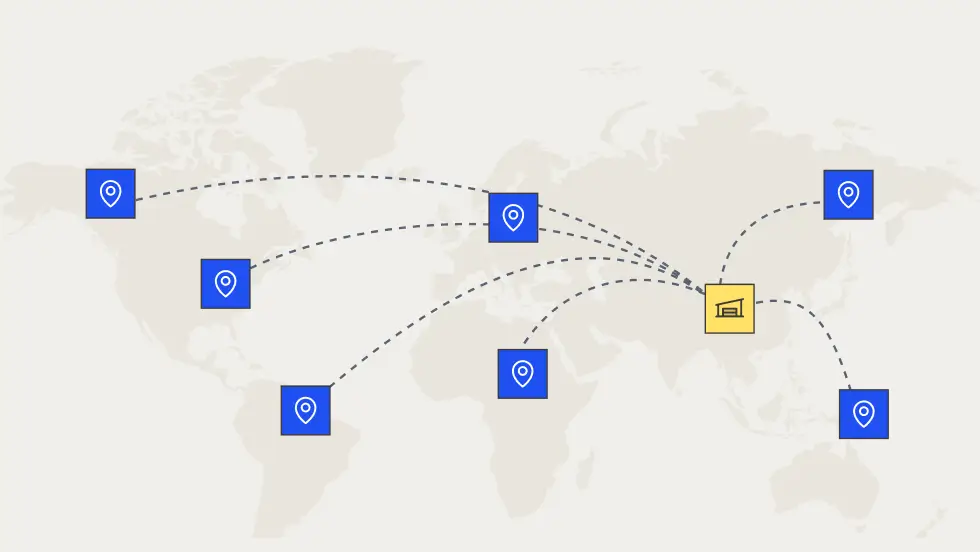
Portless operates both bonded and non-bonded fulfillment from China, depending on what makes financial sense for each brand. Roughly 90% of brands on the platform use non-bonded because the logistics savings exceed the duty cost for their product mix. The remaining 10% use bonded, typically for higher-COG products where the VAT savings outweigh the operational premium. If you're trying to figure out which model fits your brand, contact our team to run the numbers on your product mix and order volumes.
← Back to the Ecommerce supply chain glossary