Freight shipment
A freight shipment is any cargo moved in bulk by ocean, air, rail, or truck — typically over 150 pounds or palletized — under a commercial transportation contract. It's the standard mode for moving inventory between manufacturers, ports, warehouses, and distribution centers, distinct from parcel shipping, which handles smaller individual packages.
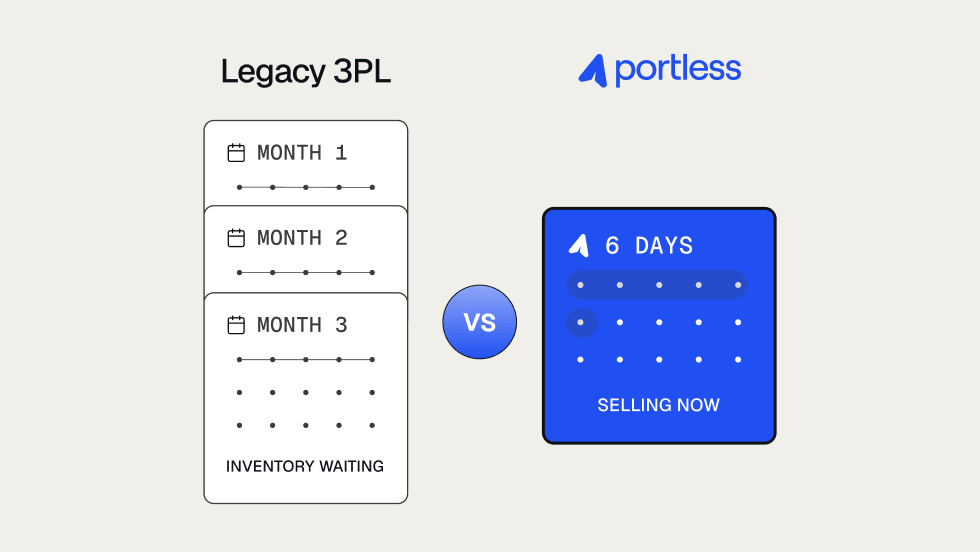
Freight shipment is the backbone of the legacy Ecommerce supply chain. If you manufacture in Asia and sell in the US, EU, or UK, every unit you've ever sold likely moved as freight at some point — usually on an ocean container that took four to six weeks to arrive. Freight is how bulk inventory gets from a factory to a 3PL warehouse, and it's also where most of the cash flow problems in DTC start: capital locked up in transit, duties paid upfront on goods that haven't sold, and forecasts made months before demand actually shows up.
This page covers what qualifies as a freight shipment, the modes available, how freight differs from parcel, and why the bulk freight model is increasingly the wrong default for lightweight, fast-moving Ecommerce SKUs.
What qualifies as a freight shipment
In US logistics, FedEx and most carriers classify anything over 150 pounds as freight. That's the practical line — below 150 pounds, you're typically shipping parcel through UPS, FedEx, USPS, or DHL. Above it, you're booking freight, which means pallets, crates, or containers moving under a different set of contracts, documentation, and pricing rules.
Freight shipments are usually:
- Palletized or containerized, not individually boxed for end consumers
- Documented with a bill of lading rather than a simple shipping label
- Priced by weight, dimensions, freight class, distance, and mode
- Subject to customs clearance when crossing borders
The distinction matters because freight and parcel operate on different cost structures, timelines, and risk profiles. A 200-pound apparel shipment moving LTL from Long Beach to a New Jersey 3PL is freight. The 1.2-pound parcel that ships from that 3PL to your customer in Brooklyn is not.
Modes of freight shipment
There are four primary modes of freight, each with different cost, speed, and capacity trade-offs.
Ocean freight
The cheapest mode per unit and the slowest. A 40-foot container from Shenzhen to Los Angeles takes roughly two to four weeks at sea, plus port dwell time, drayage, and inland transport. Ocean is the default for bulk inventory replenishment in legacy supply chains because the per-unit cost is hard to beat at scale. The downside: lead times of six to ten weeks from PO to warehouse-ready, and capital tied up the entire time.
Air freight
Faster and more expensive — typically two to seven days from origin to destination. Air freight makes sense when speed beats cost: launching a new SKU, replenishing a stockout, or moving high-margin, lightweight goods where the freight cost is a small percentage of retail price.
Trucking (FTL and LTL)
Full truckload (FTL) is when your goods fill an entire trailer — faster and more predictable. Less-than-truckload (LTL) is when your pallets share trailer space with other shippers' cargo — cheaper per pallet, slower due to consolidation stops. Both are domestic legs that happen after international freight clears customs.
Rail
Used for long-haul domestic moves, especially between US coasts. Slower than trucking but cheaper for heavy loads moving long distances. Less common in DTC supply chains than in industrial freight.
Freight shipment vs parcel shipment
The distinction shapes everything downstream — cost, speed, customs treatment, and how much inventory risk you absorb.
::table
Attribute;Freight shipment;Parcel shipment
Weight;150+ lbs, palletized;Under 150 lbs, individual boxes
Documentation;Bill of lading, commercial invoice, packing list;Shipping label, customs declaration
Pricing;Weight, freight class, dimensions, mode;Weight, dimensions, zone, service level
Speed;Days to weeks;Hours to days
Customs;Formal entry typical;Informal entry or de minimis possible
Cost per unit;Low at volume;Higher per package
:table
The legacy DTC playbook is: move inventory as freight to a domestic warehouse, then ship parcel to the end customer. Two transportation systems, two sets of costs, two sets of risks. The freight leg locks up cash for weeks or months. The parcel leg starts the moment a customer hits buy.
The hidden costs of bulk freight in DTC
The cost of a freight shipment isn't just the freight bill. The real cost shows up in the working capital math.
When you move inventory as bulk ocean freight, you're paying for:
- The freight itself
- Duties and taxes on the entire shipment at the port of entry
- Warehouse receiving, storage, and handling fees at the 3PL
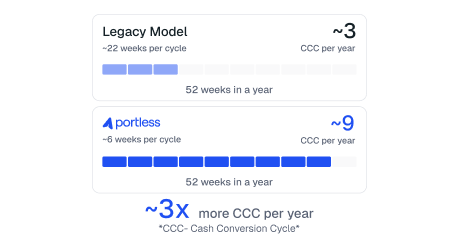
- The opportunity cost of capital tied up in inventory for six to ten weeks of transit plus however long it sits before selling
- The risk of forecast error — if demand for that SKU drops, you're sitting on dead stock you've already paid duties on
For a brand doing $5M in revenue with 90 days of inventory on the water and in warehouses, that's often $1M+ in working capital frozen at any given moment. McKinsey research and Ecommerce operator data both point to inventory as the single largest drag on DTC cash flow.
The bulk freight model also forces you to forecast demand months ahead of the selling window. Miss the forecast and you either stock out (lost revenue) or overstock (dead inventory you'll eventually liquidate at a loss).
How direct fulfillment changes the freight equation
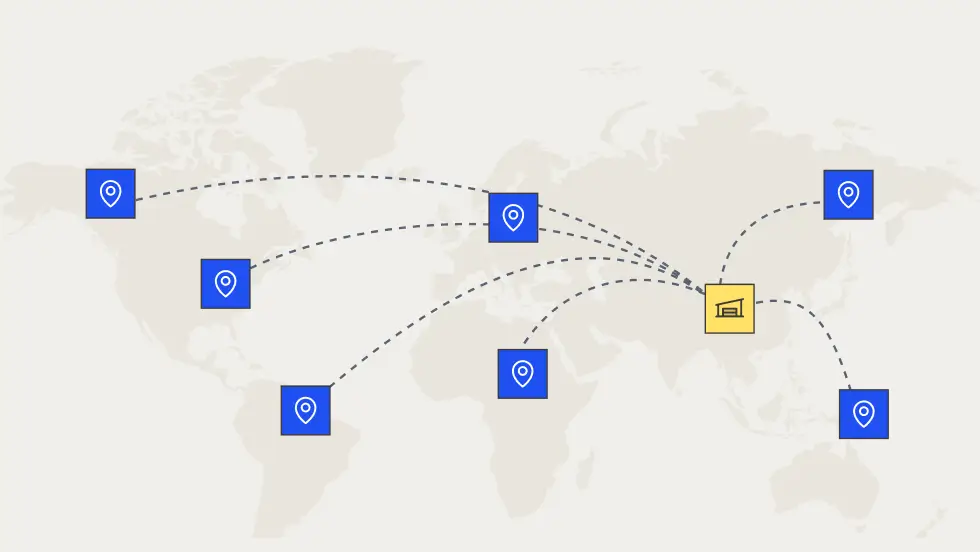
The premise of direct fulfillment is simple: skip the bulk ocean freight, skip the domestic warehouse, ship orders individually from the point of manufacture via air to the end customer. Direct fulfillment from China actually works by moving each parcel as soon as production completes, with a typical five to eight day delivery window from Asia to North America.
The freight implications:
- No 40-foot containers sitting on the water for weeks
- No upfront duties on full inventory loads — duties are paid per order as goods sell, not on the entire SKU run
- No warehouse storage fees on inventory that may not move
- Inventory available for sale 48 hours after production, not 60 days after
This model isn't right for every brand. If you sell heavy products, need same-day delivery, or run complex kitting operations, traditional freight plus a domestic 3PL still makes sense. But for lightweight DTC products — apparel, beauty, electronics, small home goods — the legacy bulk freight model is increasingly the wrong default.
Freight is not going away, but its role is changing for DTC brands
Freight shipment will always be part of global commerce. The question for DTC operators is whether moving inventory as bulk freight to a domestic warehouse — and tying up capital for months in the process — is still the right model for your business. At Portless, we ship orders directly from manufacturers in Asia to customers in 85+ countries, replacing the ocean-freight-plus-3PL model with parcel-level fulfillment that protects cash flow and shortens lead times by up to 90%.
If you want to see what that looks like for your SKUs, contact us.
← Back to the Ecommerce supply chain glossary