EXW (ex works)
EXW (Ex Works) is an Incoterm where the seller makes goods available at their own premises — usually the factory — and the buyer takes on all cost, risk, and responsibility from that point forward, including loading, export clearance, freight, and import duties. It's the most seller-favorable Incoterm and shifts maximum operational burden to the buyer.
EXW is one of 11 Incoterms published by the International Chamber of Commerce and the one that places the least responsibility on the seller. Under EXW, your supplier's obligation ends the moment goods are made available at their named location — typically the factory floor or warehouse. Everything after that, from loading the truck to clearing customs to handing the package to a customer in Toronto, is on you.
For DTC brands sourcing from Asia, EXW is common on factory quotes because it gives suppliers a clean exit point. But "common" doesn't mean "good for you." EXW pushes every downstream cost, every compliance obligation, and every risk of delay or damage onto the buyer — often before the buyer has the infrastructure to manage it.
What EXW actually means for the buyer
Under EXW, the buyer is responsible for:
- Arranging and paying for pickup at the seller's premises, including loading the goods onto the first truck
- Handling export clearance from the country of origin, including all documentation and licenses
- Paying for inland transport, international freight, and insurance
- Managing import clearance, duties, and taxes at the destination
- Delivering the goods to the final location, whether that's a warehouse or an end customer
The seller's only obligations are to make the goods available, packed appropriately, at the agreed location and time. They don't even have to load the truck unless you negotiate it explicitly. That's the gap that catches most first-time importers off guard.
Why factories quote in EXW
Factories prefer EXW because it limits their exposure. Once the goods leave the loading dock, they're done. No export paperwork to file, no freight forwarder to coordinate, no liability if a container gets stuck at port. For high-volume manufacturers in Asia handling hundreds of buyers, that simplicity matters.
You'll also see EXW quotes used as an anchor price. A factory quoting $4.80 EXW looks cheaper than a competitor quoting $5.20 FOB — until you add the ~$0.40 per unit it takes to handle export, drayage, and freight forwarding on your own. The real comparison is landed cost, not the line item on the proforma invoice.
EXW vs. FOB vs. DDP: the three terms that matter for DTC
Most Ecommerce brands sourcing from Asia will encounter three Incoterms repeatedly. Here's how they stack up:
::table
Term;Seller's responsibility ends at;Buyer handles
EXW (Ex Works);Seller's premises (factory door);Loading, export, freight, import, duties, delivery
FOB (Free on Board);Loaded onto vessel at port of origin;Ocean freight, import, duties, delivery
DDP (Delivered Duty Paid);Buyer's named destination;Nothing — seller handles everything
:table
EXW is maximum buyer responsibility. DDP is minimum. FOB sits in the middle and is the most common term used in container-based Ecommerce sourcing because it transfers risk at a clean, well-documented point (the vessel rail) and aligns with how freight forwarders are priced.
For more on how these terms compare in practice, see our breakdown of FOB shipping and DDP shipping.
The hidden costs of accepting EXW
On paper, EXW gives you maximum control. In practice, it dumps a stack of operational problems on a team that probably isn't set up to handle them. Common surprises include:
- Export clearance friction. In China, only the seller (or their authorized agent) can legally file export documentation and claim the 13% VAT rebate. If you take goods EXW, the factory loses the export rebate and may either refuse the term or add the 13% to your unit cost. Either way, you pay.
- Loading disputes. Technically, the seller doesn't have to load the truck under EXW. If your forwarder shows up and the factory's forklift is "unavailable," you're stuck. Most experienced suppliers will load anyway, but it's not contractually required.
- Origin handling fees. Drayage from factory to port, container fumigation, terminal handling charges, export documentation fees — all on the buyer.
- Insurance gaps. Risk transfers at the seller's premises, but most buyers don't arrange marine insurance until the goods are at port. That window is unprotected.
These costs and risks are why most experienced operators avoid EXW and push for FOB at a minimum.
How EXW affects your cash flow
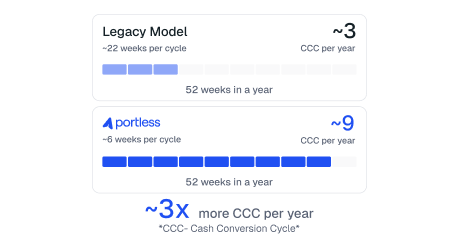
EXW lengthens your cash conversion cycle in two ways. First, you pay for the goods before they've moved an inch — typically a deposit at PO and the balance before pickup. Second, you absorb every downstream cost: freight, duties, warehousing, last-mile delivery. None of that capital comes back until the product sells.
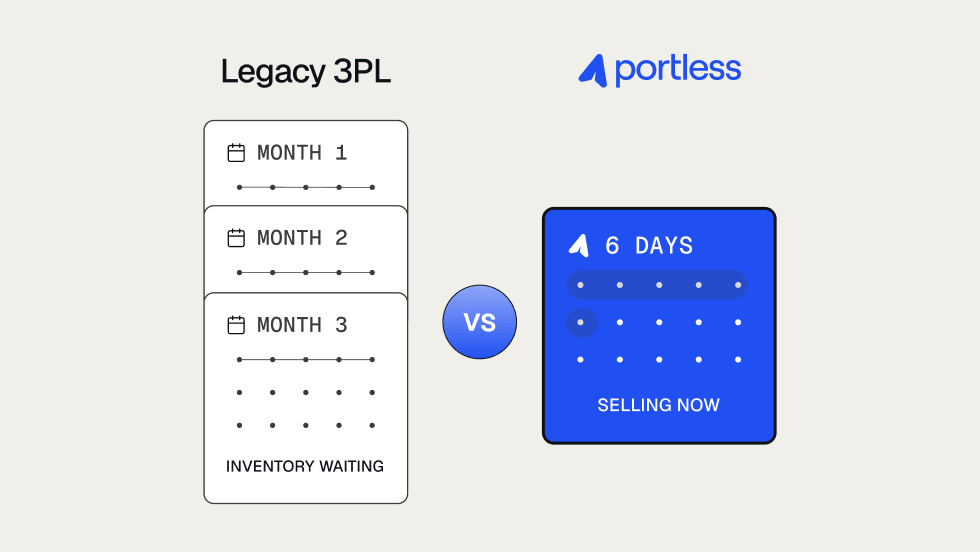
In the legacy model, this gets worse. You're not just funding one shipment — you're funding 60+ days of ocean transit, plus another 30-90 days of domestic warehousing, plus the duty payment on every unit whether it sells or not. Capital is tied up the entire time.
Direct fulfillment changes this equation. When orders ship from the manufacturer the day after production, capital comes back within days, not months. You pay duty per parcel as orders are placed, not on bulk inventory sitting in a warehouse. The Incoterm on your factory invoice still matters, but it stops being the dominant cost driver.
What to do if your factory only quotes EXW
If a supplier insists on EXW, you have three paths:
- Negotiate to FCA or FOB. Factories will often accept these terms, especially in China, because they preserve the export VAT rebate. FCA (Free Carrier) is functionally similar to EXW but shifts loading and export clearance to the seller.
- Use a partner who handles origin operations. A freight forwarder or direct fulfillment provider with on-the-ground presence in Asia can manage export clearance, drayage, and freight on your behalf — turning an EXW quote into a workable cost structure.
- Build origin infrastructure in-house. Realistic only at scale. Most brands under $50M find this isn't worth the overhead.
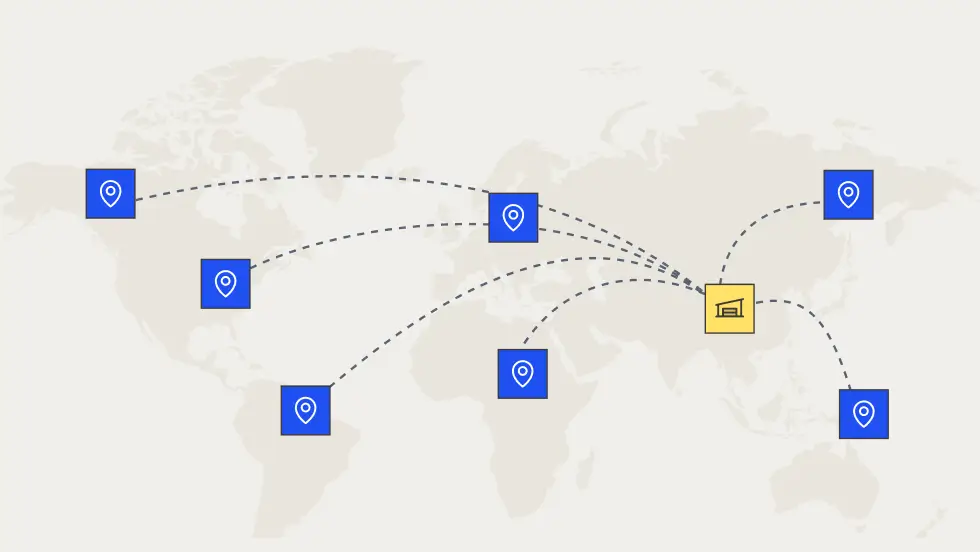
At Portless, we manage the entire origin leg — pickup from your manufacturer, export documentation, international air freight, customs clearance, and last-mile delivery to 85+ countries. So even if your factory only quotes EXW, you don't have to build that infrastructure yourself.
Skip the Incoterm headache with direct fulfillment
EXW puts you in charge of every step from the factory door to your customer's doorbell. That's fine if you've built the infrastructure to handle it. If you haven't, you're either overpaying a freight forwarder, absorbing risk you don't understand, or both. Portless handles the origin leg for you — pickup, export, freight, duties, and last-mile — so the Incoterm on your factory invoice becomes a footnote, not a bottleneck. Contact us to see how it works for your supply chain.
← Back to the Ecommerce supply chain glossary