EAS
EAS (Export Accompanying System) is the European Union's customs framework for tracking goods being exported from the EU, ensuring compliance with trade regulations, export controls, and tax obligations. It generates a document — the Export Accompanying Document (EAD) — that travels with the shipment from the customs office of export to the point of exit from the EU.
If you're an Ecommerce brand fulfilling orders out of the EU — whether from a warehouse in Germany, the Netherlands, or anywhere else in the bloc — every shipment leaving for a non-EU destination triggers an export declaration. EAS is the system that ties that declaration to the physical movement of goods. It exists to make sure what you said you were exporting actually leaves the EU, and that any applicable VAT zero-rating, export controls, or duty drawback claims hold up under audit.
For most DTC operators, EAS sits in the background of their carrier or customs broker's workflow. But when something breaks — a shipment gets held, a VAT refund gets denied, or an export declaration doesn't close out — you need to know what EAS is and what it requires.
What EAS actually does
EAS is part of the EU's broader Export Control System (ECS), now being migrated into the Automated Export System (AES) under the Union Customs Code. When you file an export declaration with EU customs, the system:
- Generates an Export Accompanying Document (EAD) with a unique Movement Reference Number (MRN)
- Tracks the shipment electronically from the customs office of export to the customs office of exit
- Confirms the goods physically left EU territory, closing the declaration
- Provides proof of export needed for VAT zero-rating and any duty drawback claims
The MRN on the EAD is what connects every party in the chain — exporter, carrier, customs at the border — to the same shipment record.
Why EAS matters for Ecommerce brands
Most DTC brands selling internationally from an EU base don't think about EAS directly. They should, for three reasons.
VAT recovery depends on it. Exports out of the EU are zero-rated for VAT, but only if you can prove the goods actually left. The EAD, once confirmed at the point of exit, is your audit-grade proof. Without it, tax authorities can reverse the zero-rating and bill you for VAT on shipments you already sold and shipped.
Customs holds reference it. If an EAD doesn't close out properly — say the carrier scans the shipment in but the exit confirmation never gets transmitted — the declaration stays open. That can trigger follow-up requests from customs months later, demanding proof the goods left.
It's about to change with the new EU Customs Reform. The EU is consolidating its customs systems into a single EU Customs Data Hub, fully operational by mid-2028. EAS and related export systems are being folded into this broader framework. Brands shipping at volume should expect more electronic data requirements and tighter validation.
How EAS interacts with the changing EU trade landscape
The EU is overhauling how it handles cross-border Ecommerce. The €150 de minimis exemption is being eliminated starting in 2026, meaning every parcel entering the EU will be subject to duties regardless of value. For brands shipping out of the EU, the export side is also tightening — more electronic data, more validation, fewer manual workarounds.
If your supply chain involves importing goods into an EU warehouse and then re-exporting some portion to customers in the UK, Switzerland, or elsewhere, you're touching EAS on the way out and potentially paying duties twice if you haven't structured the operation properly.
This is one of the structural reasons the legacy model — bulk import to an EU 3PL, then re-export to non-EU customers — has become expensive. You pay import duties on goods you'll ship back out, and you take on the EAS compliance burden on every outbound parcel.
EAS vs. other EU customs systems
A few related acronyms that operators often confuse:
- EAS (Export Accompanying System): Tracks goods leaving the EU
- ICS (Import Control System): Tracks goods entering the EU
- NCTS (New Computerised Transit System): Tracks goods moving through the EU under transit procedures
- AES (Automated Export System): The next-generation system replacing EAS under the Union Customs Code
All of these are being unified under the EU Customs Data Hub over the next several years.
Why direct fulfillment sidesteps the EAS bottleneck
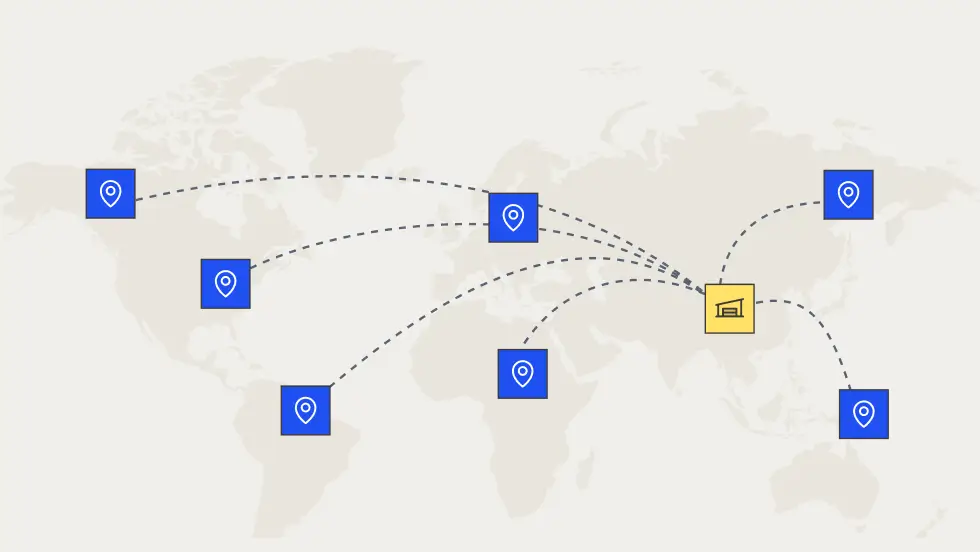
If you manufacture in Asia and your goods never enter the EU before being delivered to an EU customer, you're not generating EAS declarations at all — you're generating import declarations into the destination country.
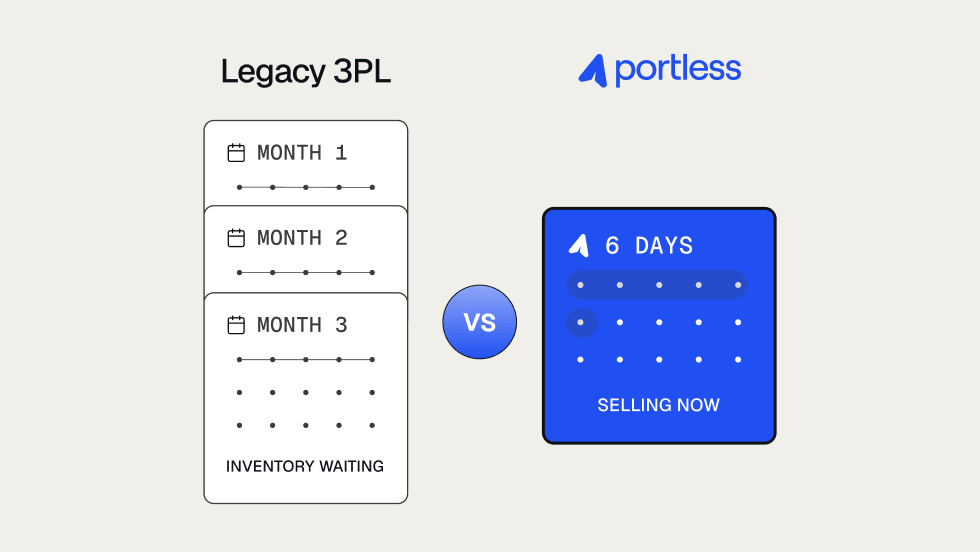
That's the structural shift Portless enables. Instead of bulk-importing into an EU warehouse, paying duties upfront, and then dealing with export compliance on any cross-border outbound shipments, your inventory stays at the manufacturer until an order is placed. The parcel ships direct to the customer, clears customs at the destination country with DDP shipping, and never touches EU export infrastructure. Fewer systems, fewer touch points, and no capital tied up in inventory sitting in a Rotterdam warehouse waiting to be re-exported.
For brands selling globally, that simplification compounds. You're not managing EAS on outbound EU shipments, ICS on inbound, and a separate customs workflow for every market. You're running one fulfillment model that handles compliance at the destination.
Build a supply chain that doesn't get stuck in EU export queues
EAS is one more piece of compliance infrastructure that the legacy model — bulk import to a domestic warehouse, then ship — forces you to manage. If your goods don't need to enter the EU in the first place to reach EU customers, you remove an entire layer of cost and complexity. Talk to our team to see what direct fulfillment from Asia looks like for your specific volume and markets.
← Back to the Ecommerce supply chain glossary