Last updated: May 2026
Cargo shipping moves the world's goods, and quietly produces a carbon footprint that rivals entire industrialized nations. For Ecommerce and DTC brands trying to build sustainable Ecommerce shipping into their operations, the question isn't whether ocean freight is a problem. It's whether the legacy model of bulk freight plus domestic 3PL is the only way to deliver internationally. It isn't.
The hidden emissions: cargo shipping's carbon footprint
How much carbon does ocean freight produce?
Maritime shipping produces roughly 3% of global greenhouse gas emissions — about 1 billion tonnes of CO2 equivalent every year, according to the International Maritime Organization's Fourth GHG Study. That's more than the entire country of Germany emits annually. The UNCTAD Review of Maritime Transport confirms that over 80% of global merchandise trade by volume moves by sea.
For DTC brands, the emissions footprint doesn't stop at the port. Every container offloaded in Long Beach or Newark triggers a chain of follow-on activity: drayage to a domestic 3PL, repackaging, transfer to a regional distribution center, and last-mile delivery. Each leg adds fuel, handling, and packaging waste. It also compounds with rising container shipping costs that have made the bulk-freight model harder to defend on cost or carbon.
The legacy model assumes you need all of those steps. Direct fulfillment proves you don't.
Striving for sustainability: Ecommerce's responsibility
As the call for a sustainable world resonates louder, the onus falls on Ecommerce and DTC brands to make mindful choices. The question isn't just about the products you offer but also about the path they take to reach consumers. Sustainable logistics starts with how, and from where, goods move.
Cargo shipping vs. direct fulfillment from China and Vietnam
Let's break down a head-to-head comparison, pitting the environmental impacts of cargo shipping against direct fulfillment from China and Vietnam.
Cargo shipping: environmental challenges
Three environmental costs hidden inside legacy ocean freight
The carbon emissions are the headline. The waste is what compounds underneath.
- Overstock and write-offs. Bulk freight forces brands to forecast demand six to nine months out. Industry research shows global retailers carry roughly $1.77 in inventory for every $1 in sales, per the US Census Bureau. Unsold units get liquidated, donated, or sent to landfill.
- Multi-leg transport. A container moves through port, drayage, warehouse, distribution center, and last-mile carrier before reaching the customer. Each handoff burns fuel and adds emissions that don't show up on the bill of lading.
- Protective packaging. Long transit windows and multiple handling points force brands to over-pack. The EPA reports that containers and packaging generate more than 82 million tons of waste annually in the US alone.
None of this is a function of selling online. It's a function of the legacy supply chain itself.
Direct fulfillment from China and Vietnam: the sustainable solution
How direct fulfillment from China and Vietnam lowers emissions
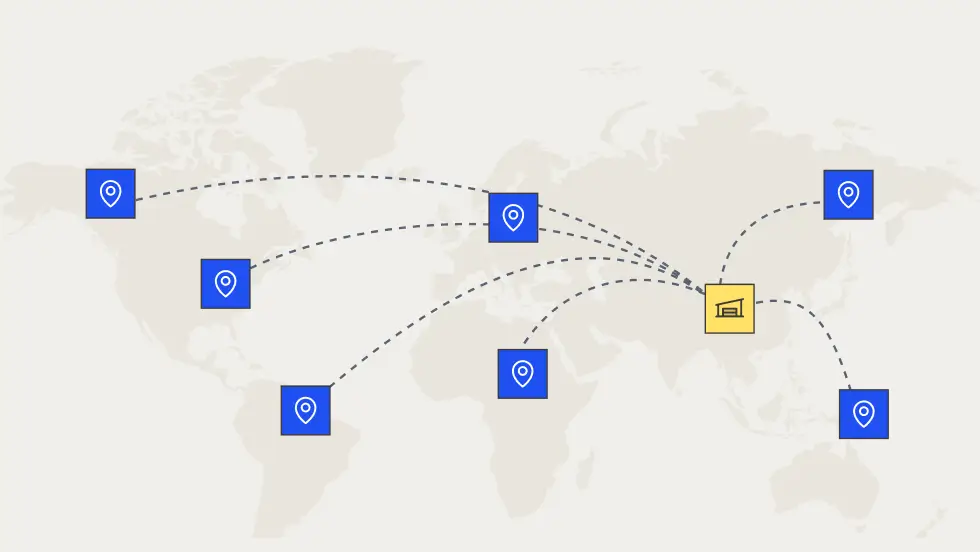
Direct fulfillment removes the warehouse, the bulk container, and the repackaging step in one move. Factories in China or Vietnam produce, pack, and ship products individually from a fulfillment center adjacent to your factory, straight to your customer in any of 75+ destination countries. This is the operational core of the DTC shipping revolution.
The mechanics, and what they cut:
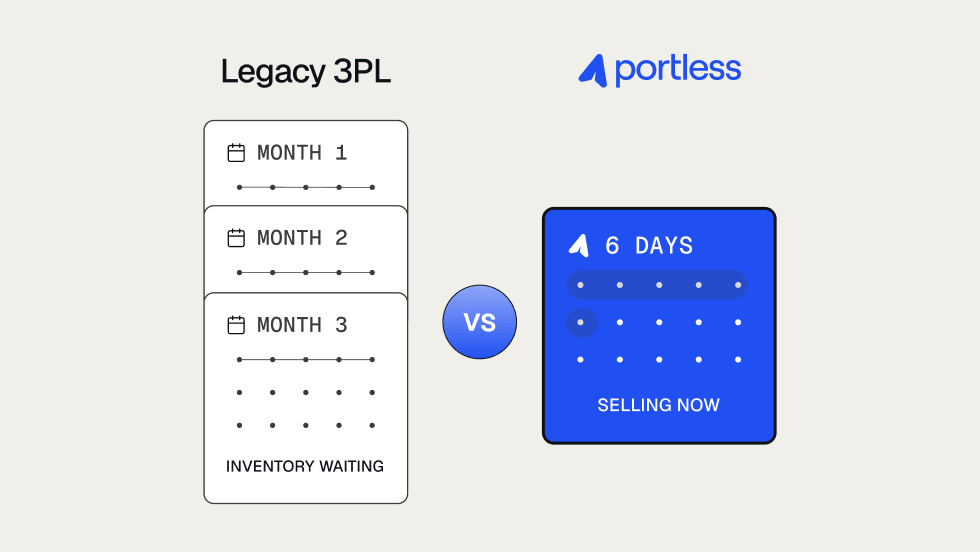
- Production-aligned inventory. You order what you sell. No nine-month forecasts, no overstock write-offs, no liquidation pallets. Cash stays in the business.
- Fewer touchpoints. The path goes from factory to fulfillment center to customer. That's three steps instead of seven. McKinsey estimates supply chains account for over 60% of global emissions, and every removed handoff cuts that footprint.
- Right-sized packaging at origin. Each order is packed once, in one controlled environment. No repacking at a domestic 3PL. No oversized boxes built for handling tolerance.
- Air freight on a per-order basis, not per-pallet. For lightweight DTC products under 3.5 lbs, individual air shipments produce less total waste than ocean freight plus domestic distribution, because there's no inventory buildup driving overproduction.
Direct fulfillment is not a "China 3PL." It's a different operating model: factory-adjacent fulfillment, just-in-time, and built for brands that sell internationally without warehousing internationally.
A greener tomorrow: Portless as the solution
The path to sustainability doesn't always require an overhaul. Portless bypasses the pitfalls of cargo shipping with direct fulfillment from origin. Low factory MOQs, factory-adjacent fulfillment centers, and per-order shipping replace the warehouse-and-bulk-freight cycle that drives most of the emissions waste in Ecommerce logistics today.
Cuddle Clones, a Kentucky-based DTC brand, fulfills custom orders directly from factory to door through Portless, eliminating warehouse stops and cutting emissions while delivering globally within days. See how leading brands operationalize sustainable logistics.
The supply chain is the sustainability lever
The choice isn't binary; it's structural. Ecommerce and DTC brands cut more carbon by changing how goods move than by changing the product or the packaging. For the operational playbook, review these seven sustainable logistics practices, then map your supply chain to a direct fulfillment model by talking to our team.
FAQ
Is China-based 3PL fulfillment better for the environment than cargo shipping?
Direct fulfillment from China is more carbon-efficient than legacy ocean freight plus domestic 3PL. By skipping bulk container shipping, port handling, and multiple warehouse transfers, brands cut up to 40% of logistics-related emissions, according to McKinsey.
How does direct fulfillment from China compare to a US warehouse?
A US warehouse forces you to bulk-ship inventory months before demand, tying up cash and creating dead stock. Direct fulfillment ships individual orders from origin only after the customer buys, eliminating overstock waste and reducing per-order emissions.
What are the pros and cons of China-based 3PL providers?
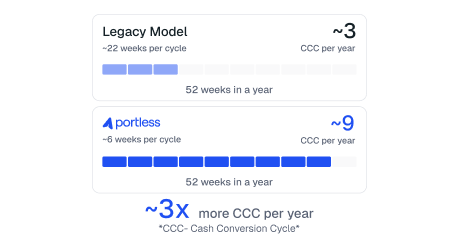
Pros: lower inventory risk, faster cash conversion, fewer fulfillment legs, and reduced packaging waste. Cons: delivery windows are five to eight days instead of two, and air freight has higher per-kg emissions than ocean freight — though fewer total touchpoints offset this for lightweight DTC products.
How does direct fulfillment reduce shipping costs for Ecommerce?
Direct fulfillment removes the bulk freight, customs brokerage, domestic 3PL receiving, and storage costs that compound under the legacy model. Brands save 10–15% on transportation alone, per the World Economic Forum, and avoid carrying costs on stranded inventory.
Can smaller DTC brands use direct fulfillment from China?
Yes. Direct fulfillment is structurally accessible to brands doing 1,000+ orders per month. Low factory MOQs and pay-as-you-ship pricing remove the capital lock-up that historically forced smaller brands into bulk freight cycles.






.jpeg)

.jpg)
.jpg)
%20(1).jpg)