Air injection
Air injection is a cross-border fulfillment model where goods are flown from an origin country (typically China) and handed directly to a domestic carrier in the destination country for last-mile delivery, bypassing traditional ocean freight, bulk warehousing, and freight forwarding steps.
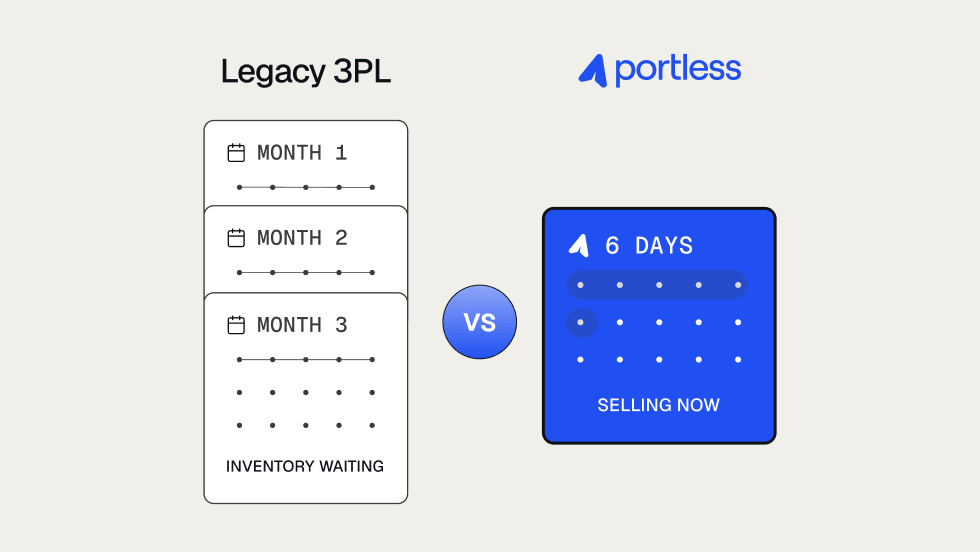
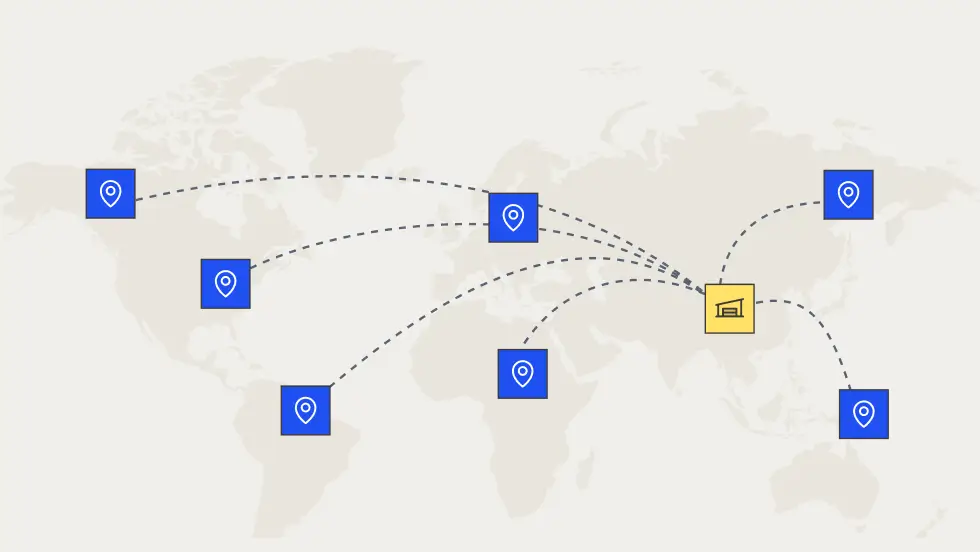
In Ecommerce logistics, air injection refers to the practice of moving finished goods by air freight from a manufacturing origin and "injecting" them into a domestic carrier's network close to the end customer. Instead of consolidating bulk shipments at a port, clearing them through customs as freight, and then routing them through a 3PL warehouse, individual parcels (or palletized parcel batches) move by air, clear customs as Ecommerce shipments, and are handed off to USPS, Royal Mail, Canada Post, or another national carrier for final delivery. The result is a delivery window in the range of five to eight days for most destinations — without the 30 to 60 days of ocean transit and domestic warehouse dwell time that the legacy model requires.
The term itself is borrowed from logistics: a carrier "injects" a parcel into the postal network at a specific sortation facility, skipping earlier steps in the carrier's own pipeline. Air injection extends that idea internationally. The flight does the long haul. The domestic carrier does what it already does best.
How air injection works
The mechanics are straightforward when you strip out the legacy steps:
- Orders are picked, packed, and labeled at a facility near the manufacturer in China
- Parcels are consolidated onto a daily or near-daily flight to the destination country
- On arrival, parcels clear customs as individual Ecommerce shipments (often under simplified entry types)
- Parcels are sorted and injected into the domestic carrier's network at a sortation hub
- The domestic carrier handles last mile delivery to the customer's door
The brand never touches a domestic warehouse. There's no bulk receipt, no pick and pack cycle on domestic soil, and no inter-facility transfers. The order moves once — from the production country directly into the destination carrier's network.
Why air injection beats the legacy model
The legacy DTC supply chain is built around a flawed assumption: that you need to forecast demand months in advance, buy bulk inventory, ship it by ocean, pay duties on all of it upfront, and store it domestically until customers order. That model locks up cash in unsold stock, extends lead times to 60+ days, and forces brands to absorb tariff costs on inventory that may never sell.
Air injection inverts the model:
- Inventory becomes sellable days after production, not weeks or months
- You pay duties only on units actually sold, not on bulk shipments sitting in a warehouse
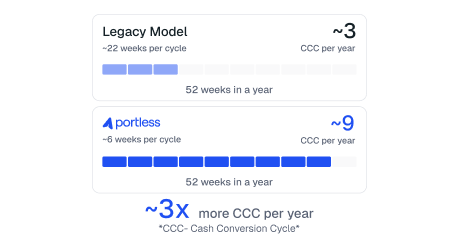
- Cash conversion cycles shrink — sometimes to near zero, as Foreign Resource demonstrated when they cut their manufacturing-to-shipping window from 21+ days to two
- Smaller, more frequent production runs replace large speculative bets
- International expansion no longer requires a warehouse in every market
Shein and Temu built their entire models on air injection at scale. That's how a $15 dress ships from Guangzhou to Atlanta in under a week without a US warehouse in between.
Air injection vs. traditional sea freight
The comparison comes down to four variables: speed, cash flow, duty exposure, and inventory risk.
::table
Variable;Legacy sea freight;Air injection
Time from production to customer;45–90 days;5–8 days
Duties paid on;Bulk inventory at import;Per unit, as sold
Warehouse footprint;Required in each market;None needed
Minimum viable order size;Container or pallet;Single parcel
Cash tied up in inventory;Months;Days
:table
Sea freight still has a role for low-margin, high-volume, slow-moving SKUs where time isn't a factor. For most DTC brands shipping products under 3.5 lbs, the math works in air injection's favor — especially once you factor in carrying cost, tariff exposure on unsold stock, and the decision latency that comes with bulk inventory planning.
What air injection requires
Not every brand or product is a fit. Air injection works best when:
- Products are lightweight (typically under 3.5 lbs per unit)
- Manufacturing is in China, where air freight infrastructure is dense
- Order volumes justify daily or near-daily flight consolidation
- Margins can absorb air freight rates (which are higher per kilogram than ocean, but offset by lower carrying costs and duty deferral)
- Customer expectations allow for five to eight day delivery
It also requires customs and compliance infrastructure on the receiving end. Each parcel needs proper HS code classification, accurate transaction value declaration, and — for brands using a DDP model — duties prepaid so customers aren't hit with a bill at the door.
Common misconceptions about air injection
"Air injection means dropshipping." It doesn't. Dropshipping is a fulfillment relationship where the brand has no control over inventory, packaging, or quality. Air injection ships from a brand's own dedicated production and fulfillment setup, under the brand's packaging, branding, and quality standards. The infrastructure is different. The customer experience is different.
"Air injection is too expensive." Per-kilogram, air freight costs more than ocean. But the legacy model's hidden costs — warehouse rent, duties on unsold inventory, dead stock writedowns, expedited freight when forecasts miss — usually exceed the air premium for lightweight DTC products. Run the math on landed cost before assuming.
"Customers won't wait five to eight days." Shein, Temu, and a wave of US-based DTC brands have demonstrated otherwise. With proactive tracking and clear delivery expectations set at checkout, conversion holds. What customers actually hate is uncertainty, not duration.
How Portless uses air injection to replace your 3PL
Portless operates the air injection model at scale for DTC brands manufacturing in Asia. Orders are fulfilled within one to two days of being placed at our facility near your manufacturer, consolidated onto daily flights, and injected into domestic carrier networks across 75+ countries. Duties are handled via DDP, so customers never get a surprise bill. The result: inventory that's sellable days after production, no domestic warehouse overhead, and cash flow that compounds instead of stalls.
If you're running bulk ocean freight and wondering whether the model still makes sense for your brand, contact us to run the numbers on your specific product mix.
← Back to the Ecommerce supply chain glossary