Delivered duty unpaid (DDU)
Delivered duty unpaid (DDU) is a shipping arrangement where the seller covers transport to the buyer's country, but the buyer pays all import duties, taxes, and customs clearance fees on arrival. It's an older Incoterm officially replaced by DAP (Delivered at Place) in the 2010 update, though the term is still widely used in cross-border Ecommerce.
DDU shifts the duty burden from the seller to the buyer at the destination. The seller pays for everything up to the point of delivery in the buyer's country — freight, insurance, and export clearance — but stops short of paying import duties or value-added tax (VAT). The customer is then contacted by the carrier or customs authority and asked to pay before the package is released.
For a DTC brand, that moment is where the model breaks. The customer who bought a $60 product at checkout now sees a $15 customs bill at the door. Refusals go up. Support tickets go up. Repeat purchase rate goes down. DDU might look cheaper on paper because you're not pre-paying duty, but the downstream cost on the customer experience is significant.
It's worth noting that DDU is technically obsolete. The International Chamber of Commerce retired it in Incoterms 2010 and replaced it with DAP. But the term is still used in shipping contracts, carrier systems, and merchant conversations, so you need to know what it means and what it costs.
How DDU works in practice
Under a DDU arrangement, the seller is responsible for:
- Export packaging and documentation
- Freight from origin to the named destination
- Export clearance in the country of origin
- Insurance during transit (if agreed)
The buyer is responsible for:
- Import duties and taxes (including VAT)
- Customs clearance fees in the destination country
- Any storage or demurrage charges if clearance is delayed
- The administrative work of paying customs before the carrier releases the package
In most cases, the carrier acts as the middleman. They contact the buyer, collect the duty and any brokerage fees, and only then complete delivery. That handoff is where the friction lives.
Why DDU damages DTC conversion and retention
DDU creates a gap between the price your customer agreed to pay and the price they actually pay. That gap is the single biggest driver of cart abandonment, refused deliveries, and chargebacks in cross-border Ecommerce.
According to the Baymard Institute's 2025 checkout abandonment research, 39% of US shoppers abandon checkout because of extra costs like shipping, taxes, and duties — and 14% abandon when they can't see the total order cost upfront. Both of those failure modes are baked into the DDU experience. The customer doesn't know what they'll owe until the package is at the border.
The downstream costs:
- Refused deliveries when customers reject the duty bill
- Return shipping costs back to origin
- Negative reviews tied to "hidden fees"
- Higher WISMO ticket volume from confused customers
- Lower repeat purchase rates
If you're building a brand that competes on customer experience, DDU works against you on every front.
DDU vs DDP: the real trade-off
The alternative is Delivered Duty Paid (DDP), where the seller pays all duties and taxes upfront and the customer receives the package with no surprise charges.
::table
Factor;DDU;DDP
Who pays duty;Buyer, on arrival;Seller, upfront
Customer experience;Surprise bill at the door;Total cost shown at checkout
Refusal risk;High;Low
Support burden;High;Low
Seller cash outlay;Lower at shipment;Higher at shipment
Checkout transparency;Poor;Full landed cost displayed
:table
DDP costs more upfront because you're paying duty before the customer pays you. But you protect conversion, you eliminate refusals, and you turn cross-border into a domestic-feeling experience. For a deeper breakdown of how to calculate the cost difference, use the landed cost calculator.
Why DDU is technically replaced by DAP
The Incoterms 2010 update consolidated DDU into Delivered at Place (DAP). The mechanics are nearly identical: the seller delivers the goods to a named place in the buyer's country, and the buyer handles import clearance and duties. The current standard is DAP under Incoterms 2020, but DDU persists in everyday usage because:
- Legacy contracts and shipping platforms still reference it
- Carriers and brokers continue to use the term operationally
- The concept is well understood across the industry
If you see DDU in a contract today, treat it as functionally equivalent to DAP — but verify the duty-payment terms explicitly, because ambiguity around who pays what is exactly what creates problems at the border.
When DDU might still make sense
There are narrow cases where DDU is defensible:
- B2B shipments where the buyer has an established customs broker and prefers to manage their own duty payments
- Markets where the buyer can reclaim VAT and wants documentation in their own name
- Wholesale transactions where the importer of record is the buyer by design
For DTC Ecommerce, those cases are rare. If you're shipping to individual consumers, DDU almost always costs more than it saves once you account for refusals, returns, and lost repeat purchases.
How Portless replaces DDU friction with a DDP model
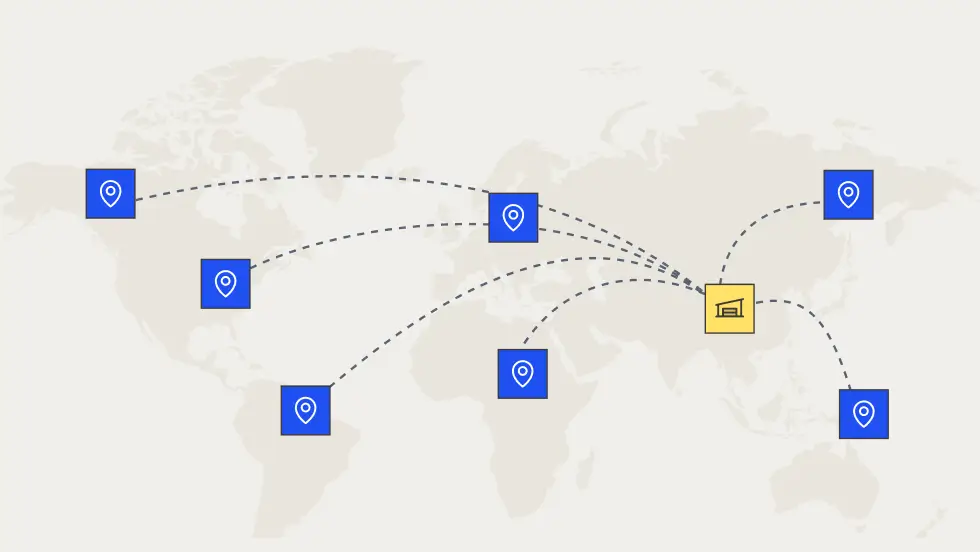
Portless ships directly from manufacturers in Asia to customers in 85+ countries using a DDP model. Duties are calculated, paid, and reflected at checkout — so your customer sees the total cost upfront and the package arrives at their door with no surprise bill. You get the cash flow benefit of paying duty per order (only on what actually sells), and your customer gets a domestic-feeling experience. Contact us to see how the model works for your brand.
← Back to the Ecommerce supply chain glossary