Dropshipping
Dropshipping is a retail fulfillment model where a seller takes customer orders but doesn't hold inventory. Instead, a third-party supplier ships products directly to the customer on the seller's behalf.
You've probably seen the pitch: launch a store, list products you've never touched, and let a supplier handle the rest. That's dropshipping in its simplest form. The seller markets and sells. The supplier stores, picks, packs, and ships. The seller never holds inventory, never rents a warehouse, and never sees the product before it arrives at the customer's door.
For founders testing an idea with no capital, that model has obvious appeal. But for any Ecommerce brand serious about building margin, customer experience, and a defensible business, dropshipping has structural limits. Understanding what it is — and what it isn't — matters before you decide how your supply chain should actually work.
How dropshipping works
The mechanics are straightforward. You never see, touch, or pay for inventory until a sale happens. There's no minimum order quantity, no warehousing cost, and no upfront capital tied up in stock. That's the appeal.
Most modern dropshipping setups run on platforms like Shopify connected to supplier marketplaces (AliExpress, CJdropshipping, Spocket) or print-on-demand services.
Where dropshipping breaks down
The trade-off is control. When the supplier owns the product, the packaging, and the shipping experience, you don't. That creates four problems serious brands run into fast.
Margins are thin. Dropshipping suppliers price for the model — wholesale rates aren't deeply discounted, and you're competing with thousands of sellers listing the same SKUs from the same suppliers. Net margins of 10–20% are common, and ad costs eat into that quickly.
Shipping times are long and inconsistent. Most dropshipping suppliers ship from China via the cheapest available method. Delivery windows of two to four weeks are normal. By contrast, direct fulfillment from manufacturers using air freight typically delivers in five to eight days.
Quality is opaque. You don't see what ships. If the product is damaged, mislabeled, or off-spec, you find out when the customer complains. There's no QC layer between supplier and buyer.
Branding is generic. Standard dropshipping ships in plain poly mailers with no branded inserts, no custom packaging, no thank-you cards. The unboxing experience belongs to the supplier, not you.
Dropshipping vs direct fulfillment
These two models get confused because both ship from the country of manufacture. They're not the same thing.
::table
Factor;Dropshipping;Direct fulfillment
Inventory ownership;Supplier;Brand
Product selection;Supplier's catalog;Brand's own SKUs
Branding;Generic;Fully branded
Quality control;None;Brand-controlled
Shipping speed;2–4 weeks typical;Five to eight days
Margins;Thin (10–20%);Comparable to domestic 3PL
Scale ceiling;Low;High
:table
Dropshipping is a model for testing products you don't own. Direct fulfillment is infrastructure for shipping products you do own — manufactured to your spec, branded as yours, shipped to your customer in days, not weeks. Brands like Shein and Temu built their growth on the second model, not the first.
When dropshipping makes sense
You're not wrong to use dropshipping in specific situations:
What dropshipping doesn't do well: scale a brand. Once you're past validation and want margin, speed, and a customer experience that drives repeat purchases, you need to own the product and the fulfillment path.
Why dropshipping isn't a long-term supply chain
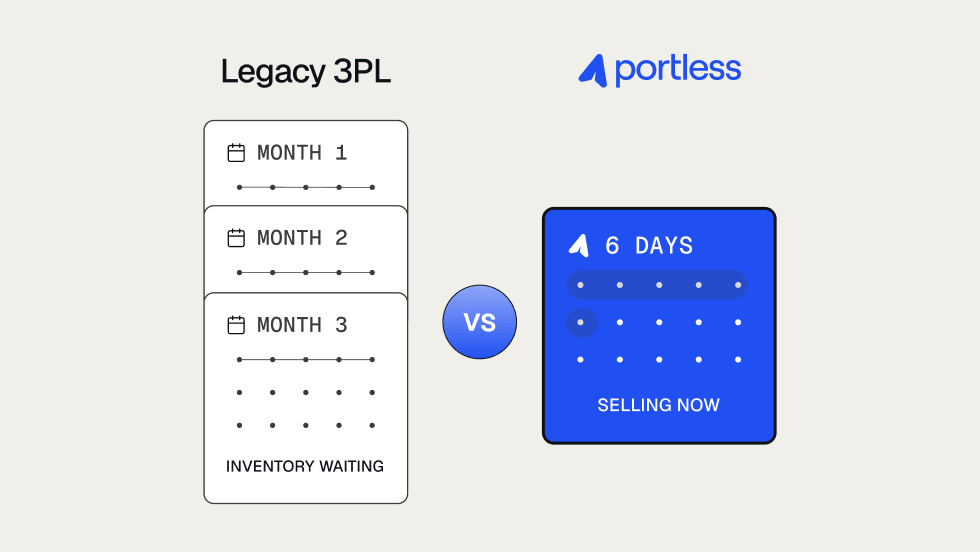
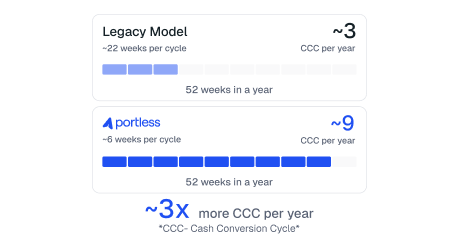
The legacy alternative — bulk ocean freight to a domestic 3PL — solves the branding and quality problem but creates new ones: 45 to 60 days of ocean transit, cash locked in unsold inventory, and upfront duties paid before a single unit sells. That's why a growing number of DTC brands are skipping both models.
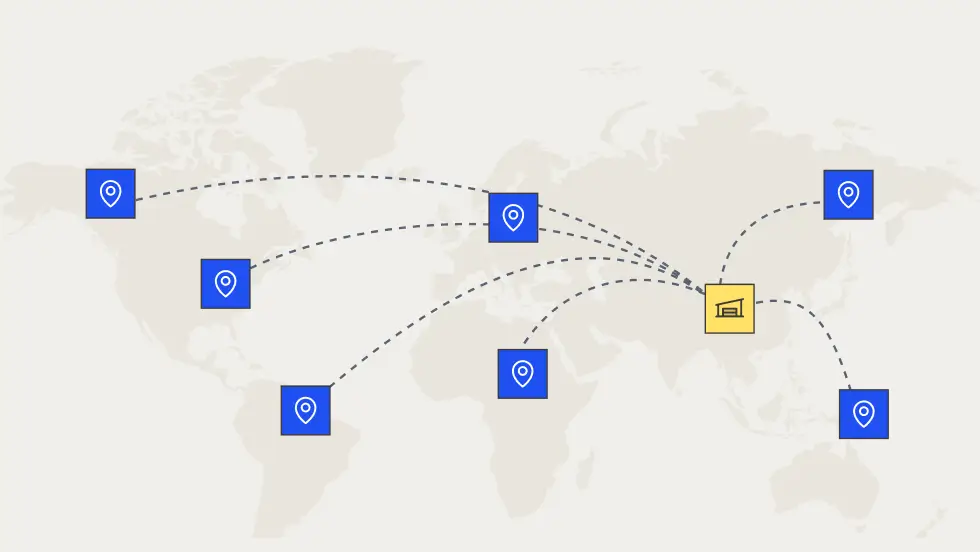
Portless ships your branded inventory directly from your manufacturer in Asia to customers in 85+ countries in five to eight days. You own the product. You control the packaging. You make inventory available for sale days after production, not months after a container clears port. Duties are handled via DDP so there are no surprises at the customer's door.
If dropshipping is the floor, direct fulfillment is the ceiling — without the warehousing overhead in between. Contact us to see how it works for your brand.
← Back to the Ecommerce supply chain glossary