Fulfilled by Amazon (FBA)
Fulfilled by Amazon (FBA) is Amazon's outsourced fulfillment program for third-party sellers. You send your inventory into Amazon's fulfillment network, and Amazon takes over the physical and operational side of every order: storage, pick and pack, shipping, customer service, and returns processing. In exchange, your listings become Prime-eligible, which historically correlates with higher conversion rates on the marketplace.
For a DTC brand selling on Amazon, FBA is the path of least resistance. You don't run a warehouse, you don't negotiate carrier rates, and you don't handle WISMO ("where is my order?") tickets. But the convenience comes with fees, inventory commitments, and structural trade-offs that are worth understanding before you commit your working capital to Amazon's system.
How Fulfilled by Amazon (FBA) works
The mechanics are straightforward. You manufacture your product, ship bulk inventory into one or more Amazon fulfillment centers, and Amazon distributes that stock across its network based on its own forecasts. When a customer places an order, Amazon picks, packs, and ships it under the Prime delivery promise.
The workflow looks like this:
You pay for the service through a combination of per-unit fulfillment fees, monthly storage fees, and a long list of ancillary charges (inbound placement, removal, disposal, aged inventory surcharges, low-inventory-level fees, and others).
FBA fees and what they actually cost
Amazon's FBA fee structure is granular. Fulfillment fees are tiered by size and weight, and storage fees vary by season — Q4 storage costs more than double the rest of the year. For brands selling lightweight apparel, beauty, or accessories under 3.5 lbs, per-unit fulfillment fees typically range from $3.65 to $7+ depending on dimensions.
The fees that catch brands off guard tend to be the secondary ones:
Add those up, and the true cost of FBA is often 25–40% of the unit's retail price by the time it reaches the customer.
FBA vs. FBM (Fulfilled by Merchant)
The alternative inside Amazon's ecosystem is Fulfilled by Merchant (FBM), where you list on Amazon but ship orders yourself from your own warehouse or 3PL. FBM gives you more control over inventory, packaging, and margins, but you lose automatic Prime eligibility unless you qualify for Seller Fulfilled Prime — a program with strict performance requirements.
::table
Factor;FBA;FBM
Who ships the order;Amazon;You or your 3PL
Prime badge;Automatic;Only via Seller Fulfilled Prime
Storage cost;Amazon's fees;Your warehouse or 3PL
Customer service;Amazon;You
Inventory control;Limited;Full
Working capital;Higher (bulk commitment);Variable
:table
FBA wins on convenience and Prime conversion. FBM wins on margin, control, and flexibility — especially for brands with their own DTC infrastructure that can multipurpose inventory across channels.
Where FBA breaks for DTC brands
FBA is purpose-built for one channel: Amazon. If your business is 100% Amazon, FBA is hard to argue against. The friction shows up when you're running a multi-channel DTC operation with a Shopify store, international markets, and a manufacturing base in Asia.
The structural problems with relying on FBA as your primary fulfillment engine:
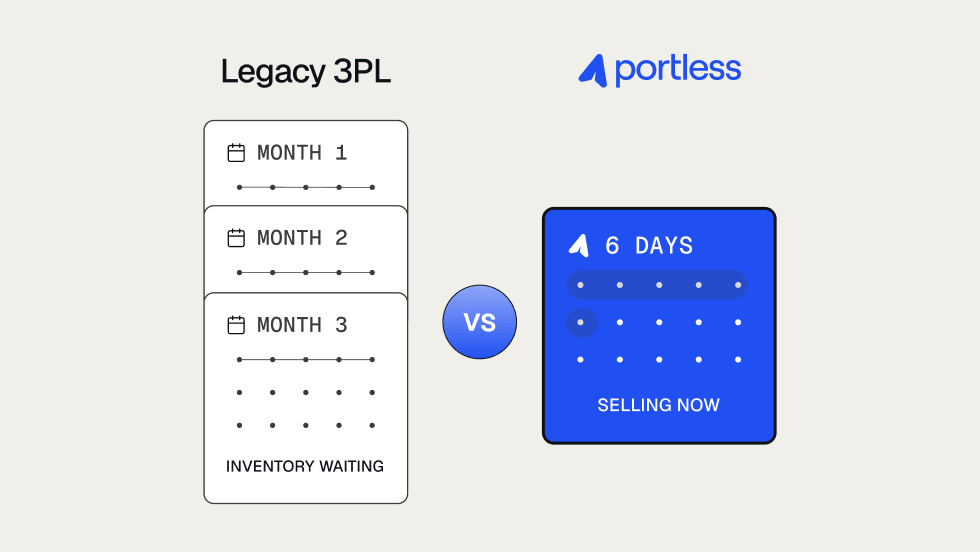
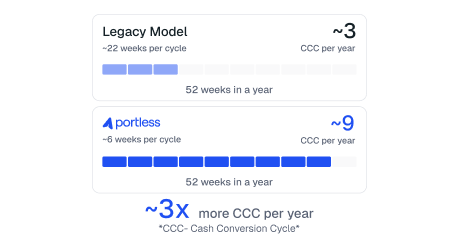
This is the same problem brands hit with legacy 3PLs more broadly: capital tied up in inventory that's parked in domestic warehouses, betting on forecasts made months before real demand data is available. See our breakdown of Ecommerce fulfillment risk for how heavy inventory decisions compound at scale.
How direct fulfillment changes the equation
The Amazon ecosystem isn't going anywhere. For brands where Amazon is the dominant channel, FBA is still the right answer. But for DTC brands selling primarily through Shopify, owned channels, and international markets, the FBA model isn't built for how you actually operate.
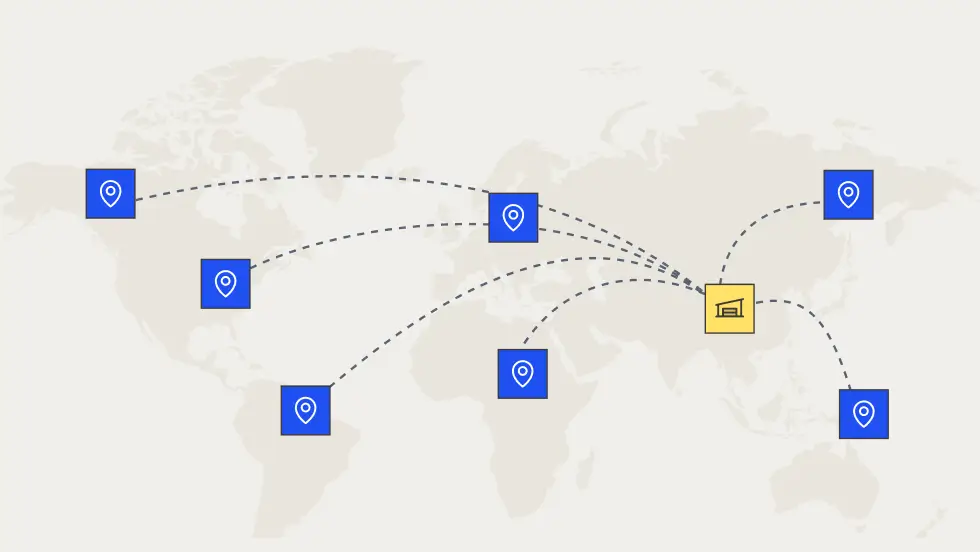
Direct fulfillment from the point of manufacture solves the structural issues: inventory stays upstream near the factory, ships to customers globally only when orders come in, and isn't trapped inside a single channel's warehouse network. Brands like Shein and Temu built their entire model on this principle. The same approach is now available to independent DTC brands without the scale of a marketplace giant.
Our direct fulfillment 101 guide walks through how factory-to-customer fulfillment works, and our breakdown of how Quince uses direct fulfillment shows what it looks like in practice at scale.
Build a fulfillment stack that doesn't trap your inventory in one channel
FBA solves Amazon. It doesn't solve your supply chain. If you're running a DTC brand that manufactures in Asia and sells across Shopify, Amazon, TikTok Shop, and international markets, you need a fulfillment model that keeps inventory liquid across channels — not locked inside Amazon's network. Portless ships directly from your manufacturer to customers in 85+ countries in five to eight days, with no domestic warehousing required. Contact us to see how direct fulfillment fits alongside your FBA channel.
← Back to the Ecommerce supply chain glossary