"We generated $70K in package protection revenue in a single quarter by adding a simple $4 protection option at checkout — plus an additional $12K from cashbacks. Customers get peace of mind, and we're making a profit on every protected order with zero effort."
"We generated $70K in package protection revenue in a single quarter by adding a simple $4 protection option at checkout — plus an additional $12K from cashbacks. Customers get peace of mind, and we're making a profit on every protected order with zero effort."
Quality takes time, the internet rewards speed. For a premium brand, that's a real challenge. Fast fashion floods every category with cheap copies, and when a product goes viral, demand can arrive months before a hand-made run is finished. Plenty of quality brands either burn out chasing that pace or drown in inventory trying to get ahead of it.
But you don't have to trade craftsmanship for speed. The right operating model lets a slow-made brand move fast where it counts. Pre-orders protect your cash, small batches keep risk low, the right factory protects your quality, and fulfillment close to production gets the product to the customer in days.
Quality is the moat the internet can't copy
It has never been easier to start a brand or to make a cheap product, which is exactly why the market is full of inferior ones. Speed and low cost are easy to match. Craftsmanship is not. A product people can feel the care in is the one thing a fast follower struggles to copy, and shoppers notice the difference.
Yitai Geng, who built the menswear brand YITAI on hand-stitched pieces that can take months to make, puts the standard simply.
Customers can tell when a brand cares about the products. — Yitai Geng, founder of YITAI
That care is not a slogan. It shows up in the materials, the stitching, and the choices a shopper may never consciously notice but can feel. In a category crowded with hype and sameness, it is what gives a brand a reason to exist.
Pre-orders protect cash and prevent dead inventory
Premium product ties up a lot of cash per unit. A hand-embroidered piece can cost hundreds of dollars to make, so holding a warehouse full of them is a fast way to strand your money. Pre-orders solve both problems at once. You make to order, so you never sit on expensive stock, and the customer funds the production instead of your balance sheet.
The worry is that customers won't wait. In practice they will, as long as you are honest about the timeline and keep them updated. That patience is what makes pre-orders work for premium, made-to-order pieces.
We don't want to sit on hundreds of inventory sitting in the warehouse, so we custom develop those per pre-order. — Yitai Geng, founder of YITAI
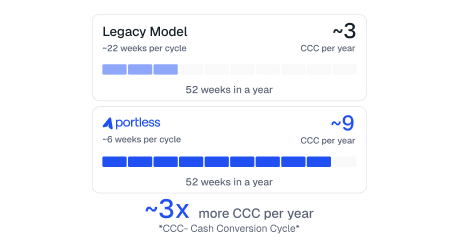
The key is communication. Email and SMS updates at each step turn a long wait into a good experience, the way a carmaker handles a custom order. Done well, pre-orders free the cash you would otherwise lock in unsold stock, and freeing that cash is what lets you keep growing. It is the same reason inventory lead time matters so much.
Vet factories by how they actually work
A premium product is only as good as the factory behind it. You find the right one by seeing the operation, not the pitch. Walk the floor and read the signals. Look at the condition of the space, whether workers have the right protective gear, how organized everything is, and how the team talks about timelines. The good ones don't over-promise or under-promise.
Yitai vets his China partners this way, visiting quarterly and testing before he commits.
We all start with a small batch run to test the efficiency and the timeliness, and from there we just scale upwards. — Yitai Geng, founder of YITAI
China makes this easier than most brands expect. Most fabric is milled there, so you are close to the source, and the sheer range of factories means you can find one matched to your standard. The constant, as Yitai puts it, is that “it's all about communication.” Agree on the exact standard and timeline up front, start with a small run to test it, and scale the partners that deliver. Knowing your real order minimums before you commit keeps that first test cheap.
Make it slowly, ship it fast
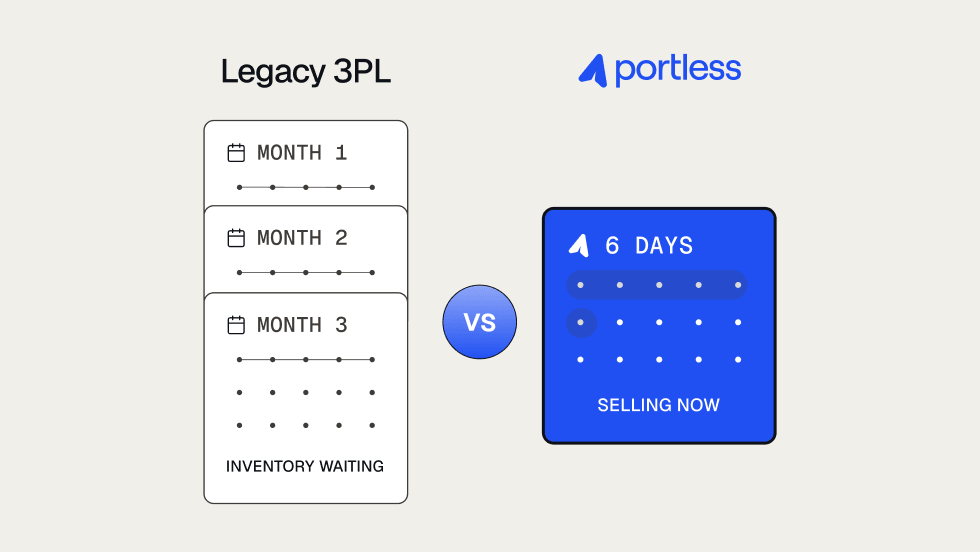
Slow production does not have to mean slow delivery, and this is where premium brands usually get hurt. When something goes viral, demand spikes in days. If your model is to produce overseas, sea freight to a domestic warehouse, then ship, you are months behind the moment, and you lose it.
Yitai ran into exactly this in 2023, fulfilling viral TikTok orders out of his own LA space while production and ocean freight stretched three to four months.
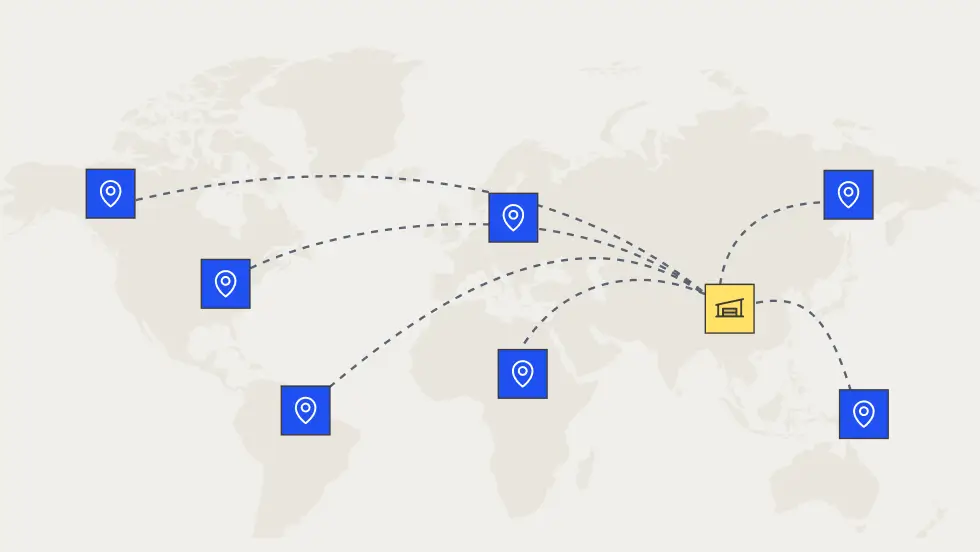
The fix is to put fulfillment next to production. When a finished run ships from a facility in the manufacturing country straight into the local carrier network, a method called direct injection, a slow-made product still reaches the customer in days. Portless runs this model from its own facility in China, close to the point of manufacture, and it's how Yitai ships now.
The fulfillment time from picking and packing to arriving is usually on five to seven days, which is no different than a US standard. — Yitai Geng, founder of YITAI
That takes volume. One founder's output is limited, so brands lean on creators to produce content at scale, and double down on the pieces that take off. A viral product is usually a signal that people want it, so that is the moment to push harder. As Yitai puts it, “you got to create a marketing agency that sells products.”
Watch the full episode
Yitai sat down with Chris de Jong on The Modern Supply Chain to get into all of it, including how he moved from hand embroidery into scalable pieces like selvedge denim, how he thinks about AI in a creative business, and the one question he asks to tell whether another operator really cares about their product.
Lorem ipsum dolor sit amet, consectetur adipiscing elit. Suspendisse varius enim in eros elementum tristique. Duis cursus, mi quis viverra ornare, eros dolor interdum nulla, ut commodo diam libero vitae erat. Aenean faucibus nibh et justo cursus id rutrum lorem imperdiet. Nunc ut sem vitae risus tristique posuere.
Get operator-level supply chain insights
Thank you! Your submission has been received!
Oops! Something went wrong while submitting the form.