Quality control (QC)
Quality control (QC) is the system of inspections, tests, and acceptance criteria used to confirm that products meet defined standards before they ship. For Ecommerce brands manufacturing overseas, QC happens at the factory — not the warehouse — and catches defects before they become returns, chargebacks, or one-star reviews.
Quality control is one of the few supply chain functions where the cost of doing it well is always lower than the cost of skipping it. A defect caught at the factory costs cents to fix. The same defect caught by a customer costs you the return shipping, the refund, the replacement unit, the support ticket, and often the customer themselves.
For DTC brands manufacturing in Asia, QC is the gate between production and fulfillment. It covers pre-production checks on raw materials, in-line inspections during manufacturing, and pre-shipment audits before goods leave the factory floor. The International Organization for Standardization defines QC under ISO 9000 as the part of quality management focused on fulfilling quality requirements — the operational checks, not the broader system design.
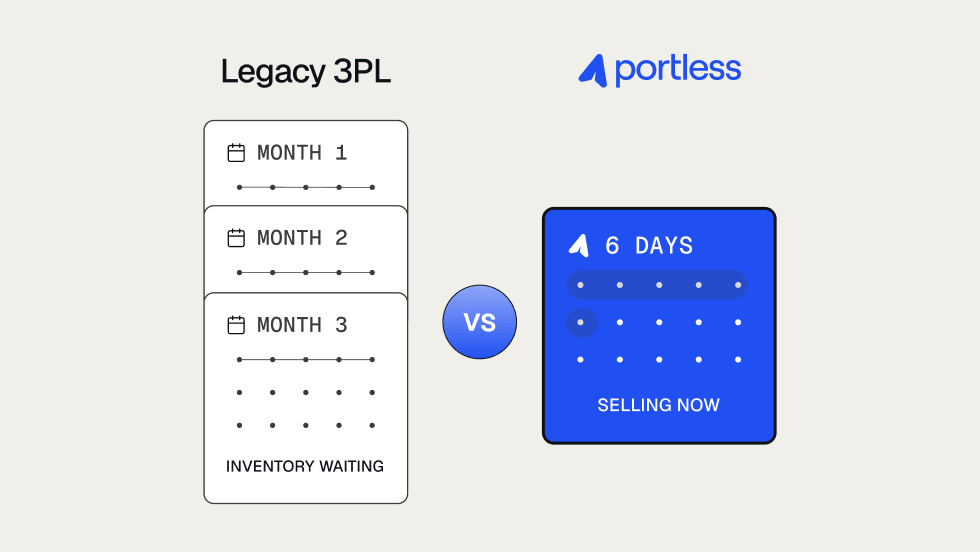
The legacy Ecommerce model made QC harder than it needed to be. Goods left the factory, sat on a ship for 30 days, cleared customs, got trucked to a domestic 3PL, and only then got opened. By the time a brand discovered a defect rate of 8%, the inventory was already paid for, already in a US warehouse, and already too expensive to send back.
What quality control covers in Ecommerce manufacturing
QC isn't a single step. It's a series of checks across the production cycle, each designed to catch a different category of defect before it compounds.
- Pre-production inspection (PPI): raw materials, components, and packaging are checked against spec before production starts
- During production inspection (DUPRO): random sampling once 10–30% of units are complete, used to catch process drift early
- Pre-shipment inspection (PSI): the final audit on finished goods, typically when 80–100% of the order is packed and ready
- Container loading check (CLC): verification that the right SKUs, quantities, and packaging make it onto the freight
Most brands working with overseas manufacturers use third-party QC firms — SGS, QIMA, Bureau Veritas, AsiaInspection — to run these checks on a sampling basis using ANSI/ASQ Z1.4 acceptable quality limits (AQLs). A typical apparel order might use an AQL of 2.5 for major defects and 4.0 for minor defects, meaning the sample tolerates a defined percentage of issues before the lot is rejected.
Why QC matters more for direct fulfillment
When products ship directly from the factory to the customer, QC becomes the only inspection point. There's no domestic 3PL receiving team to flag a wrong barcode or a damaged seam. The unit goes from the production line to a customer's doorstep in five to eight days — which is the speed advantage of direct fulfillment, and also the reason QC has to be airtight.
This is why brands running on direct fulfillment models invest more heavily in factory-level QC than brands running legacy bulk freight. The trade-off is worth it: catching a defect at the source costs roughly 10x less than catching it after a customer return, according to research from the American Society for Quality.
One Portless customer caught a barcode mismatch on every unit of a 4,000-piece shipment during a pre-shipment inspection. Had those units shipped, every single order would have triggered a fulfillment error. Fixed at the factory in 48 hours. Fixed at a US 3PL, it would have been a 30-day disaster.
Common QC failure modes
The defects that show up in Ecommerce fulfillment tend to cluster around the same root causes:
- Component substitution by the factory without approval
- Inconsistent sizing or color across production runs
- Packaging that fails drop tests once it hits real-world shipping conditions
- Barcode and label errors that break warehouse and carrier systems
- Country of origin labeling errors that create customs and compliance risk
The last one matters more now than it did three years ago. With tariffs varying significantly by country of origin, a mislabeled "Made in" tag isn't just a compliance issue — it can change your duty rate by 20 percentage points or more.
How QC ties into cash flow
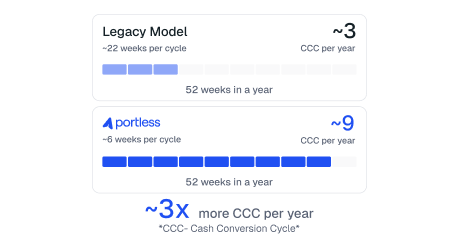
Brands often think of QC as a cost line. It's more accurately a cash flow tool. Every unit that ships defective ties up working capital twice: once when you paid for it, and again when you have to replace it, refund it, or write it off.
For brands running just-in-time inventory on a direct fulfillment model, the math is even tighter. There's no buffer stock waiting in a US warehouse to absorb the bad units. QC at the factory is what makes the model work — without it, you'd be shipping defects to customers in real time.
Build QC into your supply chain, not on top of it
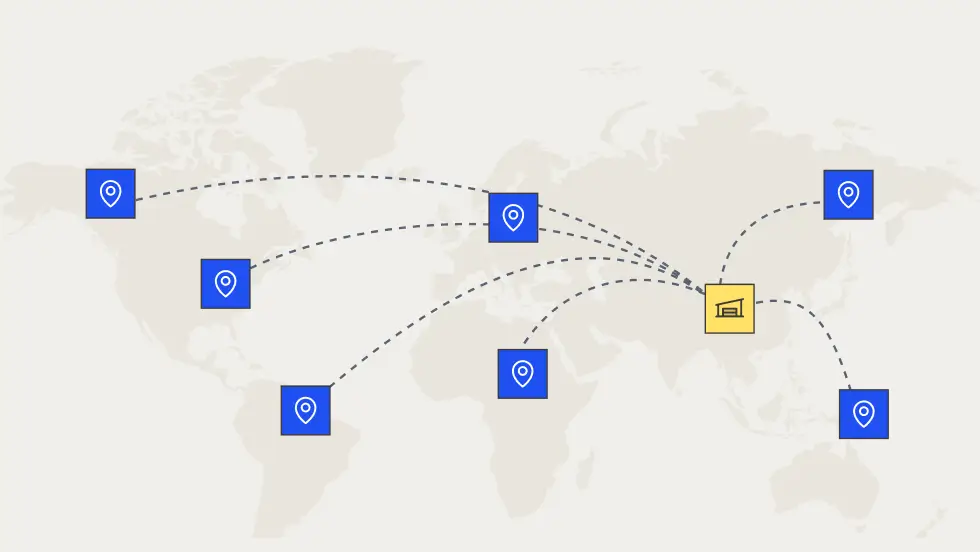
Portless customers manufacture in Asia, ship directly to customers in 85+ countries, and rely on factory-level QC as the gate between production and delivery. We work with brands that treat quality control as part of their fulfillment architecture, not an afterthought layered on top of a broken legacy system. Contact us to see how direct fulfillment changes what QC can do for your margins.
← Back to the Ecommerce supply chain glossary