"We generated $70K in package protection revenue in a single quarter by adding a simple $4 protection option at checkout — plus an additional $12K from cashbacks. Customers get peace of mind, and we're making a profit on every protected order with zero effort."
"We generated $70K in package protection revenue in a single quarter by adding a simple $4 protection option at checkout — plus an additional $12K from cashbacks. Customers get peace of mind, and we're making a profit on every protected order with zero effort."
Planning is where most of a brand's cash goes. It's also where most brands break. Overbuy and you tie up the cash you needed for ads and payroll. Underbuy and you leave revenue on the table. The hard part is that you place those bets months ahead, on demand you can't see yet.
You'll never build a perfect forecast. So aim for something more useful — a plan that survives being wrong. In this post, we'll cover how to do just that.
You'll never forecast demand perfectly, so plan for it
Start by accepting the premise. No forecast is right. Demand shifts, trends move, and a launch you were sure of can miss while a quiet one sells out. Planning is part art and part science, and the science only takes you so far. What matters is knowing your tolerance for being wrong and where you have room to absorb it.
Pooja Parikh has built a career on this. She led demand forecasting at Glossier before becoming COO of Andie, the swimwear brand, where she runs planning across a deeply seasonal, fit-sensitive catalog. She is direct about the limits of any forecast.
You're never going to be right 100% of the time. Absolutely never. — Pooja Parikh, COO at Andie
A wrong bet is survivable as long as you kept room to absorb it. If every bet lands, you are playing too safe and leaving growth on the table. The job is to take real bets while holding enough buffer to survive the misses.
Buy lean and let stockouts teach you
When cash is finite (and it always is) buy lean. The moment you pay for inventory, that cash is locked up and cannot go to ads, payroll, or the next product. Overbuying is the expensive mistake. By McKinsey's estimate, 30 to 40% of apparel inventory ends up sold at a discount, which is margin you planned to earn and then gave away.
My recommendation is always to go leaner. — Pooja Parikh, COO at Andie
Treat a fast sellout as information. It proves real demand and lets you react, reorder, and go deeper on something you now know works. As Pooja puts it, “once you're paid for the inventory, that cash is just gone,” so it is better to sell out and chase than to sit on stock that never moves. That is the case for keeping inventory lead time short enough to restock fast.
Protect the core, budget for the bets
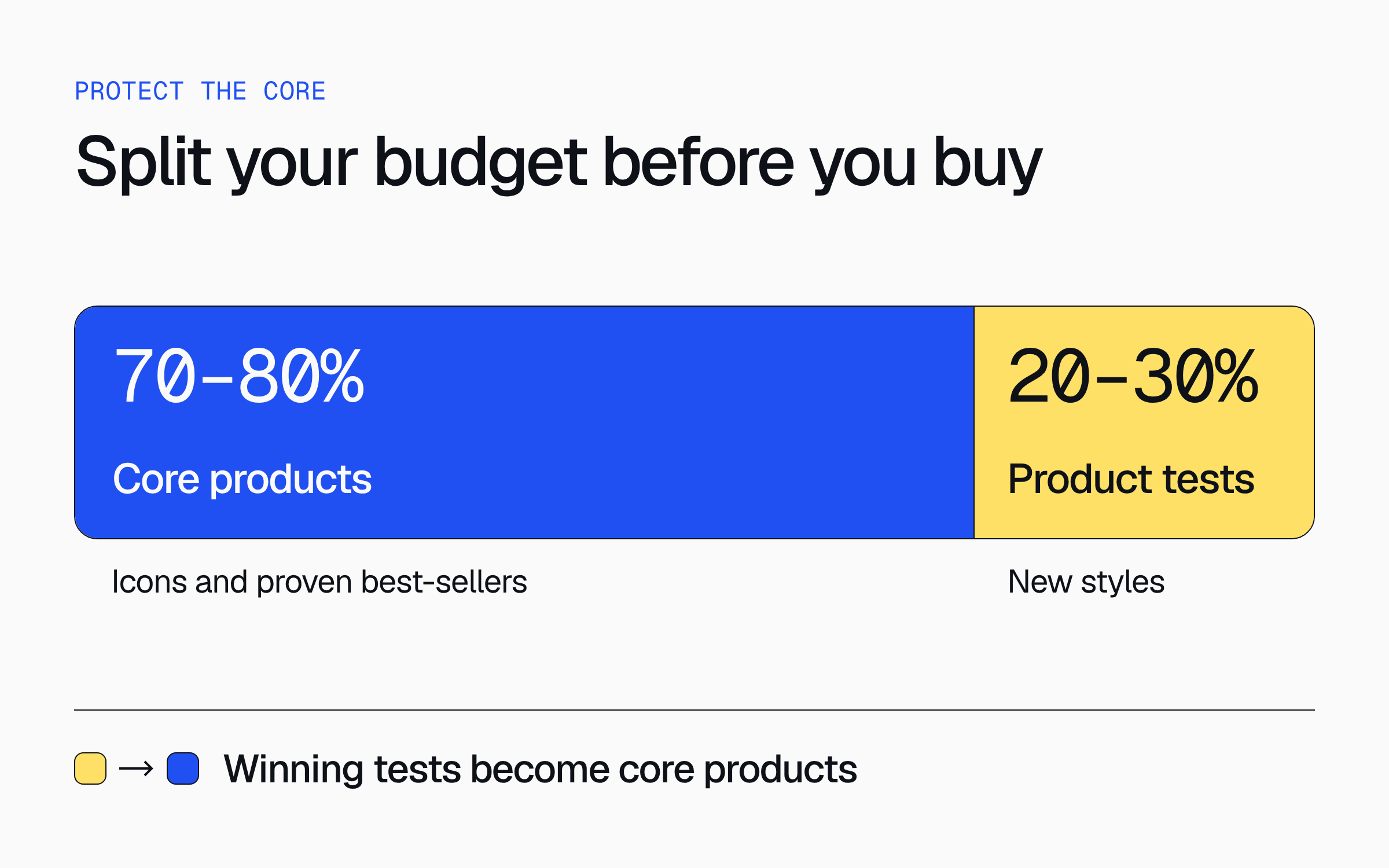
Not all inventory is a bet, so split your budget. The majority should protect what already works, your icons and the proven best-sellers customers come to you for, plus the color extensions of those. Keep them in stock. Then reserve a fixed slice, roughly 20 to 30%, for tests, the new silhouette, the new fabric, the bold print you are not sure about.
Really protect that core that makes your brand your brand. — Pooja Parikh, COO at Andie
The point of the test budget is to find the next winner without betting the business. It only works if you can run the tests cheaply and fast, then restock the winners before the moment passes. Producing in small batches and shipping from the point of manufacture, the way Portless works, keeps that loop quick. Over time, the tests that land become the new core, which is its own apparel inventory strategy.
Read the signals beyond sales
Sales are the loudest signal, not the only one. The best planners read several at once. Customer feedback is the clearest, the returns, the requests, the comments asking you to bring something back. Then peer brands, especially ones with overlapping customers, and even the runway, translated into the colors and shapes people will want next year.
The clearest signal for us is customer feedback. — Pooja Parikh, COO at Andie
One trap is reading sales too literally. A color that sold out last season is not a reason to reorder the same thing, because, as Pooja notes, “that customer already has a light blue suit. She may not want another light blue suit.” Listen closely, but not so closely that you only ever give customers what they already own. That is how brands stop innovating.
Size your bets to the season, and plan the exit
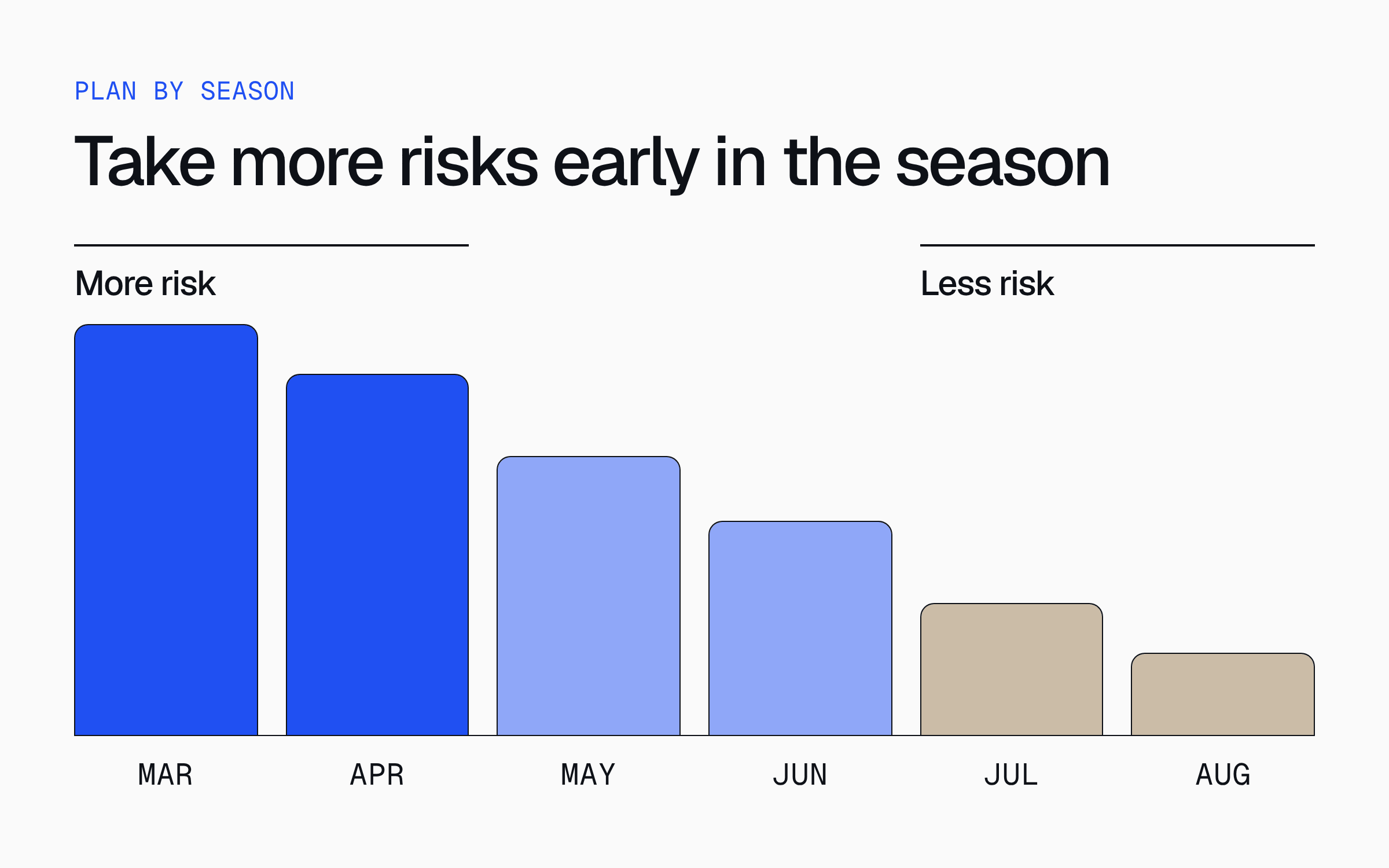
Timing changes how aggressive you should be. Early in a season, with selling months ahead, you can take bigger swings. As the season ends, tighten up so you are not stuck with stock that has nowhere to go. The same buy can be smart in March and reckless in July.
We can take more risks in March and April because we know we have the selling season, but as we get towards July, August, we've got to tighten up. — Pooja Parikh, COO at Andie
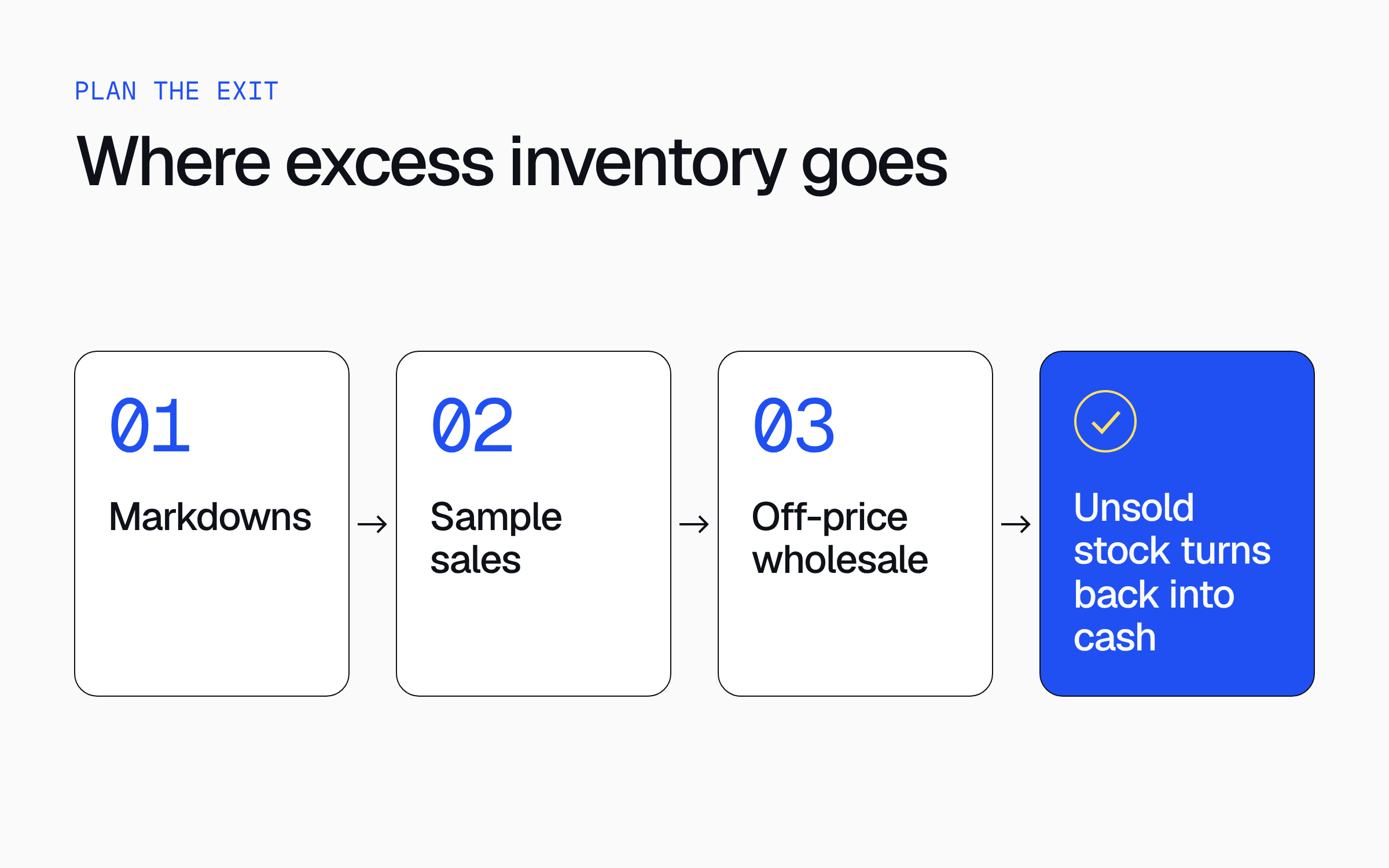
You will still end a season with excess. Every apparel brand does. Decide the exit before you need it. Markdowns come first, and you want some markdown stock on purpose, because some shoppers only ever buy on sale. After that come sample sales and off-price channels, then wholesale partners like the off-price retailers, which move units at a smaller discount so you hold your pricing while pulling cash back out. Planned that way, excess turns into recovered cash instead of a write-off.
Watch the full episode
Pooja and Izzy covered more on The Modern Supply Chain, including what changed when Andie launched nearly 50 exclusive styles across 2,000 Target stores, why a bigger production run often means a different factory, and where AI actually helps a planner.
Lorem ipsum dolor sit amet, consectetur adipiscing elit. Suspendisse varius enim in eros elementum tristique. Duis cursus, mi quis viverra ornare, eros dolor interdum nulla, ut commodo diam libero vitae erat. Aenean faucibus nibh et justo cursus id rutrum lorem imperdiet. Nunc ut sem vitae risus tristique posuere.
Get operator-level supply chain insights
Thank you! Your submission has been received!
Oops! Something went wrong while submitting the form.