"We generated $70K in package protection revenue in a single quarter by adding a simple $4 protection option at checkout — plus an additional $12K from cashbacks. Customers get peace of mind, and we're making a profit on every protected order with zero effort."
"We generated $70K in package protection revenue in a single quarter by adding a simple $4 protection option at checkout — plus an additional $12K from cashbacks. Customers get peace of mind, and we're making a profit on every protected order with zero effort."
Nik Sharma, known as “The DTC Guy,” hosted Portless CEO Izzy Rosenzweig on a podcast episode about taking your brand global. Nik founded the growth agency Sharma Brands, which was acquired in 2025, and writes a DTC newsletter read by more than 100,000 operators. He was also an early investor in Portless.
Izzy ran his own DTC brand for 10 years before he founded Portless. Much of the hour came back to one question. How do you sell in new countries without tying up more cash in inventory?
This recap covers what they said about cash flow, when a brand is ready to go global, and which markets to start with.
Cash flow decides how fast you can go global
Every new market needs inventory, ad spend, and time before it pays back. If your cash is tied up in stock on a shelf, you can’t fund that expansion. Nik opened the main conversation with cash flow.
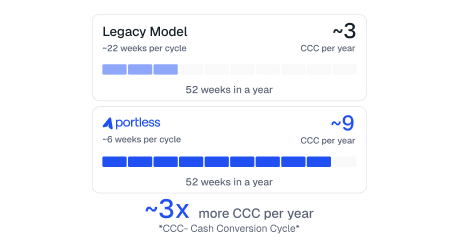
The cash conversion cycle measures the days between paying for inventory and getting paid for it. A negative cycle means you collect cash from customers before your supplier invoice comes due. Your sales fund the business instead of your bank balance.
Nik pointed to a Medium post by Gymshark’s founder.
“[The Medium post] was from the Gymshark founder talking about the negative cash conversion cycle, and that was basically the secret to how Gymshark grew.” — Nik
Izzy explained why that matters. When customers pay you before your factory invoice is due, their money funds your next order. In his words, “your customers are your investors,” so you don’t need a line of credit to grow.
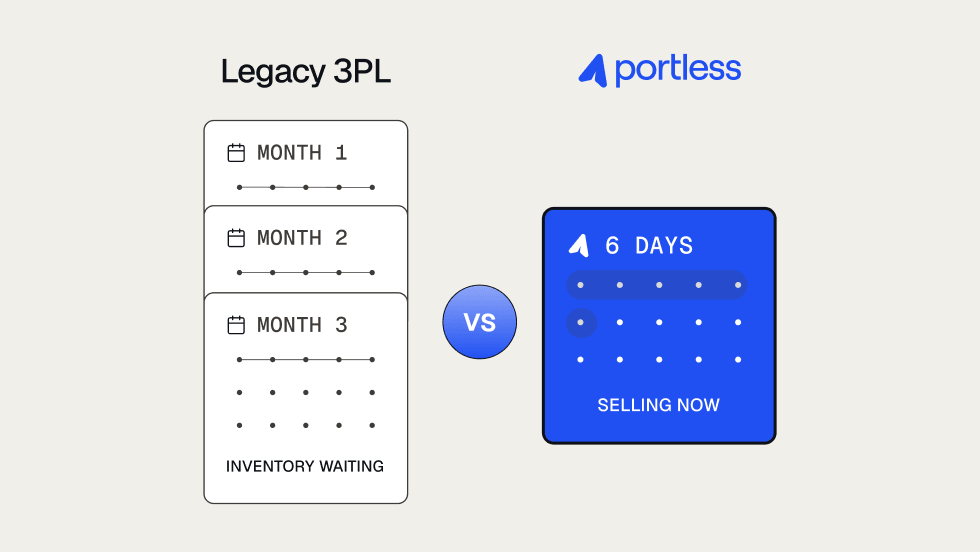
Two Portless brands show what this looks like. Foreign Resource, an apparel brand that ships direct from China, reached a near-negative cash conversion cycle. Craft Club cut its cycle from 22+ weeks to six weeks after moving to direct fulfillment.
Why the legacy bulk model keeps cash tied up
The legacy model ties up cash at every step. You pay the factory, wait for production, ship by ocean, and order months ahead to keep buffer stock. When that stock sells through, you start the cycle again.
Izzy lived this. In the first two years of his home and kitchen brand, Browze, revenue grew from $100,000 to $200,000. He had plenty of demand. He didn’t have cash, because every dollar went into the next purchase order and 60 days on the water.
When Browze moved to a cross-border model that shipped from near the factory, demand stayed the same. Revenue went from $200,000 to $2.5 million, then grew 100% year after year. For a deeper look at the problem, read how bulk inventory traps DTC cash flow.
“If you can unlock cash flow, if you have a great product, and you can sell your goods now to 80 countries around the world, and reinvest your profit very fast, there is nothing stopping you go from zero to 100 million literally in 1 to 2 years.” — Izzy
Smaller batches let you scale into more markets
The fastest way to shorten your cash cycle is to buy less at a time and sell it sooner. Smaller batches mean less cash goes out the door up front. Selling as soon as production finishes means that cash comes back sooner.
Speed after production matters as much as batch size. When inventory stays close to the point of manufacture, it can be ready to sell within 48 hours of production.
Izzy’s example is a brand that puts $1 million into inventory on day one.
“[On a direct model,] you could go from a million dollars out the door day one for your inventory being stuck for 6 months to 100 grand.” — Izzy
The other $900,000 goes to marketing, hiring, and new markets.
One Portless merchant in particular ran this playbook from the start. The brand produced small batches, sold them, and put the cash into the next run. Izzy said the brand “scaled around the world day one” and went “from zero to now north of a hundred million within 3 years.”
Stockouts cost you in every market you sell in
A stockout cuts off revenue at the moment demand is highest. As Izzy put it, “What you don’t see on a P&L is out of stock.”
Nik saw the same problem from the marketing side. Spend follows momentum, and momentum doesn’t wait for a restock.
“We might wake up and spend, you know, $200,000 in a day [on ads] when we normally spend $70,000 just because the momentum’s there.” — Nik
Your best sellers drive most of the business. When they sell out, competitors get the click, paused ads lose their momentum, and your factory gets fewer orders from you. Across retail, out-of-stocks and overstocks cost an estimated $1.7 trillion a year, according to IHL Group.
Every country you add makes demand harder to forecast. When an ad works, you want to scale it, and no forecast tells you whether you’ll need 1,000 units or 25,000. Izzy said brands restock faster once they move to the Portless model.
“We’ve seen on average once you go to the Portless model, your revenue will simply increase by 30% by being more agile and how fast you can restock.” — Izzy
Izzy puts the line at about $1 million in revenue. Below that, you’re “really just getting your business rocking and rolling.” Above it, going global should be close to a default.
The old guidance was to wait until $50 million. Izzy called that the old world. For the founders he works with now, “it’s really day one.” Nik framed it as a step to take once you have product-market fit and your supply chain in place.
Product matters too. The model works best for items under about 3 lb, so apparel, accessories, electronics, cosmetics, jewelry, and toys are strong fits. Heavy items like appliances cost more to ship this way.
Brands that expand this way tend to keep going. Across 89 merchants Portless analyzed, the average number of countries shipped to grew from 1.7 to 7.1 within three quarters of going live. Izzy said brands typically see 30% to 40% of their revenue come from outside their core market.
“Since we’ve helped brands go global, not a single brand has pulled back a country.” — Izzy
Start with English-speaking markets
Izzy’s first markets are the UK, Australia, and Canada. For a US brand, these markets need almost no new work. Your product, packaging, and ads are already in English.
“So, English markets, it’s a no-brainer, go live.” — Izzy
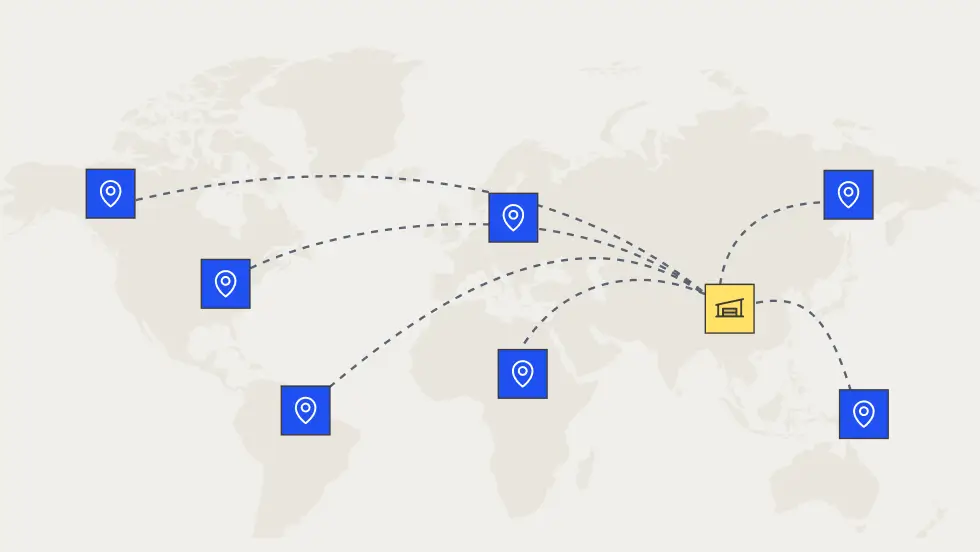
The legacy options cost more. Izzy said shipping a US order to the UK by DHL Express costs about $30. With Portless, shipping starts at about $5 an order, and every market ships from one inventory pool. The other option is a warehouse in each new country, which ties up more stock.
Izzy said setup takes two to four weeks. You turn on local currency in Shopify Markets, add the countries in Meta, and set up fulfillment.
Ad costs help too. Izzy said CPMs are cheaper in Australia and the UK than in the US.
“Your CPMs are going to be much lower in international markets, you know, especially if you’ve got native speaking English markets like the UK or Australia or Canada.” — Nik
The pieces that used to block expansion are solved problems now. Meta translates ads inside Ads Manager. Compliance partners handle the tax side. Portless has 19 return facilities around the world, so customers can send items back locally. Here’s how Portless helps brands expand internationally.
Test non-English markets before you double down
Europe takes more work. Languages change from country to country, and shoppers expect checkout to work the way it does at home. Izzy’s advice is to avoid over-optimizing early.
“[In non-English-speaking countries,] test the market, do a small test, test Europe, see where you get bites.” — Izzy
Add a few countries, or all of Europe, and see where demand shows up. Conversion rates may start lower than in your home market, but you’ll still get sales. Once a country takes off, invest in localizing for it.
One brand Izzy works with has Australian founders and sells a camera product. Italy is its number one market.
Nik and Izzy also covered pre-sells and made-to-order drops, how to negotiate better terms with your factory, and how to plan around factory shutdowns for Chinese New Year. Watch the full episode below.
Frequently asked questions
Heading
Lorem ipsum dolor sit amet, consectetur adipiscing elit. Suspendisse varius enim in eros elementum tristique. Duis cursus, mi quis viverra ornare, eros dolor interdum nulla, ut commodo diam libero vitae erat. Aenean faucibus nibh et justo cursus id rutrum lorem imperdiet. Nunc ut sem vitae risus tristique posuere.
Get operator-level supply chain insights
Thank you! Your submission has been received!
Oops! Something went wrong while submitting the form.