“We generated $70K in package protection revenue in a single quarter by adding a simple $4 protection option at checkout — plus an additional $12K from cashbacks. Customers get peace of mind, and we're making a profit on every protected order with zero effort."
“We generated $70K in package protection revenue in a single quarter by adding a simple $4 protection option at checkout — plus an additional $12K from cashbacks. Customers get peace of mind, and we're making a profit on every protected order with zero effort."
When your best-selling product runs out, the ads usually keep running, and every click lands on a sold-out page.
Most brands book that as lost revenue for the days the SKU was down, which understates it badly. The real cost of a stockout also covers customers who bought from a competitor and never came back, ad spend that kept going to an out-of-stock page, and the air freight you paid to restock in a hurry. Behind all of it is usually a lead time measured in months and cash tied up in slower-selling inventory. Here’s how to size the full cost and how to bring it down without buying more stock than you can afford.
What does a stockout cost mean?
A stockout is when a SKU runs out of sellable inventory. Its cost is everything you lose while the product is unavailable, which is more than the orders that didn’t happen.
Most teams measure a stockout as missed revenue for the days the SKU sat at zero. That’s usually the smallest part of the cost. The rest appears over the following months, in reorders that never came and margin spent getting back in stock.
IHL Group’s inventory distortion study puts the combined annual cost of out-of-stocks and overstocks at roughly $1.7 trillion, with out-of-stocks about two thirds of it.
The direct cost, the sales you can see
Take average daily units, multiply by days out of stock, multiply by price, then apply gross margin.
A SKU moving 40 units a day at $60 on a 55% margin, unavailable for 12 days, misses 480 unit sales, or $28,800 in revenue and $15,840 in gross profit. Those are illustrative numbers. Run your own, and run them per SKU rather than across the catalog, because the damage concentrates in whatever sells fastest.
The hidden costs most brands miss
Customers who leave and don’t come back
A sold-out page sends shoppers to a competitor, and many of them don’t come back. A 2026 survey of 1,000 US shoppers, commissioned by the operations software firm Doss, found 62% had switched to a competing brand at least once because of a stockout, and 45% said they buy from a different retailer when one happens.
That loss usually shows up months later in repeat-purchase data, by which point nobody connects it to the stockout.
Wasted ad spend and lost search ranking
Paid traffic doesn’t pause when inventory does. Shopping and catalog ads usually stop serving once your product feed marks the item out of stock, but search and social ads pointing at the product page keep running until someone pauses them. Every click in that window lands on a product nobody can buy.
Organic and marketplace ranking take a hit too, since both reward sales velocity. Sellers report that ranking can take time to recover once stock is back, though the platforms say little about how this works and it’s hard to measure cleanly.
Emergency freight and rush fees
Recovering usually means paying for speed. That can mean air freight instead of ocean, rush fees at the factory, and expedited handling on arrival. The cost comes out of the margin on the units you do recover, which is the line most post-mortems leave out.
What causes stockouts
Most stockouts trace back to a decision made months earlier. When supplier lead time runs 45 to 120 days, you’re committing to a forecast a full quarter ahead of the demand it’s supposed to serve. If you underestimate demand for a product that sells well, you run out long before the next shipment leaves port. Our breakdown of how lead time drives inventory risk covers this in more detail.
The standard answer is safety stock. A buffer large enough to absorb demand swings usually works. It also ties up a lot of capital, accrues carrying costs of 20% to 30% of inventory value a year, and can’t be spent on the SKU that’s actually selling. Brands with tight cash end up buffering the products they can afford to buffer rather than the ones that need it.
The cash flow trap behind most stockouts
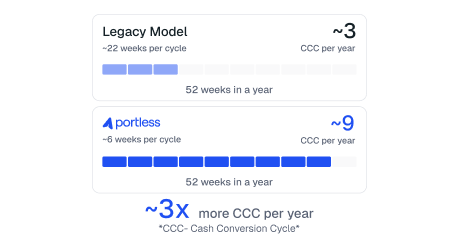
Money tied up in inventory at sea, inventory in a warehouse, and the duty paid on both can’t be used to reorder what customers want this month. Your cash conversion cycle stretches, your working capital shrinks, and you run short on winners while capital sits in dead stock.
This is why stockouts and overstock often happen in the same business at the same time. Both come from having to forecast too far ahead. The DTC cash flow trap covers how brands get there, and our guide to cash flow and inventory strategy covers what to do about it.
Duty adds to the problem. Our Ecommerce Tariffs Benchmark Report, based on over 100 US brands, found 92% raised prices and 79% still got squeezed on margin. When duty is paid on a whole shipment upfront, less cash is left to reorder the products that sell.
How to lower the real cost of a stockout
Tune safety stock and reorder points
Set your reorder point from real sell-through and real lead-time variability rather than a round number someone picked a year ago. Watch velocity weekly on your top SKUs, since that’s where a stockout costs most and where demand moves fastest, and reorder winners earlier than feels comfortable.
This is worth doing, but it doesn’t change the lead time that made the buffer necessary.
Shorten the lead time itself
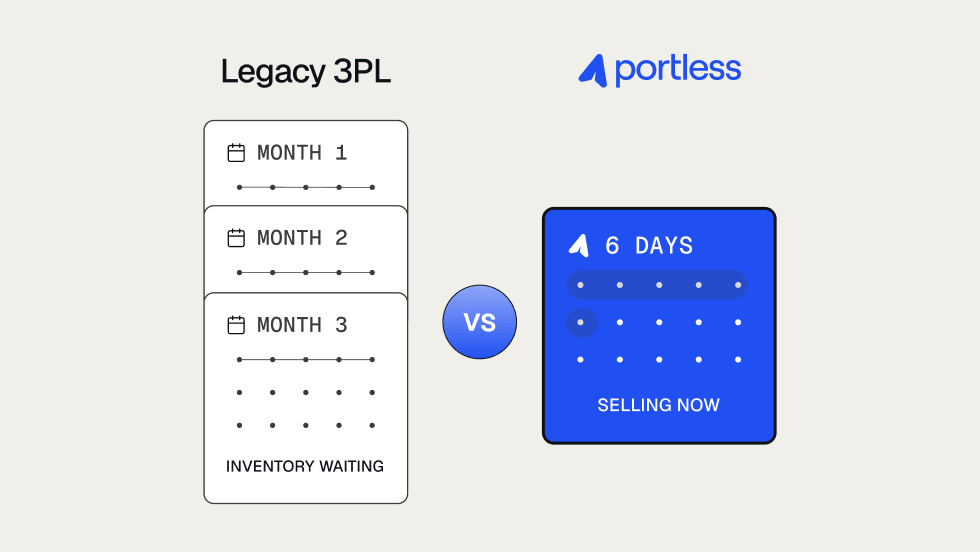
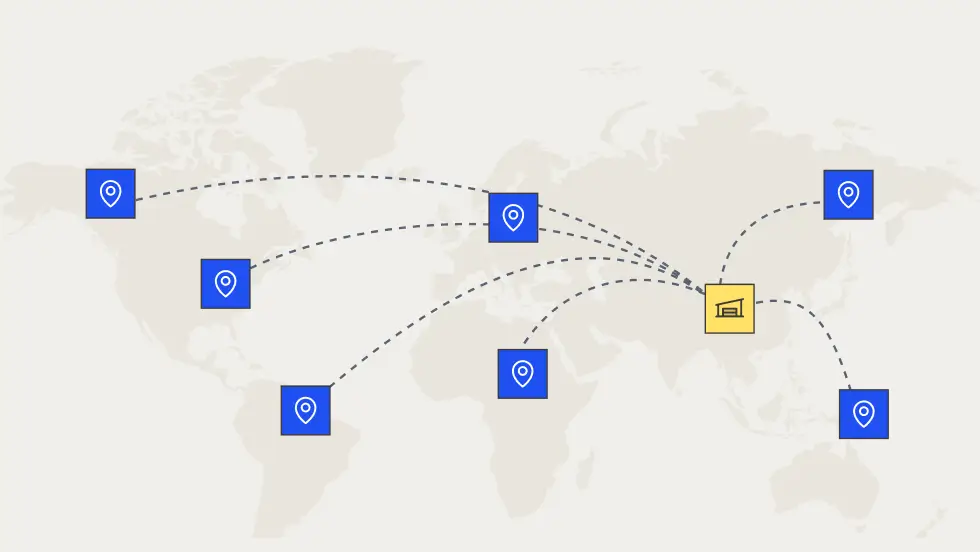
Direct fulfillment ships confirmed orders from a fulfillment center close to the point of manufacture, straight to the customer. Production finishes, stock is sellable within a day or two, and orders go out as they come in. You replenish in small batches against demand you can see instead of committing to a large order months in advance. Inside a direct fulfillment center covers how it runs day to day.
Two weeks before Father’s Day, &Collar was at 5% in stock on its hero SKUs and days from losing thousands of orders. Rerouting 40,000 units direct from the factory took under 30 days, moved in-stock from 5% to 100%, and the brand finished the peak up 35% year over year.
::table
Fulfillment model;Where inventory sits;Restock lead time;Stockout and cash risk;Best for
Legacy bulk import and 3PL;Bulk, in domestic or regional warehouses;Weeks to months, set by ocean transit and receiving;High. Cash is committed upfront, so you stock out of winners while capital sits in slow movers;Heavy or bulky goods with steady, predictable demand
Direct fulfillment from the point of manufacture;Little to no pre-imported stock;Seven to 15 days;Low. You reorder in small batches and cash stays free;Lightweight goods with variable demand
:table
This won’t suit every catalog. Heavy or bulky goods with steady demand are usually still cheaper to ship by sea, and a brand with predictable demand gets less benefit from short lead times than one launching products with uncertain demand.
Switching doesn’t have to happen all at once, either. By the end of its trial, memobottle was routing 40% of its orders through Portless. To see what the change would mean for your own volumes, the direct fulfillment ROI calculator runs the comparison against your current setup, and compare fulfillment model costs walks through the math behind it.
See how Portless works
Shorter lead times mean you need less buffer stock and run out less often. Portless fulfills orders direct from the point of manufacture to customers in 85+ countries in five to eight days, with duty paid per parcel rather than upfront on stock that hasn’t sold. Book a demo to see what that does to your numbers.
FAQ
What is a good stockout rate?
There’s no universal benchmark, but many retailers aim to keep stockout rates in the low single digits, with a tighter target for best sellers. The right number depends on margin, since a high-margin hero SKU justifies more buffer than a long-tail product that turns twice a year.
What’s the difference between a stockout and a backorder?
A stockout means the product is unavailable. A backorder means you’ve taken the order anyway and will ship when stock lands, which keeps the revenue but moves the waiting onto the customer. They only work when the restock date you quote is one you can hold.
How long does it take to recover from a stockout?
Restocking takes as long as your replenishment lead time, which is 45 to 120 days on a bulk import cycle and days on a direct one. Full recovery takes longer, because paid campaigns need rebuilding and the customers who switched during the gap don’t come back on their own.
What’s the difference between stockout cost and carrying cost?
Stockout cost is what running out takes from you. Carrying cost is what holding inventory takes from you, at 20% to 30% of inventory value a year. Most inventory planning is the work of trading one against the other, and shortening lead time is the rare move that lowers both.
Frequently asked questions
Heading
Lorem ipsum dolor sit amet, consectetur adipiscing elit. Suspendisse varius enim in eros elementum tristique. Duis cursus, mi quis viverra ornare, eros dolor interdum nulla, ut commodo diam libero vitae erat. Aenean faucibus nibh et justo cursus id rutrum lorem imperdiet. Nunc ut sem vitae risus tristique posuere.
Get operator-level supply chain insights
Thank you! Your submission has been received!
Oops! Something went wrong while submitting the form.






%20(1).jpg)
.png)

.jpg)
%20(1)%20(1).avif)
%20(1).avif)