“We generated $70K in package protection revenue in a single quarter by adding a simple $4 protection option at checkout — plus an additional $12K from cashbacks. Customers get peace of mind, and we're making a profit on every protected order with zero effort."
“We generated $70K in package protection revenue in a single quarter by adding a simple $4 protection option at checkout — plus an additional $12K from cashbacks. Customers get peace of mind, and we're making a profit on every protected order with zero effort."
Many first-time customers never place a second order, and the product is often not the reason. The fulfillment mistakes that kill repeat purchases happen after checkout, while the customer is waiting for a delivery, looking for tracking updates, paying an unexpected fee at the door, or trying to return something.
Why fulfillment decides whether customers come back
The mistakes that lose repeat customers are slow or unpredictable delivery, surprise duties at the door, poor tracking, stockouts and split shipments, wrong or damaged orders, and a difficult returns process. All of them happen after the sale, at a point when many brands have stopped paying close attention to the customer.
Retention has a large effect on profit. Bain’s research, reported in Harvard Business Review, found that increasing customer retention rates by 5% increases profits by 25% to 95%. A lost repeat customer costs you their full customer lifetime value, which is worth far more than any single order. Low repeat rates are also one reason brands hit a growth ceiling.
It doesn’t take much to lose them. Narvar’s 2025 State of Post-Purchase Report found that after a single bad experience, 60% of 18 to 29-year-olds say they won’t shop with that retailer again, compared with 17% of shoppers aged 60 and over. Brands with younger customers have less room for error.
The fulfillment mistakes that lose repeat customers
Slow, unpredictable delivery
Customers judge delivery against the date you promised them. A nine-day delivery promised in seven disappoints more than a 13-day delivery promised in 14, so an accurate estimate matters as much as a fast one.
Delivery problems are common. A 2025 Descartes study of 8,000 consumers in North America and Europe found 66% had experienced a delivery problem in the previous three months. Among under-35s, 21% said they didn’t order from that retailer again.
The fix is to quote a delivery window you can meet consistently, even if it’s longer than the fastest one you could advertise. Our post on Ecommerce delivery speed explains why reliable delivery outperforms fast delivery.
Surprise customs duties at the door
For international orders, asking the customer to pay duty at the door is one of the fastest ways to lose them. They have already paid for the order, and now a courier is asking for more money they weren’t told about.
Until recently this was rare for low-value parcels. The $800 US de minimis threshold let small shipments enter duty-free, so most DTC orders arrived without extra charges. That exemption is now suspended, and low-value parcels clear customs and pay duty like any other import. The EU made a similar change in July 2026, replacing its €150 duty exemption with a temporary flat duty of €3 per item.
Unexpected charges also cost sales before delivery. In a 2026 DHL eCommerce survey of 29,000 shoppers in 29 countries, unexpected customs and tax charges became the top reason for cart abandonment at 63%, up from 33% a year earlier.
The fix is delivered duty paid shipping. You calculate and collect duty at checkout, so the customer doesn’t face any charges on delivery. Our comparison of DDP vs DDU at checkout explains how the two models affect international conversion.
Poor order tracking and silence during delays
Once an order ships, customers want to know where it is. If they hear nothing, many assume something has gone wrong, even when the parcel is on schedule.
Delivery information also affects whether customers buy in the first place. Digital Commerce 360’s 2025 conversion report found 13% of shoppers who abandoned a cart cited the lack of a guaranteed or estimated delivery date, a share that rose year over year.
Sending proactive updates solves most of this. Branded order tracking keeps customers on your own tracking page instead of a carrier’s, and answers “where is my order?” (WISMO) before customers contact support.
Stockouts and split shipments
If a customer comes back to reorder and the product is out of stock, you lose a repeat purchase you had already earned. Stockouts are especially costly on your best sellers, because those are the products customers are most likely to buy again.
Split shipments cause a different problem. When one order arrives in several parcels on different days, each with its own tracking number, the customer has to work out whether anything is missing. Each extra parcel is also another chance for something to go wrong in transit.
Both problems come from where inventory is held and how much of it a brand can afford to hold.
Wrong or damaged orders
Receiving the wrong item or a damaged one breaks trust immediately. It’s also expensive. You pay for a refund or reshipment, a return, and a support ticket, and you’re likely to lose the customer’s next order as well.
Accurate pick and pack is the first defense. The second is checking products for defects before they ship, which is easier when quality control happens close to where the product was made.
A difficult returns process
Many customers read your returns policy before they buy. Loop’s 2026 returns research found 58% of US online returners always or often check a retailer’s return policy before purchasing, and 63% have stopped shopping with a retailer or abandoned a purchase because of its return policy.
A clear, fast returns process helps retention, so it’s worth investing in rather than cutting. Managing reverse logistics well, or outsourcing it to a partner who does, protects the next order. Our post on a smoother returns process covers how brands reduce returns costs without making the experience worse.
The hidden root cause, inventory and cash flow
Most of these problems share a cause, which is the legacy model of importing inventory in bulk and storing it in domestic warehouses.
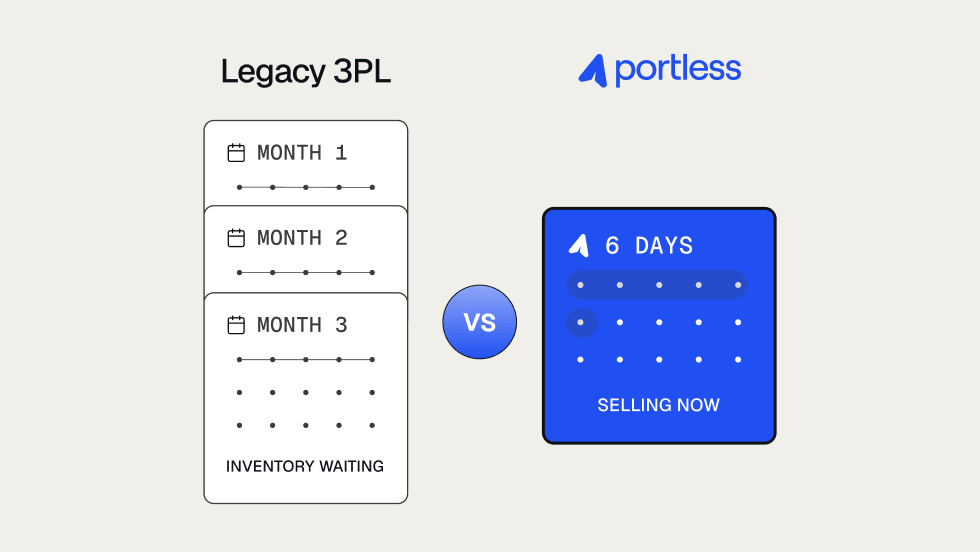
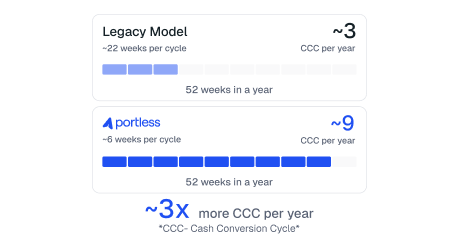
Under that model, you pay for inventory, freight, and duty months before any of it sells. That lengthens your cash conversion cycle, which is the time between paying your supplier and collecting payment from your customer. It also forces a difficult choice. If you buy too much, you tie up cash in inventory that isn’t selling. If you buy too little, you run out of the products that are.
The same model causes the other problems as well. Inventory held in one country delays delivery to customers in another. Stock spread across several regional third-party logistics (3PL) providers leads to split orders. And when duty is prepaid on some routes and charged at the door on others, the customer experience varies from market to market.
Tariffs have added pressure. Our Ecommerce Tariffs Benchmark Report, based on over 100 US brands, found 92% raised prices in response to tariffs and 79% still saw their margins squeezed. When duty is paid upfront on unsold inventory, that cost hits before a single order ships.
How direct fulfillment fixes the repeat-purchase problem
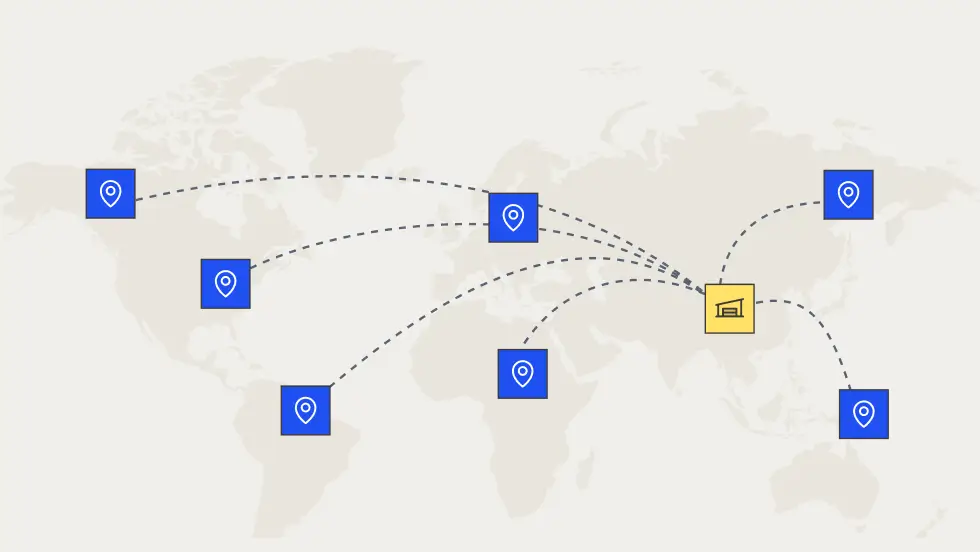
Direct fulfillment ships each order from a fulfillment center close to the point of manufacture, straight to the customer. There’s no ocean freight, no domestic warehouse, and no regional 3PL holding stock you paid for months earlier.
Shipping every order from one location near the factory solves several of these problems together. Duty is calculated and paid per parcel at checkout, so customers don’t face charges at the door. Inventory is ready to sell within a day or two of production, so stockouts are shorter and less frequent. Orders ship from a single inventory pool, so fewer of them are split. Quality control happens next to the factory, so defects are caught before the parcel ships rather than discovered by the customer.
Portless ships to 85+ countries in five to eight days, with 99.8% pick and pack accuracy and 99.8% of orders leaving within a day. Orders are routed across more than 20 last-mile carrier networks, so customers receive a local tracking number and a domestic delivery experience. Inside a direct fulfillment center explains how this works day to day, or watch this 2-minute video:
::table
;Legacy bulk import and domestic 3PL;Direct fulfillment
Who holds the inventory;You do, months before it sells, in one or more regional warehouses;A fulfillment center next to your manufacturer, until an order comes in
Who ships the order;A regional 3PL, from whichever warehouse holds that SKU;One fulfillment center, direct to the customer, with duty paid at checkout
Best for;Heavy or bulky goods with steady, predictable demand;Lightweight goods with variable demand, sold in several countries
NATPAT reached 50+ countries from a single inventory pool, after previously facing wait times of 15 to 30 days across its markets.
Direct fulfillment isn’t the right fit for every brand. Heavy or bulky products with steady demand are usually still cheaper to import by sea. Switching also doesn’t have to happen all at once. By the end of its trial, memobottle was routing 40% of its orders through Portless. The direct fulfillment ROI calculator runs the comparison against your current setup.
How to audit your fulfillment for retention risks
Check these against your own data before making changes.
On-time delivery rate. Measure it against the delivery date shown at checkout, not your average transit time.
International duties. Place a test order to your furthest market. If the courier asks for duty on delivery, your customers there are paying it too.
WISMO tickets per 100 orders. A high number usually means tracking updates aren’t reaching customers.
Stockout frequency on your top 10 SKUs. These are the products customers are most likely to reorder.
Split-shipment rate. More than a few percent suggests inventory is spread across too many locations.
Returns timeline. Time the full process from return request to refund, and read your policy as a first-time customer would.
See how Portless works
Most of these mistakes come from how inventory is held and shipped, which is why fixing them one at a time rarely lasts. Shipping direct from the point of manufacture addresses delivery speed, duties, stockouts, and cash flow together. Portless delivers to 85+ countries in five to eight days with duty paid per parcel. Book a demo to see whether it fits your products and markets.
FAQ
What’s a good repeat purchase rate for a DTC brand?
It depends on the category. Consumables tend to run higher and considered purchases lower, so compare against your own trend over time. A falling repeat rate is often the first sign of a post-purchase problem.
How long is too long for international delivery?
There’s no fixed cutoff, but the longer delivery takes, the more likely customers are to cancel or contact support. Consistency matters as much as speed, so a reliable 8-day window is better than one that ranges from 5 to 14 days.
Does faster shipping increase customer lifetime value?
Reliable shipping does. Fast delivery helps win the first order, but consistent delivery is what brings customers back for later ones. For brands selling across borders, surprise fees and slow delivery are common reasons for losing international customers. If you’re considering new markets, our page on how to expand into new markets covers what changes.
Frequently asked questions
Heading
Lorem ipsum dolor sit amet, consectetur adipiscing elit. Suspendisse varius enim in eros elementum tristique. Duis cursus, mi quis viverra ornare, eros dolor interdum nulla, ut commodo diam libero vitae erat. Aenean faucibus nibh et justo cursus id rutrum lorem imperdiet. Nunc ut sem vitae risus tristique posuere.
Get operator-level supply chain insights
Thank you! Your submission has been received!
Oops! Something went wrong while submitting the form.






.jpg)
%20(1).png)
.png)

%20(1).jpg)
%20(1)%20(1).avif)
%20(1).avif)