Delivered duty paid (DDP)
Delivered duty paid (DDP) is an Incoterm where the seller takes on all costs, risks, and responsibilities for delivering goods to the buyer, including freight, export and import clearance, duties, and taxes. The buyer receives the order at their door with nothing left to pay.
Delivered duty paid (DDP) is one of 11 Incoterms published by the International Chamber of Commerce, and it places the maximum obligation on the seller. Under a DDP arrangement, the seller pays for transport, handles export clearance in the origin country, pays import duties and taxes in the destination country, and delivers the goods to the buyer's named address. For Ecommerce brands shipping cross-border to customers in the US, EU, UK, and beyond, DDP is the model that lets shoppers check out with the full landed cost displayed and nothing owed at the door.
For DTC brands that manufacture in Asia and sell globally, DDP is more than a contract term. It's the only way to deliver a domestic-feeling experience to international customers. The alternative — delivered duty unpaid (DDU), now technically DAP — leaves the customer holding the bag when duties show up at delivery, which is one of the fastest ways to lose a sale, generate a refusal, and burn through customer service hours.
How DDP works in practice
Under DDP, the seller is responsible for the full chain of cost and risk:
- Arranging and paying for freight from origin to destination
- Handling export clearance and documentation in the country of origin
- Paying import duties, taxes, and VAT in the destination country
- Clearing customs at the destination
- Delivering the goods to the buyer's named location
The buyer's only responsibility is to receive the shipment. Risk transfers from seller to buyer at the named place of delivery, typically the customer's address.
In Ecommerce, this is operationalized through duty calculation at checkout. The brand calculates the full landed cost — product price, shipping, duties, and applicable taxes — and charges the customer once. The brand (or its fulfillment partner) then remits duties to customs authorities as part of the import process.
Why DDP matters for DTC brands
Cart abandonment data is unambiguous on this point. According to the Baymard Institute, 39% of US online shoppers abandon checkout because of unexpected extra costs like shipping, taxes, or duties, and 14% abandon when they cannot see the total order cost upfront. Both failure modes are baked into the DDU model, where duties only appear at the door.
DDP solves three specific problems for cross-border brands:
- Checkout transparency. Customers see the total cost upfront and aren't ambushed by carrier invoices later.
- Refusal rates. Packages held at customs or refused at the door become reverse-logistics problems. DDP eliminates this entirely.
- Customer service load. Every "why am I being charged extra?" ticket disappears.
For brands selling in markets where customers expect a domestic-grade experience — most of them — DDP is the baseline, not a premium add-on.
DDP vs DDU vs DAP
The Incoterms 2020 update replaced DDU with DAP (Delivered at Place), but the term DDU is still widely used in shipping contracts and platform settings. Functionally:
- DDP: Seller pays duties and taxes. Buyer pays nothing on arrival.
- DDU/DAP: Seller delivers to the destination but the buyer pays duties, taxes, and clearance fees on arrival.
- EXW (ex works): Seller makes goods available at the factory. Buyer handles everything else.
For more on the customer-experience trade-off between these models, see Portless's breakdown of cross-border duty strategies for DTC brands.
What DDP actually costs the brand
DDP shifts the duty burden from the customer to the brand's P&L, which means duty calculation accuracy matters more than ever. Three variables drive cost:
- HS code classification. The Harmonized System code determines the duty rate for each SKU. Misclassification means overpaying or facing compliance penalties.
- Country of origin. Goods manufactured in China currently face Section 301 tariffs on top of base MFN duty rates. Vietnam-origin goods may face reciprocal tariffs depending on the category and current USTR actions.
- Declared customs value. Duty is calculated on transaction value — the price paid to the manufacturer — not the retail price at checkout. Declaring retail value can mean overpaying duty by several multiples.
For a deeper breakdown on the third point, see Portless's guide to customs valuation after de minimis.
DDP after de minimis
The end of the $800 US de minimis threshold on August 29, 2025 changed the math for nearly every brand shipping cross-border. Before, low-value parcels entered the US duty-free. Now, every shipment triggers duty, and brands have to decide who pays.
The EU is following the same path. The European Council voted on November 13, 2025 to eliminate the €150 de minimis exemption, with implementation beginning in 2026. For brands shipping into the EU, accurate DDP execution — with correct HS codes, declared values, and VAT handling via IOSS — is becoming the default expectation.
Brands that ship DDP with clean documentation typically see fewer customs holds and shorter delays than brands relying on the customer to pay duties on delivery. For the full picture on EU changes, see Portless's analysis of what the end of EU de minimis means for your brand.
How Portless handles DDP for direct fulfillment
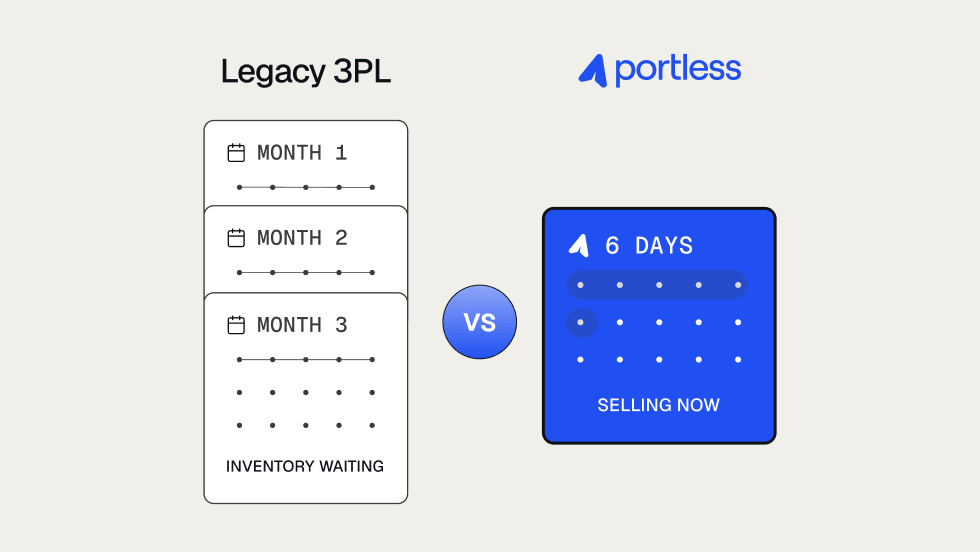
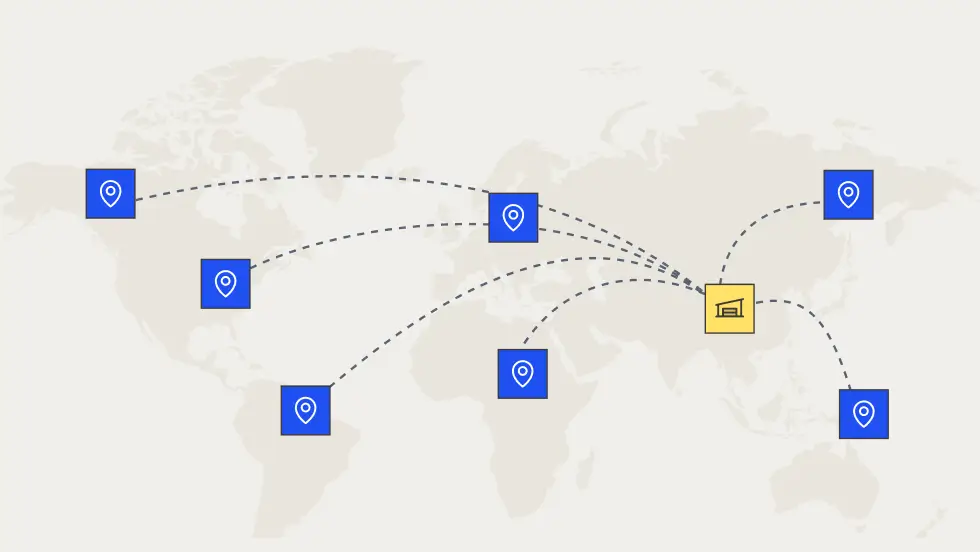
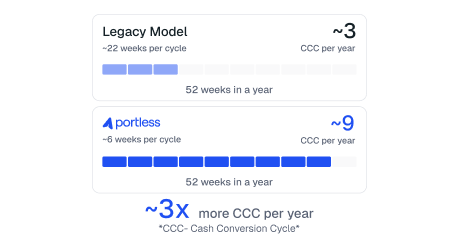
Portless ships orders directly from manufacturers in Asia to customers in 85+ countries, and DDP is built into the model. Duty is paid per order at the time of shipment, not on bulk inventory months before the goods sell. That changes the cash flow equation in two ways: you stop pre-paying duty on units that may never sell, and you only owe duty on orders that have already generated revenue.
If you're modeling the impact of DDP on your unit economics, contact us to walk through how direct fulfillment changes your landed cost and cash conversion cycle.
← Back to the Ecommerce supply chain glossary