Reverse logistics
Reverse logistics is the process of moving goods from the end customer back through the supply chain — for returns, repairs, recycling, refurbishment, or disposal. It's the opposite direction of standard fulfillment, and for most Ecommerce brands, it's a major cost center.
Every order that ships forward has a chance of coming back. For Ecommerce brands, that probability is much higher than retail — around 30% of online purchases are returned, compared to roughly 9% in brick-and-mortar. Reverse logistics is the system that handles what happens next: the transportation, inspection, restocking, refurbishment, resale, or disposal of every returned unit. Done well, it recovers value. Done poorly, it quietly destroys margin.
The legacy model treats reverse logistics as an afterthought. Inventory comes back to a domestic 3PL, sits in a returns queue, gets inspected weeks later, and often ends up discounted, liquidated, or thrown out. The cost compounds: return shipping, labor, warehouse space, and the original landed cost that's already sunk. According to NRF data, US retailers handled $743 billion in returns in 2023 — and Ecommerce returns alone accounted for $247 billion of that.
What reverse logistics actually covers
Reverse logistics is broader than returns. It includes any goods moving backward through the supply chain, for any reason.
- Customer returns: unwanted, wrong size, damaged, or "didn't match expectations" items
- Warranty claims and repairs: products sent back for service, then redistributed
- Refurbishment: restoring used or returned goods to sellable condition
- Recycling and end-of-life disposal: materials reclaimed or destroyed at the end of product life
- Recalls: removing defective or unsafe product from the market
- Excess inventory returns: unsold stock moved back from retailers or fulfillment nodes
For DTC brands, the first category dominates. The rest matter at scale or in regulated categories like electronics and beauty.
The reverse logistics process, step by step
A functional reverse logistics flow has five stages. Most brands lose money at every one of them.
- Return initiation. Customer requests a return through your portal, email, or a third-party returns app.
- Transportation. A label is generated, the customer ships the item back, and it moves to a receiving location.
- Inspection and sorting. The unit is graded: resellable, repairable, refurbishable, or scrap.
- Processing. Restock, repair, refurbish, recycle, or dispose, depending on grade.
- Refund or replacement. The customer is made whole, and the unit re-enters inventory or exits it permanently.
The expensive part isn't the refund — it's everything in between. Return shipping, manual inspection labor, repackaging, and warehouse space all sit on your P&L.
Why reverse logistics is so expensive for Ecommerce brands
Returns cost retailers an average of 66% of the original item price to process. That number includes return shipping, inspection, labor, repackaging, and the gap between original cost and resale value. For a $40 item, you're often eating $25+ in reverse logistics costs before you've even decided whether the unit can be resold.
A few structural reasons it gets worse in DTC:
- Free returns are table stakes. Most customers won't buy without them, so the cost can't be passed through.
- Bracketing. Customers order multiple sizes or colors planning to return most of them.
- Apparel and beauty have the highest return rates. Fit, color, and personal preference drive return volume that other categories don't see.
- International returns are punishing. Cross-border return shipping plus duty reconciliation often costs more than the product itself.
For brands operating on a legacy bulk-import model, returned inventory hits a domestic warehouse, but the original landed cost — including duties paid on the way in — is already gone. That's capital you can't recover, sitting in a returns bin.
Forward logistics decisions shape reverse logistics costs
The cheapest return is the one that never happens. Most reverse logistics cost is created upstream, in decisions made long before a customer hits "return."
- Sizing accuracy and product information: unclear sizing charts and bad product photos drive a disproportionate share of apparel returns
- Quality control at the factory:catching defects at receiving — before products ever ship to customers — eliminates an entire category of returns
- Packaging: under-protective packaging causes in-transit damage that turns into reverse logistics volume
- Delivery speed expectations: research shows that faster-than-expected deliveries actually increase return rates, particularly among new customers
A factory-level QC catch costs pennies. The same defect caught after the unit ships to a customer, gets returned, gets inspected, and gets liquidated costs a multiple of the product's retail price.
How direct fulfillment changes the reverse logistics equation
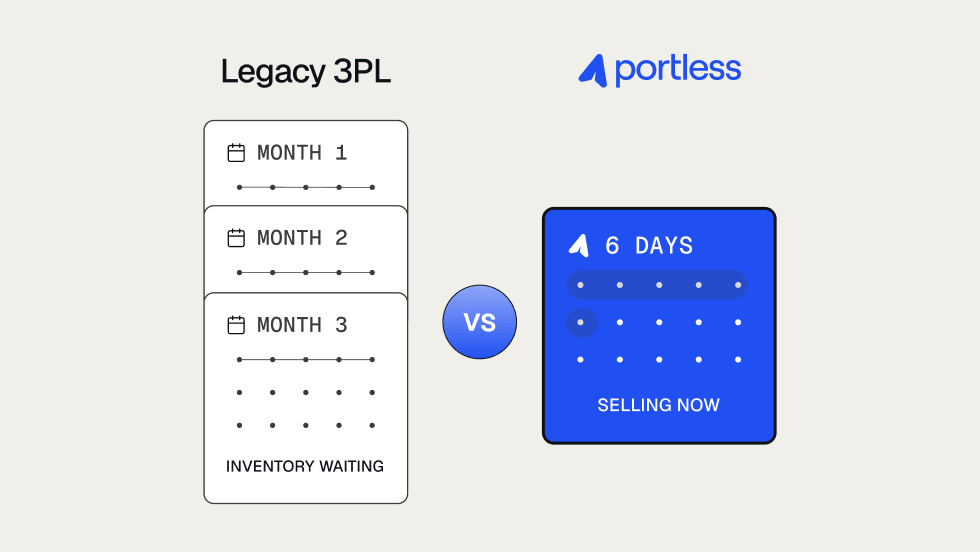
The legacy model forces brands to commit capital upstream: produce in bulk, ship by ocean, pay duties on the full container, sit on inventory in a domestic warehouse for months, then handle returns at the back end with no recourse upstream.
Direct fulfillment from manufacturing hubs changes the math in three ways:
- Upstream QC catches defects before they ship. When the fulfillment center is adjacent to the factory, a defective batch goes back to the production line the same day — not to a customer six weeks later.
- Smaller, more frequent production runs reduce returns from forecast error. You're not stuck with 10,000 units of a SKU customers didn't want.
- DDP shipping means duties are paid per-order, not per-container. When a customer returns a product, you haven't already burned duty cost on thousands of unsold units.
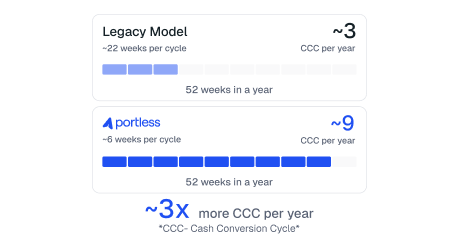
Reverse logistics doesn't disappear. But the volume shrinks, the unit economics improve, and the capital you'd otherwise have trapped in returned inventory stays free.
Cut the reverse logistics problem at the source with Portless
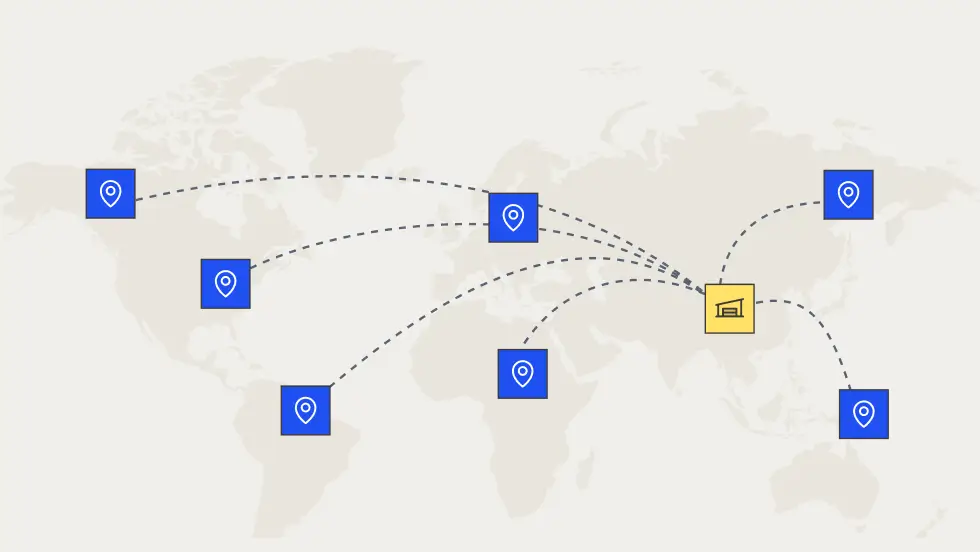
Reverse logistics is mostly a downstream symptom of upstream decisions. Bulk production, six-week ocean freight, and domestic warehousing all amplify return costs because every defect, every misfire, every unsold unit has already cost you cash by the time it hits the returns queue. Portless powers direct fulfillment from manufacturers in Asia, with factory-adjacent QC and DDP shipping, so you're not paying full landed cost on inventory that's about to come back. Contact us to see how it works for your brand.
← Back to the Ecommerce supply chain glossary