“We generated $70K in package protection revenue in a single quarter by adding a simple $4 protection option at checkout — plus an additional $12K from cashbacks. Customers get peace of mind, and we're making a profit on every protected order with zero effort."
“We generated $70K in package protection revenue in a single quarter by adding a simple $4 protection option at checkout — plus an additional $12K from cashbacks. Customers get peace of mind, and we're making a profit on every protected order with zero effort."
As your Ecommerce brand grows, you'd expect it to feel more financially stable. In reality, many brands stay low on cash as they scale, scrambling to keep up with demand.
It's a common stage for growing Ecommerce brands. Cash leaves the business months before revenue comes back in, with money committed across manufacturing, freight, and warehousing long before a product is ever sold.
This article looks at where cash gets stuck across the supply chain, and how more brands are shortening their inventory lead times to free up working capital.
Why growth doesn't always translate into stronger cash flow
One of the trickier parts of growing an Ecommerce brand is that more sales don't always mean more cash flow.
To keep up with demand, you order more inventory, which means more spending on freight and landed costs, all of it upfront. It can take months of lead time for those products to go from manufactured to sold.
That ties up cash you could otherwise put toward marketing, product development, or your next order. It's why so many brands look strong on paper but still feel a crunch day to day.
Where exactly is this cash being trapped?
Cash gets stuck at almost every stage of the legacy Ecommerce supply chain, usually sitting in inventory before that inventory has earned anything back.
For most brands, it starts with forecasting demand and placing large inventory orders months ahead. From there, cash leaves through supplier payments, freight, duties, landed costs, and warehousing fees, long before anything sells.
The bigger issue usually isn't the cost itself, but how long that capital stays locked up. Inventory can sit for weeks or months before revenue comes back in.
This works when demand is steady and forecasting is accurate. But as brands grow, they have to keep committing larger amounts of cash to fund that growth, which is why more operators are taking a closer look at their fulfillment model to shorten lead times and free up capital.
The costs you can't see upfront
You're probably already tracking the visible costs: freight, duties, storage, and fulfillment fees. The bigger costs are often the ones that never show up on an invoice.
Tariff increases can compress margins on stock you've already ordered, especially as US brands navigate tariff uncertainty and de minimis pressure.
Overstocking to guard against disruption raises storage exposure and invites markdowns later.
Long replenishment cycles make it harder to react when a product takes off or demand shifts.
Capital committed across the supply chain limits what you can invest in expansion or innovation.
The longer inventory sits, the more it costs you, not only in storage fees, but in capital that can't be used anywhere else. That's why more brands are weighing not just their costs, but how fast they can turn inventory back into cash.
Calculating how much cash is tied up in inventory
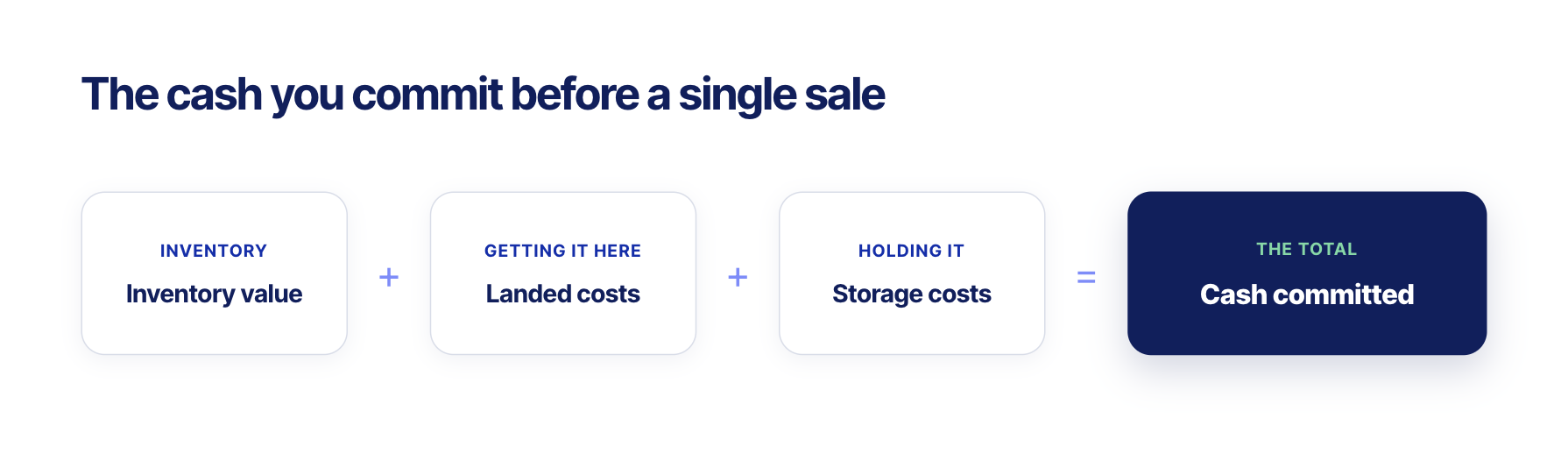
The simplest way to gauge your inventory cash flow risk is to add up how much working capital is sitting in the supply chain before anything sells.
A basic version of the formula looks like this:
Inventory value + landed costs + storage costs = total cash committed
For Ecommerce brands, landed costs usually include:
Average time between manufacturing and customer payment
Once it's filled in, you'll have a clearer picture of your true landed costs, and a better sense of where cash is getting stuck and where the supply chain could be tighter.
Why modern supply chains need more flexibility
For years, the legacy Ecommerce supply chain ran on predictability. Brands could forecast demand months out, import in bulk, and count on costs, shipping, and demand staying relatively stable.
That predictability is harder to rely on in 2026. More brands are changing their fulfillment model to cut risk and stay quick enough to compete.
At Portless, the biggest shifts we've seen are ongoing tariff uncertainty, changing de minimis rules, and a broad rise in global costs. In 2025, the US suspended duty-free de minimis treatment for low-value imports from all countries, and in June 2026 Customs and Border Protection moved to suspend it indefinitely. In the EU, member states will apply an interim €3 customs duty on parcels under €150 from July 1, 2026, ahead of removing the €150 duty exemption.
The flip side is opportunity. A quicker supply chain is a real advantage: if a product takes off through TikTok or paid ads, brands with shorter lead times can ride the demand while it's high instead of waiting on the next shipment.
Less cash locked in inventory also gives brands more room to:
Increase ad spend
Invest in product development
Launch new products faster
Test new international markets
Reorder winning SKUs more quickly
Respond faster when customer demand shifts
The pressure is real: in our survey of Ecommerce brands, 92% had already raised prices in response to tariffs, and 88% of US respondents said recent tariff changes significantly affected their product costs or margins.
That's why more brands now weigh speed and flexibility alongside cost when they choose how to fulfill.
Where you hold inventory can change your cash flow
Most founders pick a fulfillment partner based on the visible costs: storage fees, pick-and-pack rates, and shipping. The small inefficiencies only show up later.
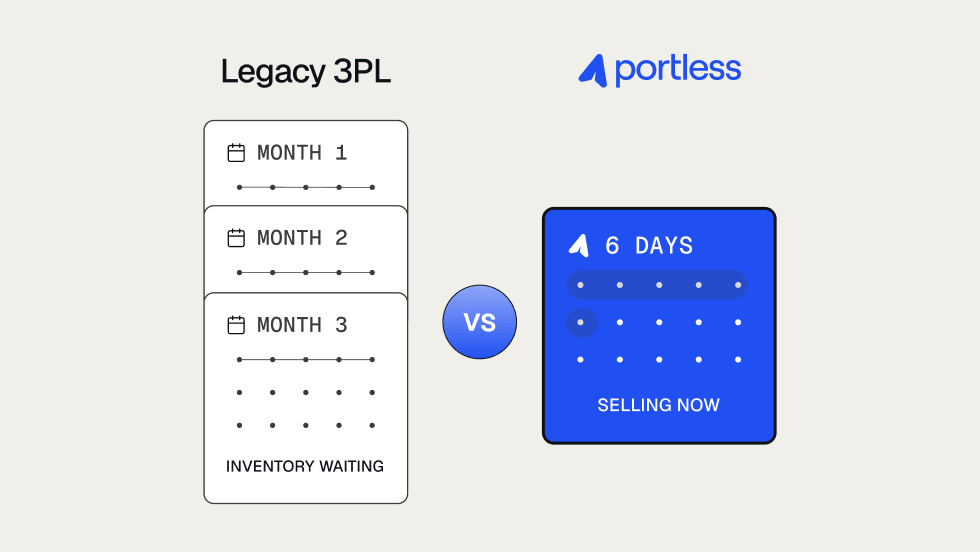
Under a legacy 3PL model, inventory ships in bulk from Asia into regional warehouses before it's sold. That can support fast local delivery, but it carries hidden operational costs and real risk for newer brands, or any brand entering a market it can't forecast yet.
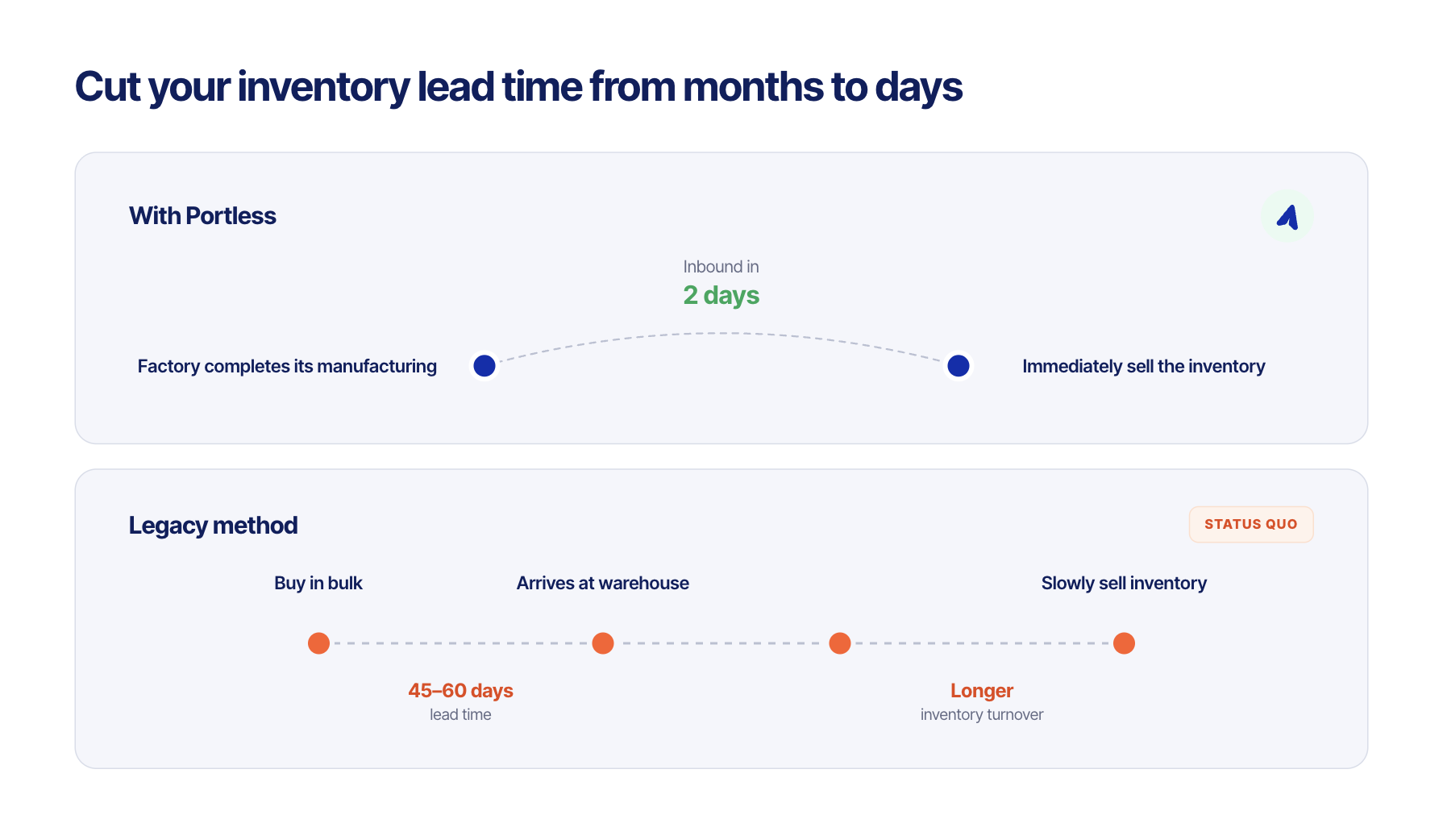
The risk comes from committing early: you pay suppliers upfront, wait 45 to 60 days for ocean freight, move stock into domestic warehouses, then wait again for sell-through and customer payment. In many cases, cash stays committed for at least 79 days before it fully returns to the business.
How direct fulfillment solves this problem
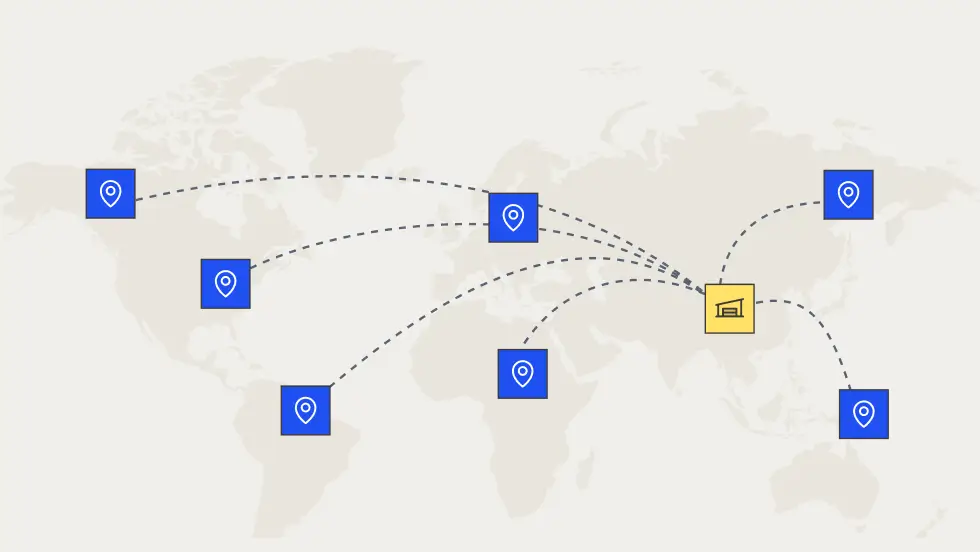
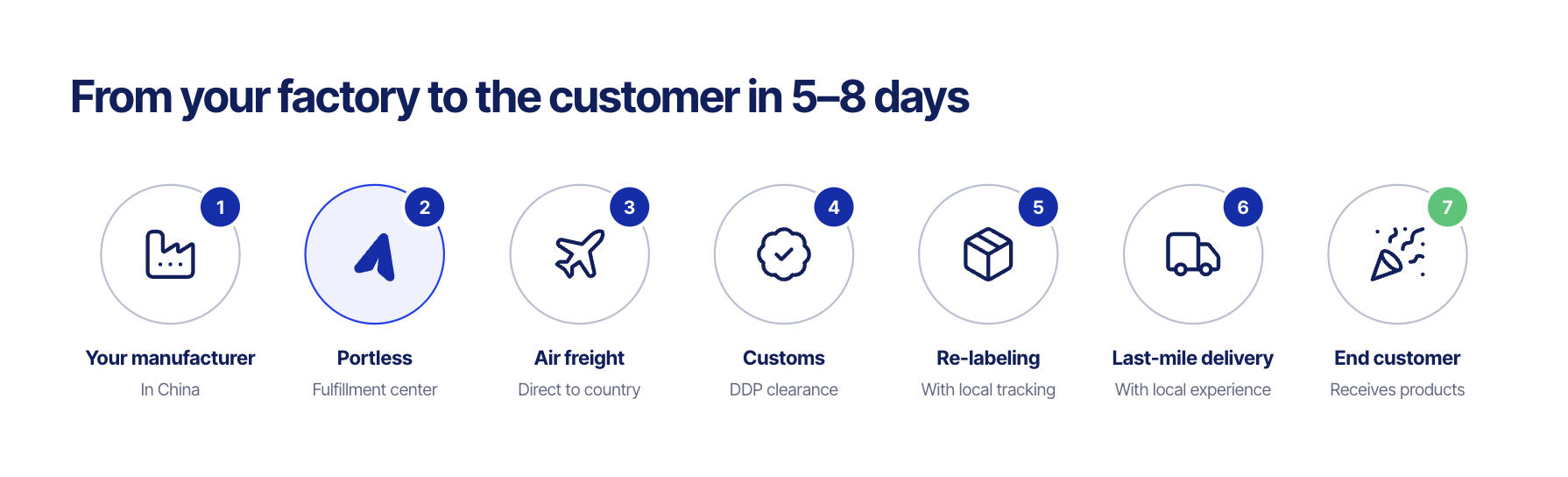
Direct fulfillment takes a leaner approach. Inventory stays centralized near production, and orders ship straight to the customer once they're placed, usually arriving within five to eight days.
Because goods move closer to the customer before entering the local delivery network, brands sidestep the delays and congestion at major ports like Los Angeles. And they only pay landed costs on inventory that's actually sold, instead of fronting cash for a bulk order.
To see how it works step by step, visit our explainer page.
How the fulfillment model you choose affects your margins
Your fulfillment model decides how much cash gets locked in inventory and how quickly you can adapt to demand. Here's how the most common options compare.
Comparing fulfillment models
::table
Model;Upfront cash;Risk;Speed;Branding control;Who it's best for
Legacy bulk importing (3PL);High upfront spend;High risk of overstock and markdowns;60 to 90+ days;High;Brands with predictable demand
Direct fulfillment;Lower upfront spend;Lower risk with faster replenishment;5 to 8 days;High;Growing brands that want flexibility and better cash flow
:table
The right setup depends on your product and growth plans. For most Ecommerce brands, direct fulfillment is becoming the default because it commits less cash early while keeping control over the customer experience and delivery speed.
What direct fulfillment looks like in practice
Here are two brands that used direct fulfillment to clear a growth bottleneck.
memobottle
memobottle is an Australian lifestyle brand known for its flat, slimline reusable water bottles. As it scaled internationally, the brand was running six warehouses around the world and carrying a roughly 120-day cash conversion cycle, which spread inventory thin across regions and made replenishment complex.
Consolidating all six warehouses into a single direct fulfillment setup cut memobottle's cash conversion cycle by more than 100 days and reduced the inventory it had to hold by 5x, freeing up working capital that had been locked across multiple markets.
Craft Club
Craft Club is a fast-growing craft kit brand run by a husband-and-wife team. As demand climbed, they kept hitting the same wall: they couldn't replenish fast enough, their cash was stuck in ocean freight, and their best sellers kept going out of stock.
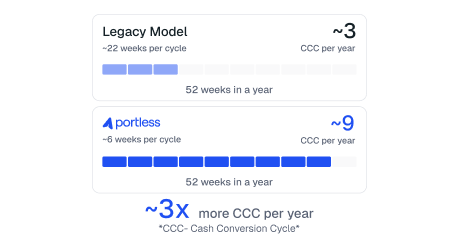
Switching to direct fulfillment cut their cash conversion cycle by 3x and supported 300% growth. It also let them launch into new international markets without committing inventory upfront across multiple warehouses.
A reading list based on the challenge you're trying to solve
Every business is different, and what works for one brand won't fit another. Use the guides below to go deeper on whatever's closest to your situation.
For growing Ecommerce brands, demand is the exciting part. The hard part is building a supply chain that keeps up without forcing too much cash into inventory too early.
That's why more brands are moving to direct fulfillment: shorter lead times make it easier to restock winners, react when demand shifts, and scale into new markets.
If you manufacture in Asia and want a more flexible way to grow internationally, Portless handles direct fulfillment and delivery into 85+ countries. If you're weighing your options, request a demo.
FAQ
What are common cash flow mistakes?
The most common mistake is tying up too much cash in inventory too early. Brands over-order stock, underestimate landed costs, or lean on long forecasting cycles that leave cash sitting in the supply chain for months before products sell. Overstocking, slow-moving products, and spending on marketing before inventory is replenished are close behind.
What are the warning signs of poor cash flow?
The clearest sign is running low on cash despite strong sales. You might also be leaning on financing to cover operating costs, or struggling to fund growth. For Ecommerce brands, poor cash flow usually traces back to too much capital sitting in freight and warehousing for long stretches.
Frequently asked questions
Heading
Lorem ipsum dolor sit amet, consectetur adipiscing elit. Suspendisse varius enim in eros elementum tristique. Duis cursus, mi quis viverra ornare, eros dolor interdum nulla, ut commodo diam libero vitae erat. Aenean faucibus nibh et justo cursus id rutrum lorem imperdiet. Nunc ut sem vitae risus tristique posuere.
Get operator-level supply chain insights
Thank you! Your submission has been received!
Oops! Something went wrong while submitting the form.






.avif)

.jpg)
%20(1).jpg)
%20(1)%20(1).avif)