Amazon multi-channel fulfillment (MCF)
Amazon multi-channel fulfillment (MCF) is a service that lets sellers use Amazon's FBA warehouses and logistics network to fulfill orders placed on non-Amazon sales channels, including Shopify, Walmart, TikTok Shop, and a brand's own website. Orders pull from the same FBA inventory pool, with delivery options ranging from two to five business days inside the US.
Amazon multi-channel fulfillment (MCF) extends Amazon's fulfillment infrastructure beyond the Amazon marketplace. If you already store inventory in Amazon's network for FBA, MCF lets that same inventory ship customer orders from Shopify, BigCommerce, Walmart, eBay, TikTok Shop, SHEIN, or your own DTC site — without standing up a separate 3PL or warehouse operation.
For brands juggling multiple sales channels, MCF can feel like a shortcut. One inventory pool, one operator, one set of SLAs. But the model carries trade-offs that matter once you understand how it actually prices, packages, and ships orders — especially for DTC brands manufacturing in Asia who are weighing MCF against direct fulfillment from the point of production.
How Amazon multi-channel fulfillment works
You send inventory to Amazon's fulfillment centers the same way you would for FBA. When an order comes in from a non-Amazon channel, you submit a fulfillment request through Seller Central, the MCF API, or a third-party integration (Shopify and Walmart have native connections as of Amazon's September 2025 expansion).
Amazon picks, packs, and ships the order from the nearest fulfillment center. You pick the delivery speed at order creation:
- Standard: three to five business days
- Expedited: two business days
- Priority: next-day delivery in select zones
Inventory is shared across FBA and MCF by default — meaning the units you store for Amazon orders are the same units fulfilling Shopify orders. You can also block MCF from pulling FBA inventory if you want to keep pools separate.
MCF pricing structure
MCF charges a per-unit fulfillment fee based on item size, weight, and selected delivery speed. Storage fees are billed monthly per cubic foot, with higher rates from October through December. Unlike FBA, MCF orders are not subject to Amazon referral fees because the sale happens off-platform.
Pricing varies significantly by category and speed tier. A standard-size apparel item shipped at two-day speed will cost meaningfully more than the same item at five-day speed. For accurate cost modeling, you'll want to run your own SKUs through Amazon's MCF rate calculator — published rate cards change frequently.
Where MCF fits and where it breaks
MCF works when you're already operating heavily inside Amazon's ecosystem and want a simple way to fulfill spillover channels without onboarding a separate 3PL. It's a reasonable bridge for brands with low non-Amazon volume that doesn't justify dedicated infrastructure.
The model breaks in a few predictable ways:
- Unbranded packaging. MCF ships in Amazon-branded boxes by default. Unbranded packaging is available but adds per-unit fees, and you have limited control over inserts, tissue, or any unboxing experience.
- No marketing inserts or custom packaging. If your brand depends on a curated post-purchase moment, MCF is a downgrade from a dedicated 3PL or direct fulfillment partner.
- Inventory still has to get there. MCF doesn't solve the upstream problem. You're still moving bulk inventory via ocean freight to Amazon's warehouses, paying duties upfront on unsold stock, and forecasting demand months in advance.
- International coverage is limited. MCF operates in specific countries (US, UK, Germany, France, Italy, Spain, Canada, Japan, and a few others). Cross-border fulfillment to the 85+ markets a global DTC brand might serve requires additional infrastructure.
- Capacity throttling during peak. Amazon prioritizes Prime orders during Q4. MCF SLAs can stretch when fulfillment centers are under load.
MCF vs. direct fulfillment from manufacturers
The fundamental difference is where your inventory sits and when capital gets committed.
::table
Factor;Amazon MCF;Direct fulfillment from China
Inventory location;US fulfillment centers (and select countries);Factory-adjacent hub at point of manufacture
Upfront capital;Bulk inventory paid for, shipped, and duties paid before sale;Inventory available for sale days after production
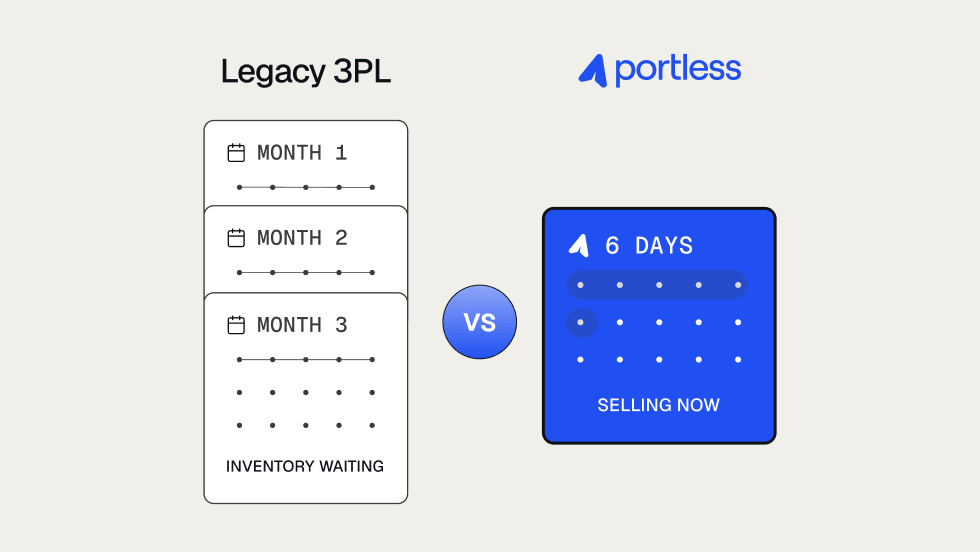
Lead time from production;45–60 days (ocean freight + receiving);Five to eight days direct to customer
Packaging control;Amazon-branded by default, limited customization;Full control, branded packaging, inserts
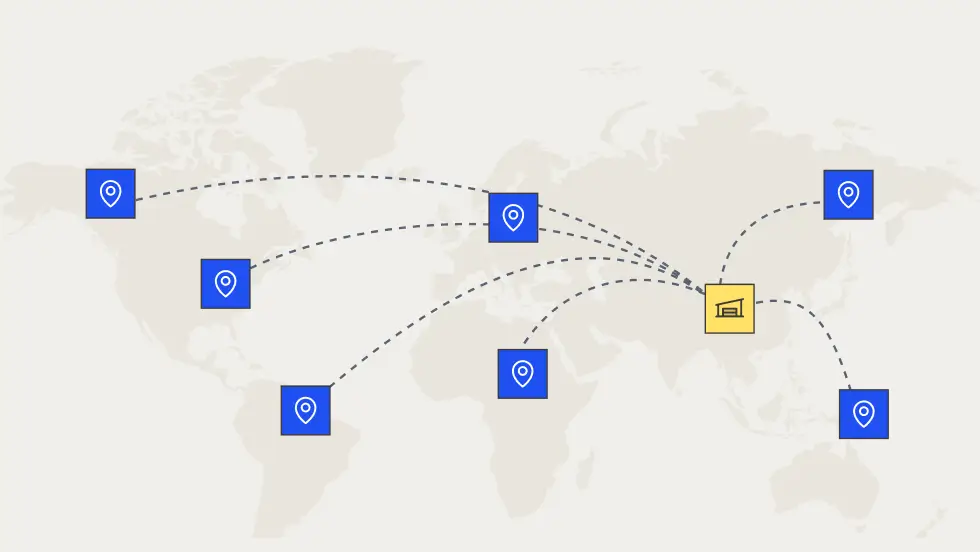
International coverage;Limited country list;85+ countries from a single inventory pool
Duty model;Duties paid upfront on bulk imports;DDP at the order level
:table
For brands manufacturing in Asia, the legacy MCF path means paying for inventory, shipping it across an ocean, paying duties, and storing it — all before a single non-Amazon order is placed. Direct fulfillment from the point of manufacture compresses that cycle by keeping inventory upstream and committing units only when orders come in.
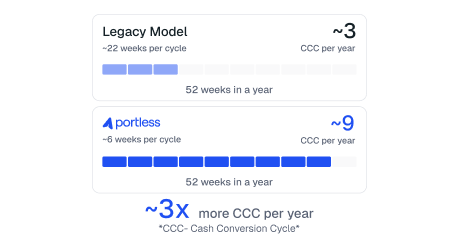
This is the same model Shein and Temu use to move billions of units globally, and it's the structural reason their cash conversion cycle is fundamentally different from a brand running on bulk freight plus MCF.
When MCF makes sense (and when it doesn't)
MCF makes sense if:
- Amazon is your primary channel and non-Amazon sales are a small percentage of total volume
- You're willing to accept Amazon-branded packaging or pay the premium for unbranded
- Your customer base is concentrated in MCF-eligible countries
- You need a fast way to fulfill a secondary channel without 3PL onboarding
MCF doesn't make sense if:
- You sell internationally beyond MCF's country list
- Branded unboxing matters to your repeat purchase rate
- You manufacture in Asia and are bleeding cash on upfront inventory
- Your non-Amazon channels are larger than your Amazon channel
Skip the warehouse, ship from the factory
MCF is a workable patch for brands deep inside Amazon's ecosystem. It's not a solution for the structural problem most DTC brands face: capital trapped in inventory sitting in domestic warehouses, months before it sells. Portless ships orders directly from your manufacturer in Asia to customers in 85+ countries in five to eight days — no bulk freight, no upfront duties on unsold stock, no Amazon-branded boxes. Contact us to see how the model fits your brand.
← Back to the Ecommerce supply chain glossary