Dimensional weight (DIM weight)
Dimensional weight (DIM weight) is a pricing method carriers use to charge for packages based on the space they occupy rather than their actual weight. It's calculated by multiplying a package's length, width, and height, then dividing by a carrier-specific DIM divisor.
If you've ever shipped a lightweight pillow or a bulky pair of sneakers and been hit with a shipping bill that didn't match the scale, you've met DIM weight. Carriers like FedEx, UPS, DHL, and USPS price most parcels by whichever number is higher: the actual weight or the dimensional weight. For brands shipping low-density goods — apparel, beauty kits, certain electronics accessories — DIM weight is often the number that ends up on the invoice, and it directly compresses margin per order.
The logic from the carriers' side is straightforward: a truck or plane runs out of space before it runs out of payload. Light, bulky packages take up cargo capacity that could otherwise hold denser, more profitable freight. DIM pricing is how carriers recoup that opportunity cost — and how it lands on your P&L.
How dimensional weight is calculated
The formula is consistent across major carriers, even if the divisor changes:
DIM weight = (Length × Width × Height) ÷ DIM divisor
Carriers measure each dimension in inches (or centimeters), multiply them to get cubic volume, then divide by a DIM factor set by the carrier. The result is the "dimensional weight" in pounds (or kilograms). You're then billed on the greater of the dimensional weight or the actual scale weight, which carriers call the billable weight.
Current DIM divisors for domestic U.S. shipments (as published by the carriers):
- UPS: 139 for daily rates (UPS reference)
- FedEx: 139 for domestic and international (FedEx reference)
- USPS: 166 for applicable Priority Mail and Ground Advantage packages over one cubic foot
- DHL Express: 139 (5000 for metric, cm³/kg)
A lower divisor means a higher DIM weight — and a higher shipping charge.
A quick example
Say you ship a 14" × 12" × 10" box of apparel that actually weighs two pounds.
- Cubic size: 14 × 12 × 10 = 1,680
- DIM weight (UPS/FedEx, divisor 139): 1,680 ÷ 139 = 12.1 lbs
- Actual weight: 2 lbs
- Billable weight: 12 lbs
You're paying to ship the equivalent of a 12-pound package, not a two-pound one. Across thousands of orders per month, that gap is real money.
Why DIM weight matters for DTC brands
DIM weight isn't an accounting curiosity. It's a structural cost that shapes packaging design, fulfillment economics, and even product development. A few specific reasons it matters more now than five years ago:
- Carriers have tightened divisors. UPS and FedEx both moved their domestic divisor from 166 to 139 over the past decade, raising effective DIM costs without changing the headline rate.
- Lightweight Ecommerce categories are the most exposed. Apparel, beauty kits, home textiles, and small electronics with protective packaging often DIM out long before they hit their actual weight tier.
- Packaging decisions become margin decisions. A box that's 20% larger than it needs to be can mean a 20% higher shipping cost per order, every order.
For brands managing tight unit economics, DIM weight is one of the variables that quietly determines whether contribution margin is healthy or eroding.
How to reduce DIM weight charges
You can't change the divisor, but you can change what gets put in the box. The most effective levers:
- Right-size your packaging. Match box dimensions to product dimensions. Excess air is excess cost.
- Use poly mailers where possible. Soft, conformable packaging often falls below DIM thresholds entirely for apparel and similar items.
- Review packaging across your top SKUs quarterly. Carrier divisors and surcharges change. Product mixes change. The optimal box size last year may not be optimal now.
- Negotiate DIM divisors with your carrier. High-volume shippers can often negotiate a more favorable divisor as part of their contract.
- Consider where your packages originate. Shipping from a domestic 3PL means every parcel hits domestic DIM pricing. Shipping direct from manufacturing in Asia routes packages through international carrier networks with different pricing structures — and skips the inbound freight where bulky packaging compounds your costs twice.
How DIM weight interacts with international shipping
For cross-border parcels, DIM weight applies on top of duties, taxes, and customs handling. International carriers typically use a metric divisor of 5,000 (cm³/kg), and freight forwarders, postal networks, and express carriers each apply their own rules.
If you're shipping bulk ocean freight to a domestic warehouse and then parcel-shipping to customers, you pay the DIM penalty twice: once on the inbound container space your bulky packaging consumes, and again on every last-mile parcel. Direct fulfillment models compress that — packages are built once at the source and enter the destination carrier network at parcel scale.
For more on how this affects total cost, see our breakdown of landed cost and how shipping zones stack onto the equation.
How Portless changes the DIM weight equation
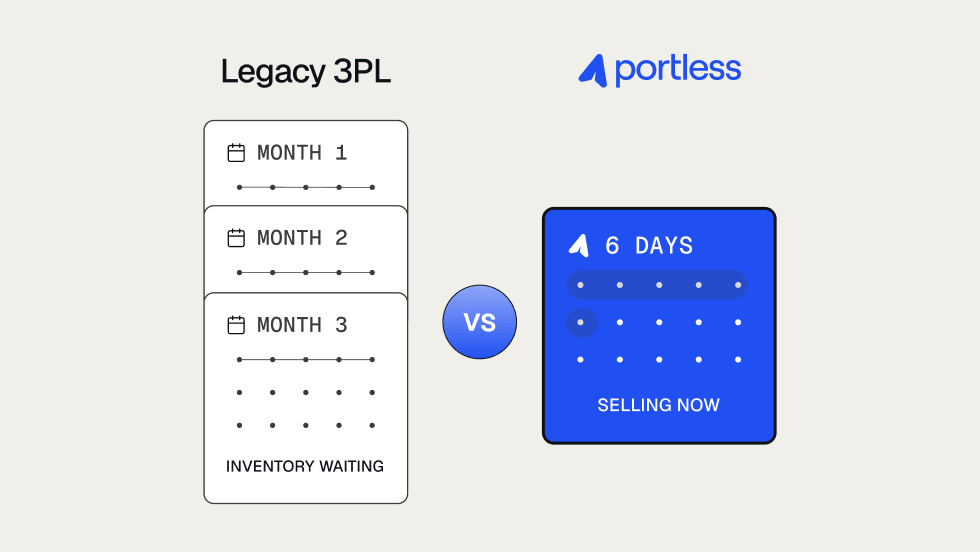
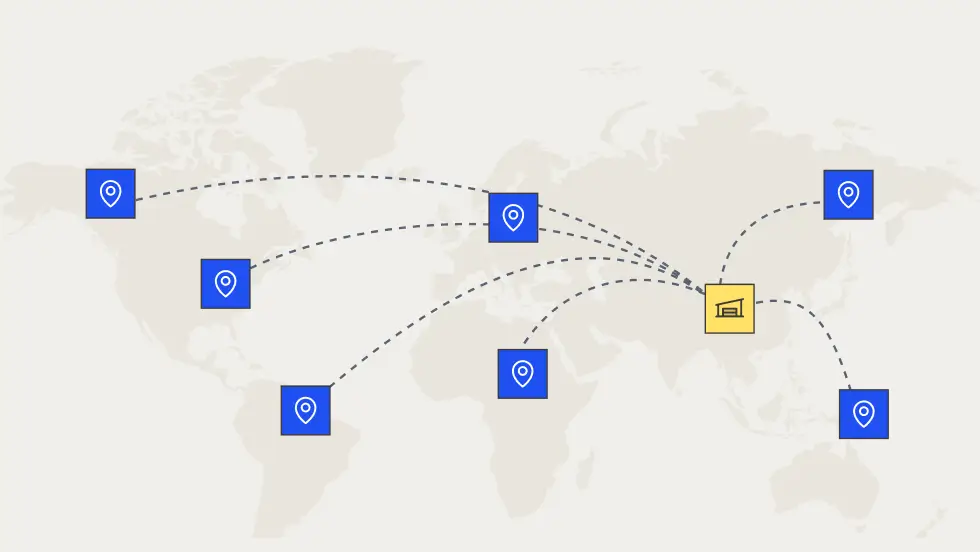
Portless ships directly from manufacturers in Asia to customers in 85+ countries, which means your packaging is finalized once — at the point of manufacture — and enters the destination carrier network as an individual parcel. You skip the legacy step of stuffing oversized boxes into ocean containers, paying for that wasted cubic space twice, and then re-handling at a domestic 3PL.
Combined with multi-carrier routing and DDP customs handling, brands typically see lower effective per-parcel costs on lightweight goods (under 3.5 lbs) than they would running bulk freight plus domestic fulfillment. If DIM weight is eating your margins, contact us to see how the numbers change with direct fulfillment.
← Back to the Ecommerce supply chain glossary