Last mile delivery
Last mile delivery is the final leg of a shipment's journey, moving a package from a local carrier hub or distribution center to the customer's door. It's the most expensive and operationally complex segment of the delivery chain, often accounting for 40-50% of total shipping costs.
The last mile is where every upstream decision in your supply chain gets judged. Your customer doesn't see the ocean container, the customs broker, or the 3PL pick line. They see one thing: how long it took for the package to show up after they clicked buy. That makes last mile delivery the single most visible part of your operation, and the part where speed, accuracy, and cost pressure collide the hardest.
For DTC brands selling globally, the last mile isn't just a cost line. It's the moment your brand experience either holds up or falls apart. A perfect product shipped through a slow, opaque last mile feels cheap. A reasonable product delivered fast and tracked cleanly feels premium.
How last mile delivery works
Last mile delivery begins when a package arrives at a local sortation facility or carrier hub in the destination country. From there, it's loaded onto a delivery vehicle, routed alongside other parcels going to the same area, and dropped at the customer's address.
The handoff typically looks like this:
- A package arrives at a regional distribution center via line haul (truck, rail, or air freight)
- It's sorted by zip code or postal code and assigned to a delivery route
- A driver loads the route, often 100-200 stops per shift
- Each package is scanned at delivery, triggering the final tracking update to the customer
In the US, the major last mile carriers are USPS, UPS, FedEx, and a growing list of regional players. In international markets, last mile is handled by the local postal authority or a domestic courier — Canada Post in Canada, Royal Mail in the UK, Australia Post in Australia, and so on.
Why last mile delivery is so expensive
The last mile is short in distance but expensive in everything else. A few reasons:
- Density problems. Rural and suburban routes mean drivers cover more miles per stop. A delivery truck running 80 stops in dense urban geography is far more efficient than one running 40 stops across spread-out neighborhoods.
- Failed deliveries. Missed addresses, signature requirements, and porch theft create reattempts. Every reattempt is essentially a second last mile at full cost.
- Speed expectations. Same-day and next-day delivery require dedicated routes, higher driver counts, and tighter sortation windows — all of which add labor cost per package.
- Labor intensity. Unlike line haul, the last mile can't be fully automated. Every stop requires a human to physically move a package from vehicle to door.
According to research from Capgemini, last mile delivery accounts for 41% of total supply chain costs on average. For some Ecommerce categories, it's higher.
The role of last mile in cross-border Ecommerce
For brands manufacturing in Asia and selling globally, the last mile is where international shipping becomes a domestic experience — or fails to.
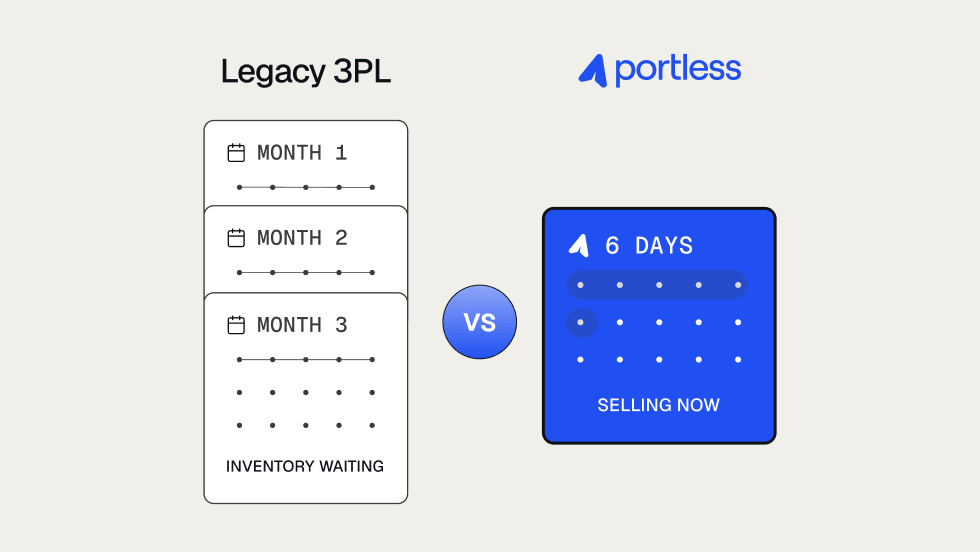
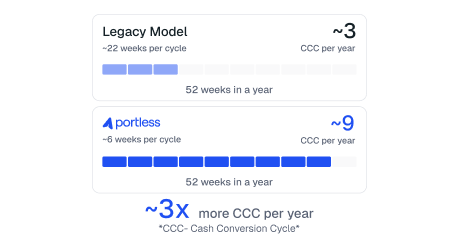
Legacy supply chains move inventory in bulk via ocean freight to a domestic 3PL, where orders are then picked, packed, and handed to a local last mile carrier. The last mile itself is fast, but everything upstream is slow: 30-60 days of ocean transit, weeks of warehousing, and capital locked in inventory that may never sell.
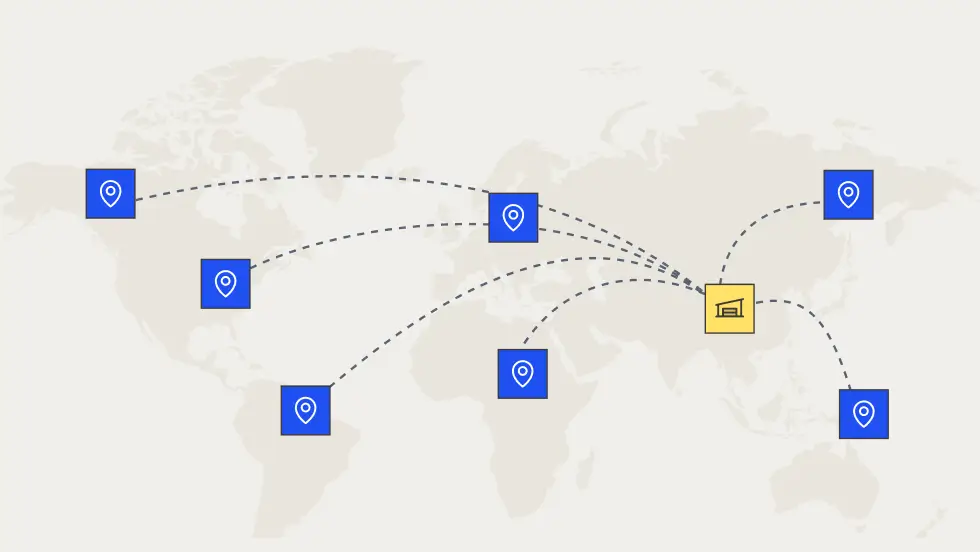
Direct fulfillment models flip this. Orders are picked and packed at origin (in Asia), flown via air freight to the destination country, and injected directly into the local last mile carrier network. The customer experience looks identical to a domestic shipment — same tracking format, same carrier, same delivery window — but the brand carries dramatically less inventory and frees up cash.
This is the model Shein and Temu have used to scale globally, and it's how Portless brands deliver orders in five to eight days from Asia to North America, Europe, and beyond.
What customers see on the last mile
One of the most overlooked aspects of last mile delivery: it's where the customer's tracking experience lives. The line haul tracking number issued at origin is typically replaced — or appended — with a domestic last mile tracking number once the package lands in-country.
This matters for a few reasons:
- Customers trust familiar carriers. A tracking page from USPS or Canada Post reads as standard. A tracking page showing an unfamiliar overseas origin can create doubt.
- Most "where is my order" (WISMO) support tickets are tied to the last mile, not the line haul. Clean tracking handoffs reduce support volume.
- Brands that don't want to disclose manufacturing origin can lean on the domestic last mile label to keep the experience consistent with a US- or EU-based brand.
How to evaluate last mile performance
The metrics that matter for last mile delivery aren't complicated, but most brands don't track them rigorously:
- On-time delivery rate. Percentage of packages delivered within the promised window
- First-attempt success rate. Percentage of packages delivered without a reattempt
- Damage and loss rate. Percentage of packages flagged as damaged or never delivered
- Cost per package. All-in last mile cost, including base rate, surcharges, fuel, and residential fees
- Tracking event accuracy. How often tracking updates reflect actual package location
Brands running multi-carrier last mile strategies — using different carriers for different zones or service levels — typically outperform single-carrier setups on cost and speed.
Where Portless fits in the last mile
Portless handles the entire chain from factory to last mile carrier injection. You manufacture in Asia, we pick and pack the order at origin, fly it via air freight, and hand it to the local last mile carrier in the destination country. Your customer sees a domestic tracking experience and a five to eight day delivery window — without you holding inventory in a US warehouse.
If you're running a legacy 3PL model and your last mile is the only part of your supply chain that actually works, the problem isn't the last mile. It's everything upstream. Talk to us about how direct fulfillment changes the math.
← Back to the Ecommerce supply chain glossary