Free trade zone (FTZ)
A free trade zone (FTZ) is a designated area, treated as outside a country's customs territory, where imported goods can be stored, handled, assembled, or re-exported without triggering standard duties or taxes until they formally enter the domestic market.
A free trade zone (FTZ) — known as a foreign-trade zone in the US — is a customs-supervised area where you can land imported goods without immediately paying duties, taxes, or many of the fees tied to formal entry. Duties apply only when the goods leave the zone and enter the domestic market for consumption. If the goods are re-exported, you may avoid most US duties entirely. For Ecommerce brands selling lightweight products from Asia, FTZs are one of several tools used to delay duty payments, protect cash flow, and reduce exposure on inventory that hasn't sold yet.
How a free trade zone works
You import goods into the FTZ under US Customs and Border Protection (CBP) supervision. The goods sit in legal limbo — physically inside the US, but treated as if they're still outside the customs border. You can store, repackage, inspect, assemble, or manufacture inside the zone without triggering duty.
Duty becomes payable only when:
- Goods are withdrawn from the zone for US consumption
- Goods are entered as a finished product (often at a lower duty rate than the components)
- Goods are destroyed or scrapped (in which case, no duty applies)
If the goods are re-exported to another country, you generally pay no US duties at all.
What FTZs are used for
The International Trade Administration lists more than 250 active FTZs across the US. Most are used by large manufacturers, automakers, and bulk importers — not Ecommerce brands. The core use cases:
- Deferring duty payments on inventory until it actually sells
- Reducing duty rates by entering goods as finished products rather than components
- Avoiding duty entirely on re-exported merchandise
- Eliminating duty on scrap, waste, or damaged inventory
- Consolidating customs entries to cut brokerage and filing fees
How FTZs differ from bonded warehouses
FTZs and bonded warehouses both let you defer duties, but they aren't the same thing.
::table
Feature;Free trade zone;Bonded warehouse
Duration;Indefinite;Up to five years (US)
Allowed activities;Storage, manufacturing, assembly, repackaging;Mostly storage and minor handling
Duty treatment;Pay on withdrawal, often at finished-good rate;Pay on withdrawal at original import rate
Best for;Manufacturers, large importers;Importers needing flexible storage
:table
FTZs offer more operational flexibility. Bonded warehouses are simpler to use but more limited in scope.
Why FTZs don't solve the core Ecommerce supply chain problem
FTZs are designed for the legacy model: import bulk inventory, hold it in the US, then push it through warehouses to customers. They reduce some of the duty pain that model creates — but they don't fix it.
The structural problem with bulk importing isn't just duty timing. It's:
- Cash locked up in 60+ days of inventory bought on forecast
- Long lead times that force demand bets months in advance
- Warehouse fees, pick-and-pack costs, and 3PL overhead
- Dead stock when forecasts miss
An FTZ defers the duty bill. It doesn't free up the working capital tied to the inventory itself. For a DTC brand doing $1–15M in revenue, that distinction matters.
How direct fulfillment changes the math
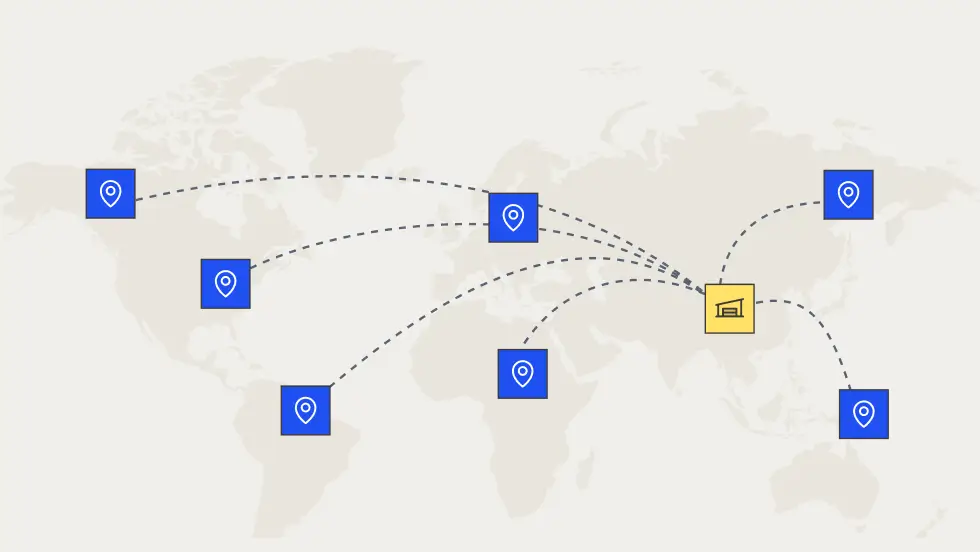
Direct fulfillment from the manufacturer flips the model. Instead of importing bulk inventory and storing it (in an FTZ or otherwise), goods ship per order from the point of manufacture in Asia directly to the end customer. The result:
- You pay duty only on units that actually sold
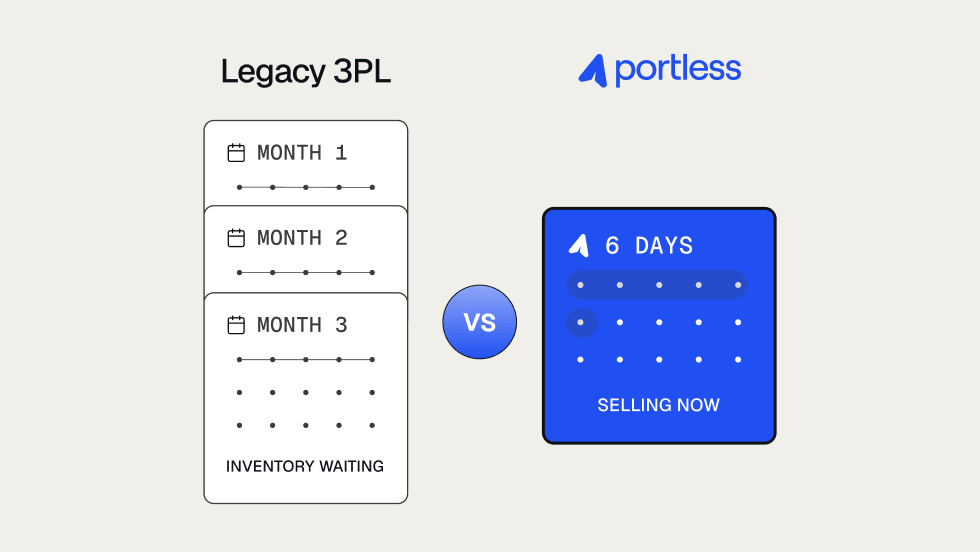
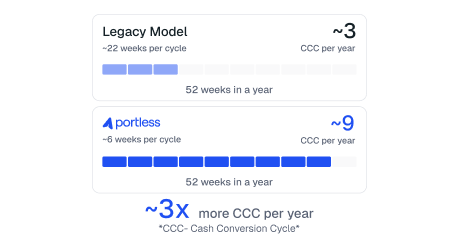
- Cash conversion cycles compress from months to days
- No warehouse fees on unsold inventory
- No demand-forecast bets months in advance
This is the same model Shein and Temu built their advantage on. After the US ended the $800 de minimis exemption in August 2025, duty deferral via per-order fulfillment became more important — not less. Even with duty owed on every parcel, you're only paying it on units that generated revenue.
How a free trade zone connects to the Portless model
Portless gives you the cash flow benefit of an FTZ without the warehouse overhead. By fulfilling direct from manufacturers in Asia, you defer duty until the moment of sale — the same outcome an FTZ offers, but without holding bulk inventory in the US. If you want to see what that looks like for your brand, contact us.
← Back to the Ecommerce supply chain glossary