First sale law
First sale law is a US customs valuation principle that allows importers to base duties on the price of the first sale in a multi-tiered transaction — typically the manufacturer-to-middleman price — rather than the higher price the importer ultimately paid. The result: a lower dutiable value and meaningful tariff savings.
When you import goods through a middleman, you've usually paid a marked-up price by the time the product reaches your warehouse. First sale law says you don't have to use that marked-up price as the basis for duties. If the transaction qualifies, you can use the earlier, lower price — the one between the factory and the middleman — to calculate what you owe US Customs and Border Protection (CBP). For brands sourcing from Asia at high tariff rates, that gap can mean 10–20% in duty savings on every shipment.
The rule traces back to the 1988 Federal Circuit case E.C. McAfee Co. v. United States, which established that the price paid in the initial sale of a multi-tier transaction could serve as the basis for transaction value — provided the sale was at arm's length and the goods were clearly destined for export to the US.
How first sale law works
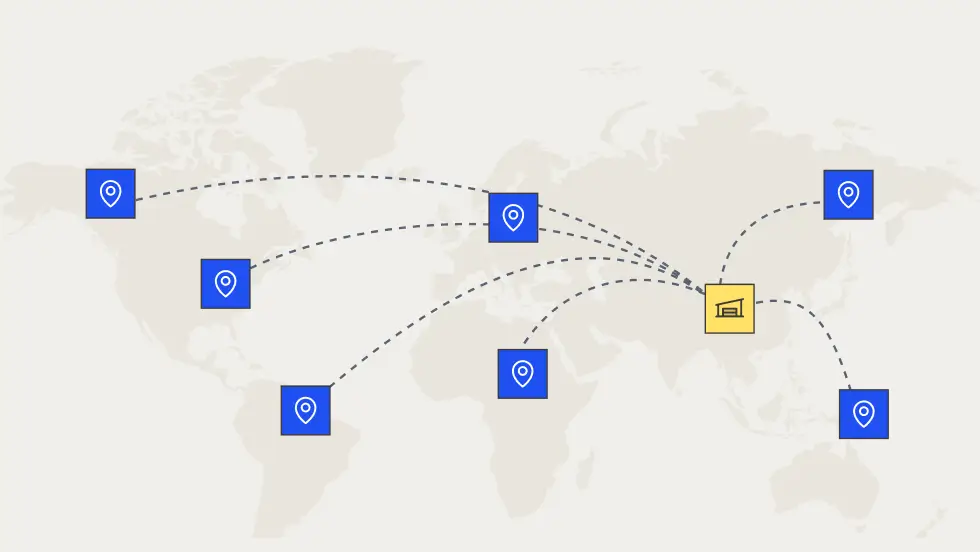
The mechanics are straightforward, but the qualifying conditions are strict. A typical first sale structure involves three parties:
- The manufacturer — the factory that produces the goods, often in China
- The middleman — a trading company, sourcing agent, or related entity (sometimes a Hong Kong corporation set up by the factory itself)
- The US importer — the brand bringing goods into the country and acting as importer of record
In a standard import, you pay the middleman, and CBP uses that price as the dutiable value. Under first sale, you declare the lower factory-to-middleman price instead. The 10–20% markup that typically covers the middleman's marketing, financing, and overhead drops out of the duty calculation.
For CBP to accept the first sale price, three conditions must be met:
- The transaction must be a bona fide sale, not a consignment or service arrangement
- The sale must be at arm's length, meaning unrelated parties or a defensible related-party price
- The goods must be clearly destined for export to the United States at the time of the first sale
Documentation is non-negotiable. You need purchase orders, invoices, payment records, and shipping documents that prove the factory knew the goods were headed to the US from the start.
Why first sale law matters more in a high-tariff environment
When tariff rates were 5–10%, first sale savings were nice but rarely worth the legal and accounting overhead. With IEEPA tariffs, Section 301 duties, and reciprocal tariffs stacking on top of base rates, the math has changed. A 20% reduction in dutiable value on a 50%+ tariff rate is real money — often six or seven figures annually for mid-market brands.
That's why first sale has moved from a niche tool used by large apparel and footwear importers to a strategy worth evaluating for any brand importing serious volume from a single factory.
Who first sale law is (and isn't) for
First sale is not a universal hack. Setting it up properly requires legal counsel, customs brokers, and ongoing documentation discipline. The overhead generally doesn't pay off unless you're importing $1–2M+ of goods annually from a single factory.
It works best for:
- Brands using a manufacturer + trading company structure
- Importers with consistent, high-volume sourcing relationships
- Categories with high tariff rates (apparel, footwear, electronics, home goods)
It typically doesn't make sense for:
- Brands buying from many small suppliers
- Importers with low total duty exposure
- Companies without the legal and finance infrastructure to maintain the program
For most direct fulfillment brands, the standard transaction value — the price you actually paid the factory — is sufficient and far simpler to administer.
First sale law vs. transaction value
The default method for valuing imports is transaction value, defined in Section 402 of the Tariff Act of 1930 as "the price actually paid or payable for merchandise when sold for exportation to the United States." CBP presumes that this is the price the importer paid.
First sale law is a legal exception to that default. It says: when there are multiple sales in the chain before importation, the importer can elect to use the earliest qualifying sale as the basis for duties, not the most recent one.
The difference in practice:
- Transaction value: you paid the middleman $10/unit. Duty is calculated on $10.
- First sale: the factory sold to the middleman for $8/unit before any of those goods reached you. Duty is calculated on $8.
On a 30% tariff rate, that's $0.60 per unit in savings. Across 500,000 units annually, that's $300,000.
Compliance risks and CBP scrutiny
CBP scrutinizes first sale claims closely. Recent enforcement actions and a First Sale Declaration Requirement mean importers using this method must affirmatively flag it at entry. The risks of getting it wrong are serious:
- Retroactive duty assessments on years of imports
- Penalties under 19 U.S.C. § 1592 for negligence or fraud
- Loss of the program and reputational damage with CBP
The most common failure points: poor documentation of the first sale transaction, related-party pricing that can't be defended at arm's length, and inability to prove the goods were destined for export to the US at the time of the first sale.
This is not a DIY exercise. Brands using first sale should work with experienced trade counsel and a customs broker who has set up programs before.
How Portless brands handle tariffs without first sale complexity
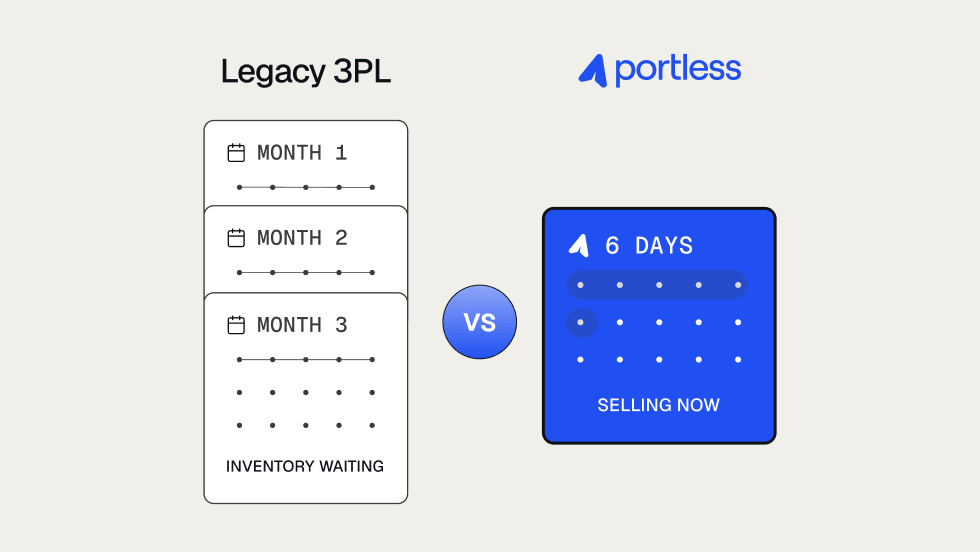
First sale law is a powerful tool for the right brand at the right scale. But for most Ecommerce operators in the $1–15M range, the better lever is structural: instead of paying duties on a full container of inventory the moment it lands, pay duties only on the orders you've actually sold.
That's what direct fulfillment delivers. When you ship from manufacturer to customer through Portless, tariffs are owed per order at the point of import — not upfront on bulk inventory sitting in a 3PL. The duty obligation matches your cash inflow, and you never pay tariffs on unsold or slow-moving SKUs.
For brands large enough to justify first sale, the two strategies stack. For everyone else, direct fulfillment alone solves the cash flow problem first sale is trying to address. Contact us to see how it works for your supply chain.
← Back to the Ecommerce supply chain glossary