LTL (less than truckload)
LTL (less than truckload) is a freight shipping mode for loads that don't fill an entire trailer, typically one to six pallets weighing between 150 and 15,000 pounds. Multiple shippers share trailer space, making LTL cheaper than full truckload but slower due to consolidation stops at carrier terminals.
LTL sits in the middle of the shipping spectrum. It's too much volume for parcel carriers like UPS or FedEx Ground to handle economically, but not enough to justify booking an entire 53-foot trailer. For Ecommerce brands, LTL most often shows up after ocean containers are deconsolidated at a port, when inventory moves from a distribution center to a 3PL, or when wholesale orders ship to retail buyers.
The economics are simple: you pay for the space your freight occupies, not the whole truck. The tradeoff is transit time. LTL shipments pass through multiple terminals where carriers consolidate freight from different shippers heading in the same direction, which adds days and handoffs to every leg.
How LTL shipping works
An LTL shipment moves through a hub-and-spoke network. Your pallet gets picked up by a local carrier, hauled to a regional terminal, sorted onto a line-haul truck heading toward the destination region, transferred to another terminal closer to the delivery point, and finally loaded onto a local truck for delivery.
Each handoff is a potential failure point. The more times a pallet gets moved, the higher the risk of damage, delay, or loss. According to the American Trucking Associations, LTL accounts for roughly $50 billion in annual U.S. freight revenue, with national carriers like Old Dominion, XPO, and Saia operating thousands of terminals.
Key operational characteristics:
- Transit times typically run two to seven business days for domestic LTL, depending on distance and lane density
- Freight is palletized, shrink-wrapped, and labeled with a bill of lading before pickup
- Carriers charge based on weight, freight class, distance, and any accessorials like liftgate or residential delivery
How LTL pricing is calculated
LTL pricing is more complex than parcel or full truckload. Carriers don't just charge by weight — they use a classification system called the National Motor Freight Classification (NMFC) that assigns every commodity a freight class from 50 to 500.
The five main pricing inputs:
- Freight class, which factors in density, stowability, handling, and liability
- Total weight of the shipment, including pallet
- Distance between origin and destination zip codes
- Accessorial charges for services like liftgate, inside delivery, or limited access
- Fuel surcharges, which fluctuate weekly based on diesel prices
Dense, easy-to-stack freight (low class numbers) costs less per pound than bulky, fragile, or oddly-shaped freight (high class numbers). A pallet of dumbbells ships at a lower class than a pallet of pillows, even if they weigh the same.
When LTL makes sense for Ecommerce brands
LTL is the default mode for moving inventory between domestic warehouse locations, transferring stock from port to 3PL, or shipping wholesale orders to brick-and-mortar retailers. It's rarely used for last-mile DTC fulfillment, which runs through parcel carriers.
You'll typically use LTL when:
- Your shipment is between one and six pallets
- Total weight falls between 150 and 15,000 pounds
- Transit time isn't time-sensitive (two to seven days is acceptable)
- You're moving inventory B2B rather than B2C
For smaller shipments, parcel is faster and cheaper. For larger shipments, full truckload (FTL) is more cost-effective per unit and avoids the damage risk of multiple terminal handoffs.
LTL vs. FTL vs. parcel
The choice between modes comes down to volume, urgency, and damage tolerance.
::table
Mode;Volume;Transit time;Cost per unit;Damage risk
Parcel;Up to ~150 lbs;1-5 days;Highest;Low
LTL;150-15,000 lbs;2-7 days;Mid;Medium-high
FTL;15,000+ lbs;1-3 days;Lowest;Low
:table
FTL is faster than LTL because the trailer goes directly from origin to destination with no terminal stops. The freight stays on the same truck the entire journey, which also reduces handling damage.
The hidden cost of LTL in a legacy supply chain
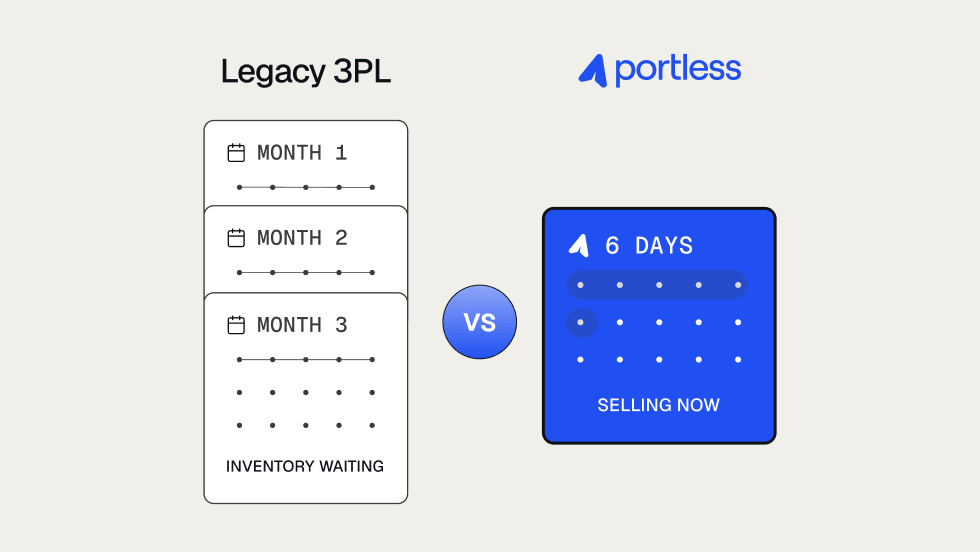
LTL is a symptom of how legacy Ecommerce supply chains are built. You import a container by ocean freight, deconsolidate at a port, move pallets by LTL to a 3PL, store inventory for weeks or months, then ship parcels to customers. Every step adds cost, time, and risk.
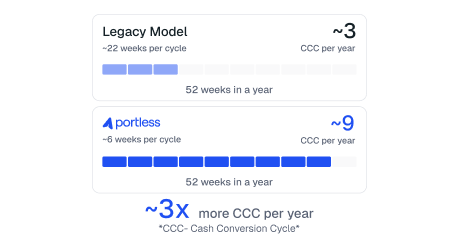
The math gets worse when you factor in inventory holding costs, the working capital tied up in slow-moving stock, and the duties paid upfront on unsold goods. Brands that import in bulk often discover their LTL line item is a small fraction of the real cost of running a port-and-warehouse model.
How Portless eliminates the need for inbound LTL
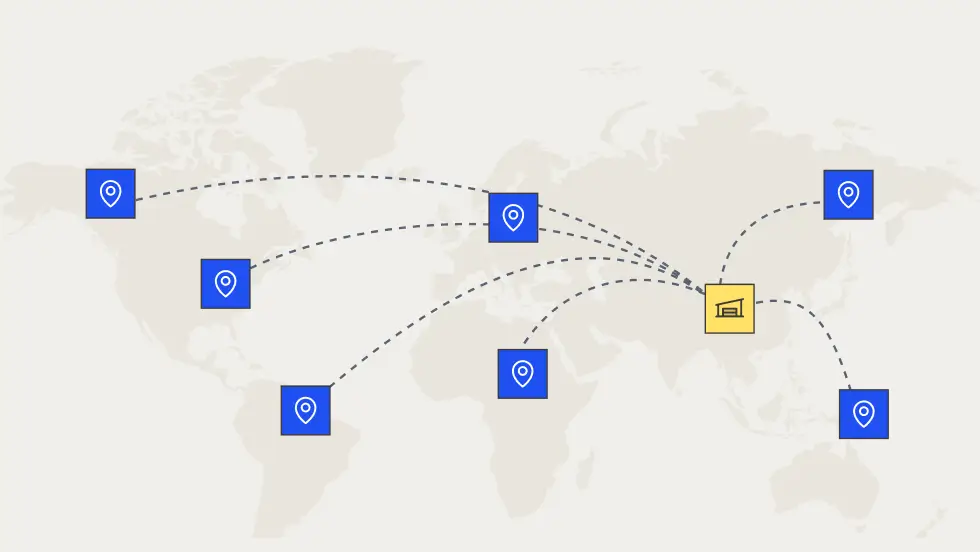
Portless skips the inbound LTL leg entirely. Instead of importing bulk inventory by ocean freight, paying duties on unsold stock, and trucking pallets between domestic warehouses, you fulfill orders directly from manufacturers in Asia to customers in 85+ countries in five to eight days. No port deconsolidation. No drayage. No LTL moves between 3PL nodes. Just direct fulfillment from production to doorstep.
If you're rethinking how much of your supply chain depends on legacy freight moves, contact us to see how direct fulfillment changes the math.
← Back to the Ecommerce supply chain glossary