FTL (full truckload)
FTL (full truckload) is a freight shipping mode where a single shipper books an entire truck — typically 12 to 24 pallets or up to about 45,000 pounds — for one dedicated load. The shipment moves directly from origin to destination without consolidation stops, making FTL faster and more predictable than less-than-truckload (LTL) freight, but more expensive per shipment.
FTL is one of the foundational modes of ground freight in the Ecommerce supply chain. When you book FTL, the truck is yours: your pallets, your route, your timeline. There's no consolidating with other shippers' cargo, no terminal stops, and no extra handling between pickup and drop-off. That makes it the default choice for moving full-container imports inland from the port, replenishing 3PL warehouses, or shifting inventory between fulfillment nodes.
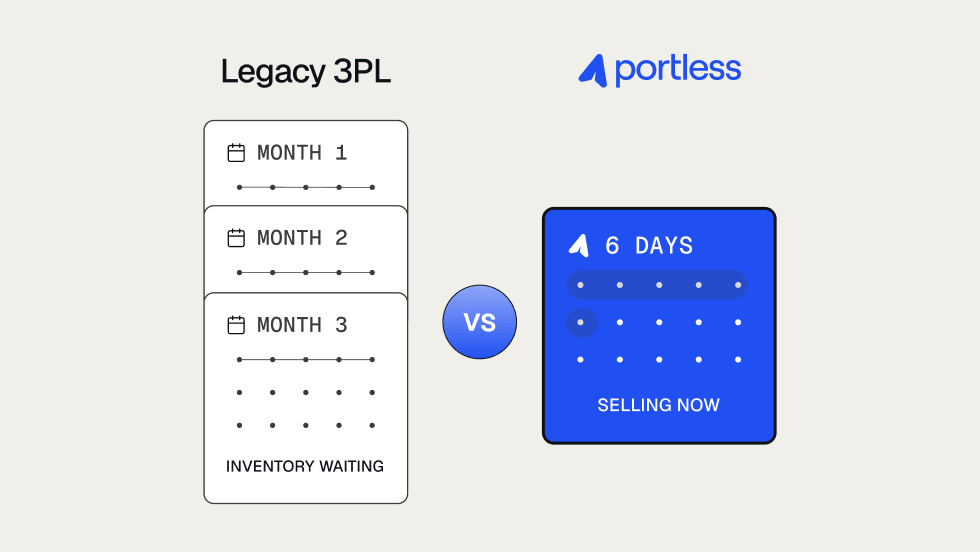
But FTL is also a legacy-model artifact. It exists because the traditional Ecommerce supply chain moves inventory in bulk: ocean container to port, drayage to a deconsolidation point, then FTL or LTL (less than truckload) to a domestic warehouse. Every step in that chain ties up cash, adds lead time, and increases the chance something goes wrong before a single order ships.
How FTL shipping works
A standard 53-foot dry van trailer holds 26 standard pallets, with a max payload of roughly 45,000 pounds depending on the truck and trailer combination. According to the Federal Motor Carrier Safety Administration, gross vehicle weight on U.S. highways is generally capped at 80,000 pounds.
When you book FTL:
- You pay a flat rate for the entire trailer, regardless of whether you fill it
- The truck picks up at one origin and delivers to one destination
- Transit times are predictable because the truck doesn't make consolidation stops
- Your freight isn't handled between pickup and delivery, reducing damage risk
Pricing is driven by lane (origin-to-destination route), fuel surcharges, equipment type (dry van, reefer, flatbed), and market capacity. Spot rates can swing significantly during peak season or capacity crunches.
FTL vs. LTL: when each makes sense
The decision between FTL and LTL comes down to shipment size, speed requirements, and handling sensitivity.
Use FTL when:
- You're shipping more than 10–12 pallets or over 15,000 pounds
- You need predictable delivery dates with no terminal delays
- Your freight is fragile, high-value, or sensitive to handling
- You're moving a full ocean container inland from the port
Use LTL when:
- You're shipping one to six pallets
- Cost matters more than speed
- Your freight can tolerate multiple touches in transit
- You don't need a specific delivery date
For most DTC brands moving bulk inventory from a port to a domestic 3PL, FTL is the standard. The catch is that you're paying for an entire truck whether your goods fill it or not.
Where FTL fits in the legacy Ecommerce supply chain
Here's the typical path your inventory takes in a bulk-import model:
- Factory in Asia produces and packs goods
- Ocean freight moves the container to a U.S. port (2–6 weeks)
- Drayage hauls the container from port to a deconsolidation facility
- FTL moves pallets inland to your 3PL or distribution center
- The 3PL receives, stores, and eventually picks/packs individual orders
- Last-mile carriers deliver to customers
Each handoff adds time, cost, and risk. FTL itself is just one leg — but it's a symptom of a model that requires bulk inventory to be physically positioned in a domestic warehouse before a single order can ship. For brands manufacturing in Asia, that means 60 to 90 days of capital locked in goods that haven't generated revenue yet.
We broke this down in detail in the 2026 inventory model: zone premiums, locked capital, delayed quality discovery, and high MOQs all compound when your supply chain depends on getting bulk freight into a domestic warehouse before fulfillment can start.
What FTL costs you beyond the freight invoice
The line item on your FTL bill is the easy part. The hidden costs are harder to see:
- Capital tied up in inventory. A full truckload of imported goods represents 30 to 90 days of cash you can't deploy until those units sell
- Storage fees. Once the FTL drops at your 3PL, you're paying for every cubic foot until orders ship
- Demand mismatch. You ordered for forecasted demand months ago. If demand shifts, you're stuck with the inventory you bought
- Dead stock risk. Anything that doesn't sell gets discounted or written off
Across a year, these costs often exceed the freight itself. ShipBob's 2025 freight guide notes that brands typically focus on per-shipment rates without modeling the working capital cost of holding the inventory that FTL delivered.
How direct fulfillment changes the equation
The reason FTL exists in your supply chain is that legacy fulfillment requires domestic bulk inventory. Direct fulfillment removes that requirement.
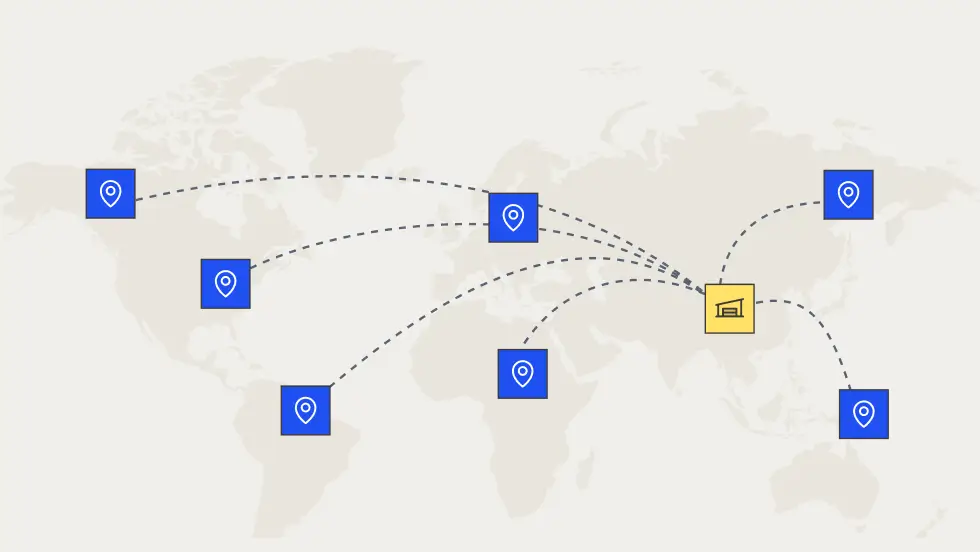
When orders ship directly from a factory-adjacent fulfillment center in Asia to your customer, the FTL leg of the supply chain disappears for most of your volume. You're not moving pallets from port to warehouse. You're moving individual parcels by air, injected directly into the destination country's last-mile carrier network, with a delivery window of five to eight days.
That doesn't mean FTL goes away entirely. Brands running hybrid models still use FTL for bulky SKUs or for stocking small safety inventory domestically. But for the 80 to 90% of orders that don't need same-day shipping, the FTL leg becomes optional — not foundational.
Replace bulk freight with a faster path to your customer
FTL is a fine tool when you need to move pallets across the country. But if you're using it because your supply chain forces bulk inventory through a domestic warehouse before customers can order, you're paying for a model that locks up cash and slows down growth. Portless ships orders directly from your manufacturer in Asia to customers in 85+ countries, bypassing the bulk freight and domestic warehousing layer entirely. Contact us to see how it works for your brand.
← Back to the Ecommerce supply chain glossary