DTC fulfillment
DTC fulfillment is the end-to-end process of receiving, picking, packing, and shipping individual customer orders directly from a brand to the consumer — without retailers, wholesalers, or marketplace intermediaries in between.
For most Ecommerce brands, DTC fulfillment is where the business actually lives or dies. Acquisition costs are a known number. Product cost is a known number. But fulfillment is the variable that determines whether a $60 order produces $12 of contribution margin or $2 — and whether that order shows up at the customer's door in five days or 15.
DTC fulfillment covers every operational step between an order being placed on your Shopify or WooCommerce store and the package landing on the customer's doorstep. That includes inventory storage, order routing, picking, packing, shipping label generation, carrier handoff, last-mile delivery, tracking communication, and returns. It can happen inside a brand's own warehouse, through a third-party logistics provider (3PL), or — increasingly — straight from the manufacturer to the customer.
The model you choose shapes your cash flow, your delivery speed, your margin, and how fast you can expand internationally. So it's worth being precise about what DTC fulfillment actually involves, where the legacy model breaks down, and what the alternatives look like.
What DTC fulfillment includes
A complete DTC fulfillment operation handles seven distinct stages:
- Receiving inventory from your manufacturer and verifying counts against the purchase order
- Storing SKUs in a way that supports fast picking and accurate counts
- Routing each order to the appropriate fulfillment node based on inventory and customer location
- Picking and packing orders, including any custom inserts, gift notes, or branded packaging
- Generating shipping labels and handing packages to the carrier
- Tracking delivery and resolving exceptions (lost packages, address issues, customs holds)
- Processing returns, inspecting goods, and restocking or disposing of them
Each stage has a cost. Each stage has a failure mode. The cumulative cost per order is what shows up in your contribution margin — and it's almost always higher than brands estimate when they're modeling unit economics.
How the legacy DTC fulfillment model works
The standard playbook for the last 20 years looks like this: manufacture overseas (usually China), bulk ship via ocean freight, clear customs, truck the goods to a domestic warehouse, store them, then pick and pack as orders come in.
That model has four structural problems:
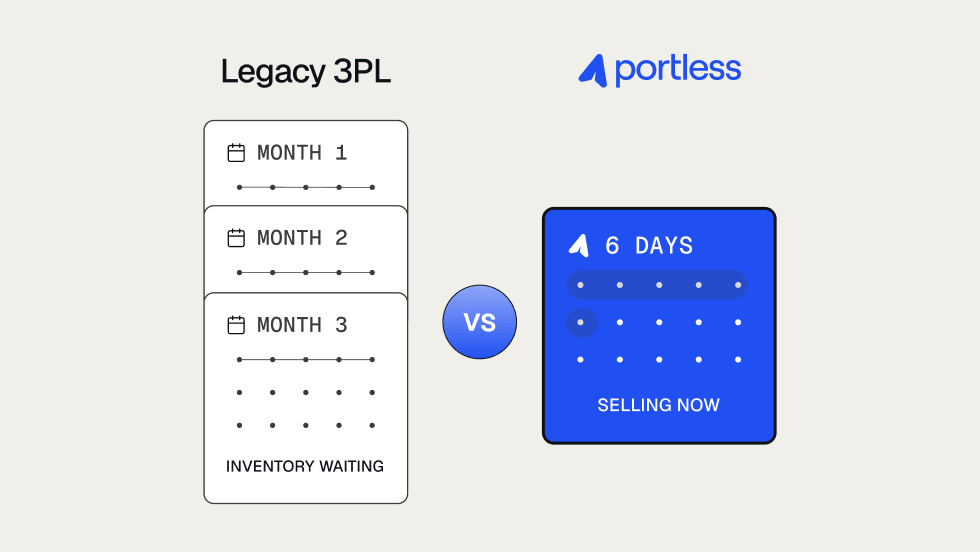
- Cash is locked up for months. You pay your supplier on production, then wait 30–60 days for ocean transit, then sit on inventory until it sells. Working capital that could fund ads or new product is frozen on a boat or a warehouse shelf.
- Lead times force bad forecasts. You're betting on what will sell three to four months from now. Get it wrong and you either stock out or sit on dead inventory.
- Duties are paid upfront on everything. You pay tariffs on the entire bulk shipment whether it sells or not. With the end of the $800 de minimis threshold on August 29, 2025, duty exposure on unsold inventory is now a much larger line item.
- Domestic 3PLs add cost and limit international reach. US warehousing, labor, and per-pick fees compound the unit cost. Shipping internationally from a US warehouse means paying twice — once to import, once to export.
The direct fulfillment alternative
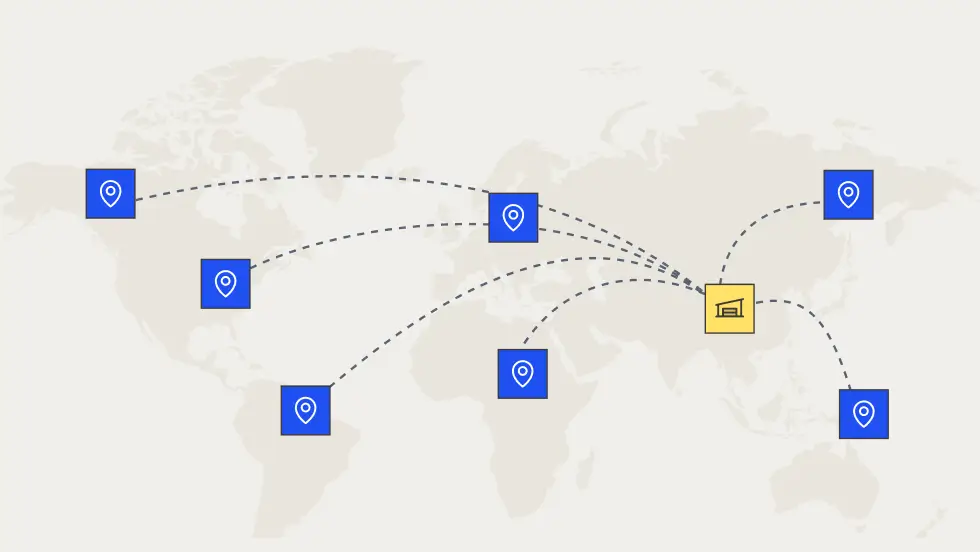
Direct fulfillment ships orders straight from the manufacturer in Asia to the end customer worldwide, bypassing the bulk-ship-then-warehouse cycle entirely. Inventory becomes available for sale days after production rather than months. Duties are paid per order via a Delivered Duty Paid (DDP) model rather than upfront on unsold stock.
This is the model Shein and Temu used to take a combined one-third of all Section 321 packages entering the US at peak. It's also the model now available to DTC brands at $1–15M in revenue who don't have the in-house infrastructure of a Chinese marketplace giant.
For a deeper breakdown of how this works in practice, see Direct Fulfillment 101: How Ecommerce Brands Can Replace 3PL Warehouses.
DTC fulfillment vs. dropshipping vs. 3PL
These three terms get used interchangeably. They shouldn't be.
::table
Model;Who holds inventory;Who ships;Branded packaging;Typical lead time
In-house DTC;The brand;The brand;Yes;1–3 days
3PL fulfillment;Third-party warehouse;3PL;Yes;1–5 days
Direct fulfillment;Manufacturer;Manufacturer (via direct fulfillment partner);Yes;Five to eight days
Dropshipping;Random supplier;Random supplier;No;2–4 weeks
:table
Dropshipping ships generic product from a generic supplier. Direct fulfillment ships your branded product from your manufacturing partner under your quality standards. These are not the same thing, even though both skip the domestic warehouse step.
What drives the cost of DTC fulfillment
Five variables determine your per-order fulfillment cost:
- Product weight and dimensions.Dimensional weight pricing means bulky lightweight products can cost more than their actual weight suggests. Products under 3.5 lbs are the sweet spot for air-based direct fulfillment.
- Shipping origin and destination. Distance, shipping zones, and carrier networks all factor into rates. A package going from a Chinese fulfillment center to a US customer can cost less than one moving across multiple US zones, depending on the lane.
- Duties and taxes. Post-de minimis, every shipment to the US faces import duties. How and when those duties are paid (DDP vs. DDU, bulk vs. per-order) changes both the cash flow profile and the customer experience.
- Pick-and-pack labor. 3PLs typically charge per pick plus per order. The more SKUs in an order, the higher the per-order cost.
- Storage and holding costs. Every day inventory sits in a warehouse, you're paying for the square footage, the insurance, and the capital tied up in it.
You can model the full picture using the landed cost calculator.
How DTC fulfillment affects cash flow
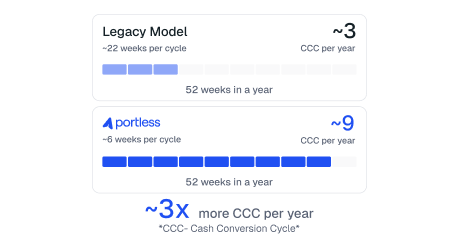
This is the part most brands underestimate. The legacy bulk-import model creates a structural cash flow gap: you pay for inventory months before you sell it. According to McKinsey, reducing working capital tied up in inventory is one of the most effective ways to improve financial performance.
Direct fulfillment compresses that gap. Inventory becomes sellable days after it's manufactured, not months. You're paying for shipping and duties on individual orders that have already sold — meaning the cash you'd otherwise have locked in containers and warehouse shelves stays available for marketing, product development, or just runway.
For brands doing $1–15M in revenue, this difference often determines whether you can fund the next growth phase from operations or whether you need to take on debt.
How to choose a DTC fulfillment model
The right model depends on your product, your geography, and your stage:
- In-house fulfillment works for brands under $500K in annual revenue or for products with complex kitting requirements that need direct oversight.
- Domestic 3PL fulfillment works when same-day or next-day delivery is non-negotiable for your category, and when your customer base is concentrated in one country.
- Direct fulfillment works for lightweight products (<3.5 lbs) in categories like apparel, beauty, electronics, home goods, toys, and adult products — especially for brands selling internationally or trying to free up working capital tied up in domestic inventory.
The framework: match the fulfillment model to the constraint you're trying to solve. If your constraint is cash, direct fulfillment is the answer. If your constraint is two-day delivery to a single market, a domestic 3PL still wins. Most brands have a cash constraint they're not naming.
Modernize your DTC fulfillment with Portless
Portless powers direct fulfillment from manufacturers in Asia to customers in 85+ countries. Inventory becomes sellable days after production, duties are handled per order via DDP, and integration with Shopify and WooCommerce means no operational rebuild. If you're tired of betting on demand forecasts four months out and watching cash sit on a boat, contact us to see how direct fulfillment changes the math.
← Back to the Ecommerce supply chain glossary