UK VAT
UK VAT (Value Added Tax) is a consumption tax applied to most goods and services sold in the United Kingdom, currently charged at a standard rate of 20%. For Ecommerce brands shipping into the UK, VAT applies at the point of sale or at import, depending on the order value and the seller's setup.
If you sell into the UK from outside the country, VAT is not optional and it's not a footnote. It changes your checkout pricing, your customs paperwork, and your cash flow. Get it wrong and you'll either eat the cost yourself, surprise your customer with a fee at the door, or trigger a hold at the border. Get it right and it becomes a predictable line item you can plan around.
This page covers what UK VAT is, the rates that apply, when you need to register, how it interacts with imports, and what changes for brands shipping directly from manufacturers in Asia.
What UK VAT is and how it works
VAT is a consumption tax collected at each stage of the supply chain, with the final cost borne by the end consumer. In the UK, the standard rate is 20%, applied to most goods and services. A reduced rate of 5% applies to specific categories like domestic energy and children's car seats, and a 0% rate applies to items like most food, books, and children's clothing — though zero-rated still counts as taxable, which matters for registration.
VAT was introduced in the UK in 1973 when the country joined the European Economic Community, and it replaced the previous Purchase Tax. Even after Brexit, the structure of UK VAT remains broadly aligned with the EU model, but the rules for cross-border sellers have diverged significantly.
The UK government publishes current VAT rates and categories on GOV.UK, which is the source of truth for any rate questions.
UK VAT rates by category
The rate you charge depends on what you sell. For DTC brands, the categories that matter most are:
- Standard rate (20%): Most consumer goods — apparel for adults, electronics, beauty, home goods, accessories, and most toys
- Reduced rate (5%): Children's car seats, mobility aids for the elderly, domestic fuel and power
- Zero rate (0%): Children's clothing and footwear, most food, books, and printed materials
- Exempt: Financial services, insurance, education — not relevant for most Ecommerce brands
If you sell across multiple categories — say, an apparel brand with both adult and children's lines — you'll charge different rates on different SKUs. Your checkout and tax engine need to handle that correctly.
When you need to register for UK VAT
UK-based businesses must register for VAT once their taxable turnover exceeds £90,000 in any rolling 12-month period, per HMRC's VAT registration guidance.
For non-UK sellers, the rules are different and stricter. If you're shipping goods from outside the UK directly to UK consumers, you generally need to register for VAT from your first sale — there is no threshold. This is because of the rules HMRC introduced on January 1, 2021, after Brexit, which removed the previous £15 Low Value Consignment Relief and shifted VAT collection responsibility to overseas sellers and online marketplaces.
The £135 threshold is the key number to remember:
- Orders ≤ £135: You (the overseas seller) must charge UK VAT at checkout and remit it via a UK VAT return. No import VAT is due at the border.
- Orders > £135: Import VAT applies at the border, calculated on the value of the goods plus shipping plus duty. This can be paid by the seller (DDP) or the customer (DDU/DAP).
If you sell through a marketplace like Amazon or eBay, the marketplace is typically the deemed supplier for VAT purposes on orders under £135 — meaning they collect and remit. If you sell direct through Shopify or WooCommerce, that obligation sits with you.
How import VAT works for higher-value orders
For orders over £135, VAT is collected at import rather than at checkout. The taxable value is calculated as the cost of goods plus shipping plus any duty owed, then VAT is applied to that total. This is where the choice between DDP shipping and DDU/DAP becomes a customer experience decision.
Under DDP, you (the seller) pay the VAT and duty upfront, then build that into the price your customer sees. Under DDU, the carrier collects VAT and duty from the customer before delivery — usually with a handling fee attached. The latter is a reliable way to generate refund requests, chargebacks, and angry support tickets.
Most brands shipping internationally land on DDP for predictability, even though it requires more upfront setup.
How UK VAT compares to the EU after Brexit
Post-Brexit, UK VAT and EU VAT are now separate systems. A few practical differences for Ecommerce operators:
- Threshold: UK uses £135 for the low-value consignment rule. The EU uses €150 as the equivalent threshold for its Import One-Stop Shop (IOSS), though the EU is ending the €150 de minimis exemption beginning in 2026.
- Filing: UK VAT requires a separate UK VAT registration and return. EU VAT can be handled through a single IOSS or OSS VAT filing covering all 27 member states.
- Documentation: Shipments from the UK to the EU (and vice versa) are now treated as third-country imports, requiring customs declarations and HS codes that weren't needed pre-2021.
If you sell into both the UK and the EU, you need two separate registrations and two separate compliance workflows. There's no shortcut.
What UK VAT means for your cash flow
VAT is a working-capital problem before it's a tax problem. You collect VAT from your customer at the point of sale, but you don't remit it to HMRC until your VAT return is due — typically quarterly. That money sits in your account in the meantime, which is fine until you confuse it with revenue and spend it.
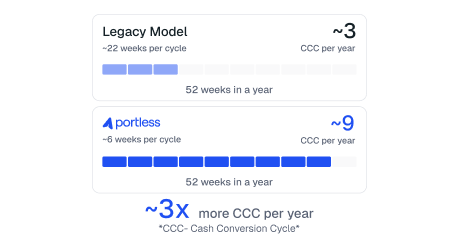
On the import side, the cash flow drag is more severe. If you bulk-import inventory into a UK warehouse, you pay import VAT on the entire shipment at the border, then wait to recover it on your next VAT return. That's a 1–3 month working capital gap on every container. Postponed VAT Accounting (PVA) eliminates this gap by allowing you to declare and recover import VAT on the same return, with no cash leaving your account.
For brands using direct fulfillment from manufacturers, VAT is collected at the point of sale on sub-£135 orders, which means it lines up naturally with your cash inflow. No bulk import VAT, no waiting on refunds, no cash trapped at the border.
Common UK VAT mistakes Ecommerce brands make
A few patterns we see repeatedly:
- Assuming the £90,000 threshold applies to overseas sellers. It doesn't. Non-UK businesses register from the first sale.
- Charging VAT on zero-rated items. Children's clothing is zero-rated. If you're an apparel brand selling kids' lines and charging 20%, you're overcharging customers and creating a refund liability.
- Not separating VAT on the customer-facing invoice. UK VAT-registered businesses are legally required to issue VAT invoices showing the VAT amount as a separate line item.
- Confusing VAT with duty. Duty is a tariff on the product based on its HS code and country of origin. VAT is a consumption tax on the total value including duty. They're calculated separately and remitted separately.
How Portless handles UK VAT for direct-fulfillment brands
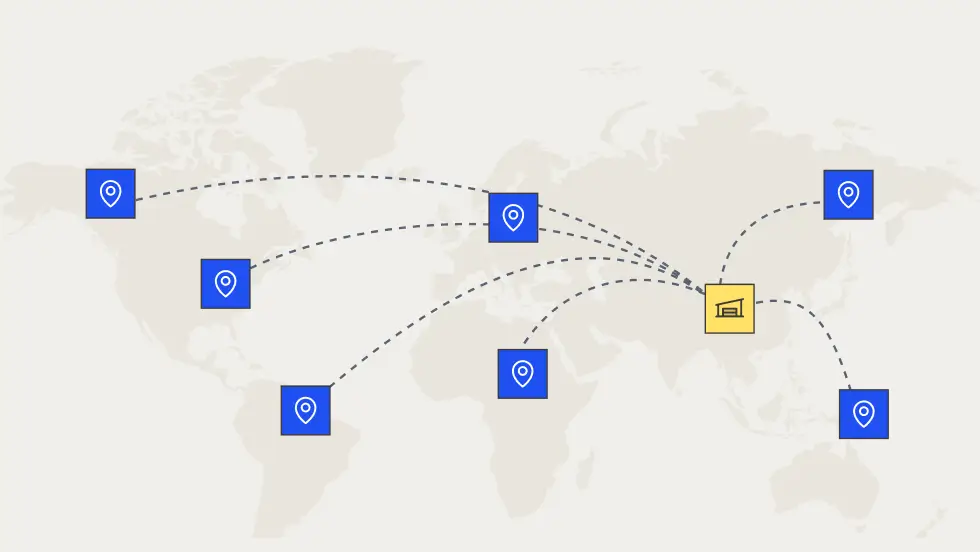
Portless ships directly from manufacturers in Asia to UK customers, with VAT and duty handled under a DDP model. That means your customer sees a clean, all-in price at checkout — no surprise fees, no carrier collection, no abandoned carts at the door.
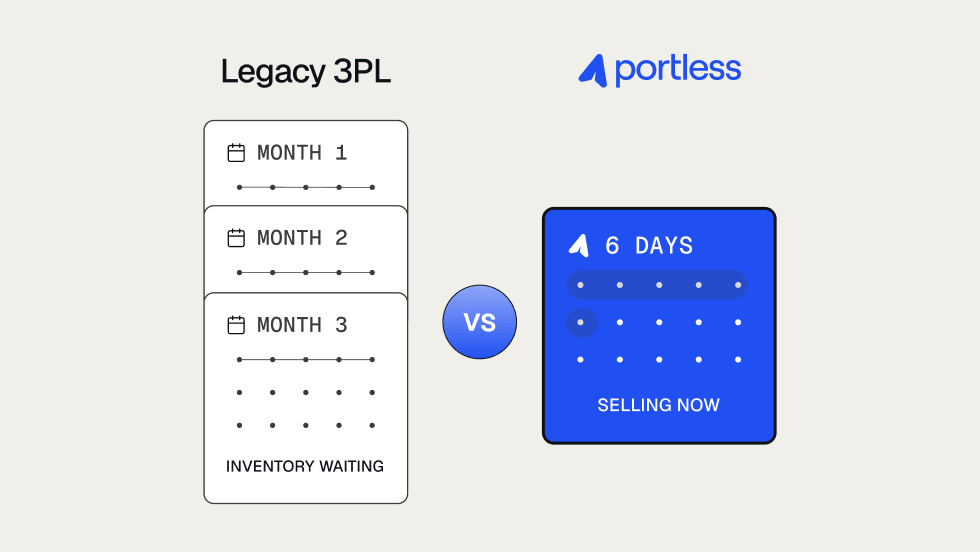
Because we ship per-order rather than in bulk, VAT is collected and remitted as orders ship, which keeps your cash flow predictable. No upfront import VAT on unsold inventory. No warehouse sitting on stock you've already paid tax on.
If you're shipping into the UK and want to see how direct fulfillment changes the math, contact us.
← Back to the Ecommerce supply chain glossary