Multi-node fulfillment
Multi-node fulfillment is a distribution strategy that splits inventory across multiple warehouse locations — or "nodes" — so orders ship from the facility closest to the customer. The goal is faster delivery and lower per-package shipping costs, but it requires holding duplicate stock in every node.
Multi-node fulfillment is the legacy answer to a real problem: when you ship every order from a single warehouse, customers far from that warehouse wait longer and you pay more in zone-based shipping fees. The fix, in theory, is to place inventory in two, three, or five different domestic 3PLs so packages travel shorter distances. In practice, this strategy multiplies your inventory investment, complicates demand forecasting, and ties up working capital in nodes that may or may not turn.
For DTC brands manufacturing in Asia and selling globally, multi-node fulfillment is often presented as the default path to faster shipping. It's worth understanding what the model actually costs before you commit to it — and what alternatives exist.
How multi-node fulfillment works
A multi-node network distributes your SKUs across several fulfillment centers, typically positioned to cover major population zones. When a customer places an order, an order management system (OMS) routes that order to the node closest to the delivery address.
The mechanics look like this:
- Inventory is allocated to each node based on regional demand forecasts
- An OMS or order routing engine assigns each incoming order to the nearest node with stock
- Each node picks, packs, and ships independently using regional carriers
- Replenishment happens at the node level, not from a central pool
The model assumes you have enough volume and demand predictability to keep every node productive. When that assumption breaks — and it often does for brands under $15M — the strategy becomes a cash trap.
Why brands consider multi-node fulfillment
Three benefits show up consistently in the pitch:
- Faster delivery times. Shorter distances mean fewer days in transit and lower shipping zone numbers
- Lower per-package shipping costs. Carriers price by zone, so a Zone 2 shipment is cheaper than a Zone 7
- Carrier redundancy. If one node or carrier goes down, others can absorb the load
These are real benefits. The question is what they cost to unlock.
The hidden costs of multi-node fulfillment
Splitting inventory across nodes is a heavy decision — the kind that's hard to reverse once made. Here's what brands tend to underestimate:
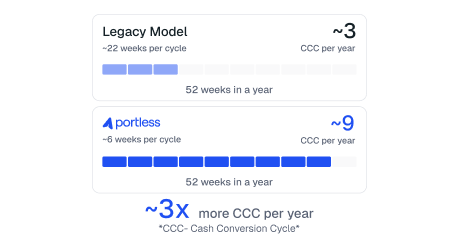
Duplicated inventory. Every node needs safety stock for every SKU it ships. If you operate four nodes, you're holding roughly four times the safety stock of a single-node setup. According to McKinsey's analysis of working capital, inventory is one of the largest drains on liquidity for growing businesses.
Forecasting complexity. You're no longer forecasting national demand — you're forecasting regional demand for every SKU in every node. Get it wrong, and you have stockouts in one node while another sits on dead stock.
Slow-moving stock gets stuck. When a node has units that aren't selling, moving them costs freight. Most brands eat the loss or discount the inventory, neither of which is good for margin.
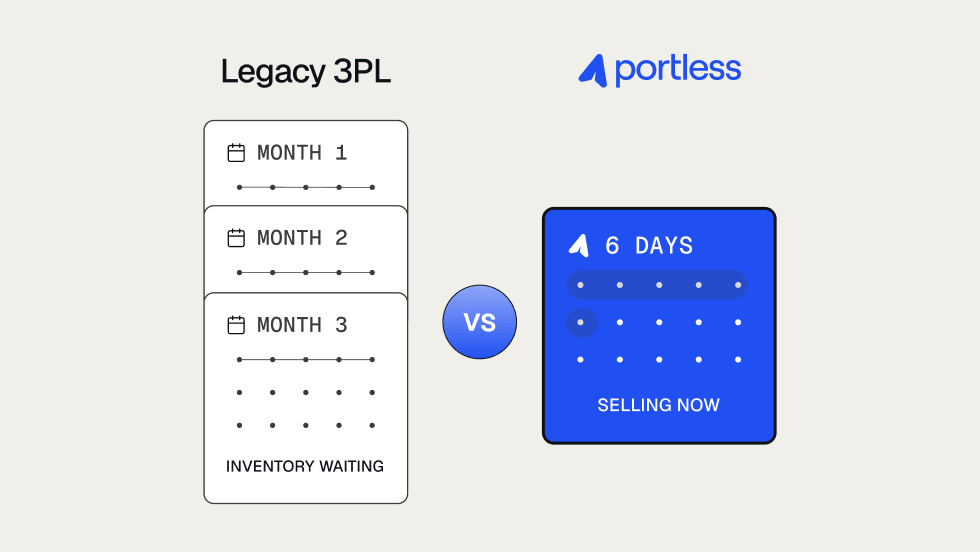
Capital lock-in for 6 to 18 months. Once stock is in a node, it's committed. You can't easily redirect it to another region or back to the source without absorbing transfer costs.
When multi-node fulfillment makes sense
Multi-node is a heavy decision that should follow proven demand, not precede it. It tends to work when:
- You have 2,000+ stable monthly orders per region
- Demand patterns are predictable across multiple cycles
- Your product has consistent year-round velocity, not seasonal spikes
- Margins can absorb the duplicated inventory carrying cost
- You've validated each market before committing capital to a local 3PL
It tends to fail when brands move to multi-node too early — locking in capital to chase a faster delivery promise before they've proven the demand exists.
The direct fulfillment alternative
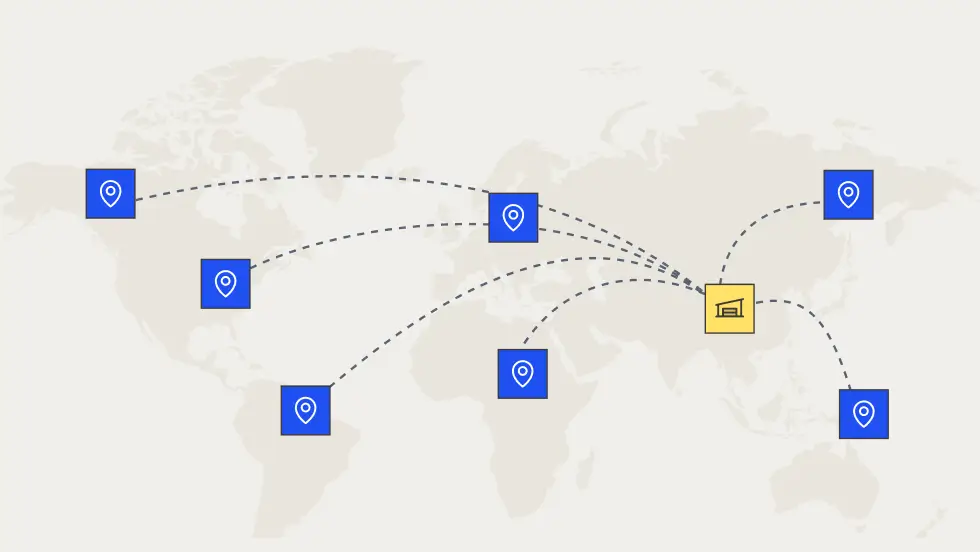
There's a different way to solve the underlying problem of "ship faster, cheaper, to more places" without splitting inventory across domestic nodes. Direct fulfillment from the point of manufacture keeps inventory centralized in a single factory-adjacent hub and uses air freight plus last-mile carrier injection to deliver to 85+ countries in five to eight days.
This is the model Shein and Temu use to ship globally without operating a node in every market. It's also how brands like Craft Club expanded internationally: one upstream inventory pool, multiple regional destinations, no commitment to local warehousing until demand is proven.
The tradeoff: delivery times are five to eight days rather than two to three. For most DTC categories — apparel, beauty, home goods, electronics — that window is acceptable, especially when the alternative is locking up six figures of working capital in regional safety stock.
How direct fulfillment compares to multi-node
::table
Factor;Multi-node fulfillment;Direct fulfillment
Inventory locations;Multiple regional 3PLs;One factory-adjacent hub
Capital tied up in safety stock;High (duplicated per node);Low (centralized)
Delivery time;Two to three days;Five to eight days
International expansion;Requires new node per region;Add markets without new warehouses
Forecasting complexity;High (regional);Low (centralized)
Reversibility;Hard (stock is committed);Easy (no regional lock-in)
:table
Which model fits your stage
The question isn't whether multi-node fulfillment works — it does, for the right brands at the right stage. The question is whether your current volume, demand stability, and margin profile justify the capital lock-in.
If you're doing $1-15M in revenue, manufacturing in Asia, and expanding into multiple markets, the most expensive thing you can do is split your inventory before you have to. Portless lets you keep inventory centralized at the point of manufacture and ship globally without committing capital to regional warehouses you may not need. When demand proves itself in a market, you can layer in local fulfillment later — but the default should be reversibility, not regional lock-in.
← Back to the Ecommerce supply chain glossary