Container freight station (CFS)
A container freight station (CFS) is a warehouse facility, typically located near a port, where less-than-container-load (LCL) shipments are consolidated into full ocean containers for export or deconsolidated from arriving containers for inland distribution.
If your brand ships ocean freight but doesn't fill an entire container, your goods pass through a container freight station. The CFS is where loose pallets from multiple shippers are grouped into a single container before sailing — and where they're broken apart again on arrival. It's a fundamental piece of the legacy ocean freight model, and it adds time, handling, and cost that most Ecommerce founders never see line-itemed on their invoice.
CFS facilities exist because ocean freight only makes economic sense when containers are full. If you're shipping three pallets, you don't get your own container — you share one. The CFS is the staging ground that makes that sharing possible.
How a container freight station works
A CFS handles two opposite operations depending on which side of the ocean you're on.
On the export side (origin CFS): Your supplier or freight forwarder delivers your goods to the CFS near the port of departure. The CFS receives the cargo, inspects it, stores it temporarily, and waits for enough cargo from other shippers to fill a container. Once the container is loaded — a process called consolidation — it's sealed, trucked to the terminal, and loaded onto a vessel.
On the import side (destination CFS): The container arrives at the destination port, gets trucked to a CFS, and is opened. Cargo from different shippers is sorted, deconsolidated, and held until each importer arranges pickup or onward drayage to a warehouse or 3PL.
This is different from a container yard (CY), which handles full container loads that move as a single unit without being opened.
When you'll deal with a CFS
You're touching a CFS any time you move freight under one of these conditions:
- Shipping LTL or LCL volumes that don't justify a full container
- Importing goods from multiple suppliers that need to be combined into one shipment
- Working with a freight forwarder that uses consolidation services to lower per-unit costs
- Receiving shipments at a port of entry where customs requires deconsolidation for inspection
For most growing DTC brands manufacturing in Asia, LCL through a CFS is the default path for early-stage ocean shipments — until volumes grow enough to justify full container loads.
What CFS handling actually costs you
The CFS itself doesn't appear on most freight quotes as one clean line item. The costs are spread across several charges that pile up fast:
- CFS receiving and handling fees — charged per cubic meter or weight ton for the labor of loading or unloading your cargo
- Storage fees — daily charges if your goods sit at the CFS beyond the free time window, typically three to seven days
- Documentation and clearance fees — administrative charges for processing the consolidated bill of lading
- Drayage to and from the CFS — short-haul trucking between the port and the facility
According to the Federal Maritime Commission, demurrage and detention charges tied to port and CFS dwell time have been a persistent source of disputes between carriers and shippers, with rules tightened in 2024 to require clearer billing practices.
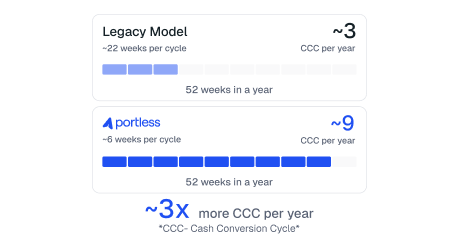
The deeper cost is time. A shipment moving through a CFS at both origin and destination adds three to seven days on each end — on top of the 20 to 40 days at sea. That's potentially two extra weeks of inventory sitting in transit before it can generate revenue.
Why the CFS model strains Ecommerce cash flow
The CFS exists to make ocean freight viable for non-full-container shippers. But the whole consolidation-and-deconsolidation cycle is built around a slower, bulkier model of commerce — moving large batches of goods to a domestic warehouse where they wait to be sold.
For a DTC brand, that creates a cash flow problem. You pay your supplier upfront. Your goods spend weeks consolidating, sailing, deconsolidating, and clearing customs. Then they sit in a 3PL waiting to sell. Your capital is locked up the entire time, and you're paying duties on inventory that may never move.
We've written more about how this affects growing brands in Ecommerce fulfillment risk: hard-to-reverse decisions for growing brands.
How direct fulfillment bypasses the CFS entirely
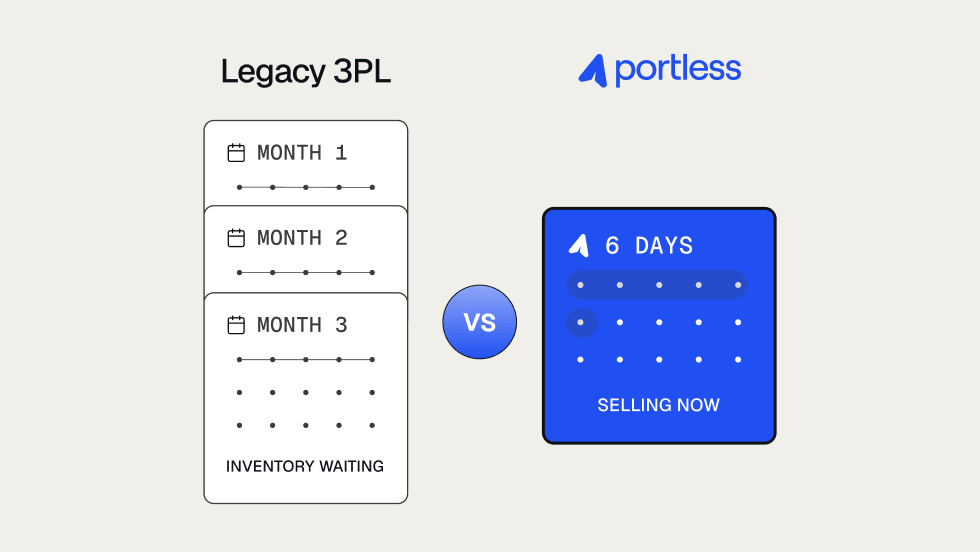
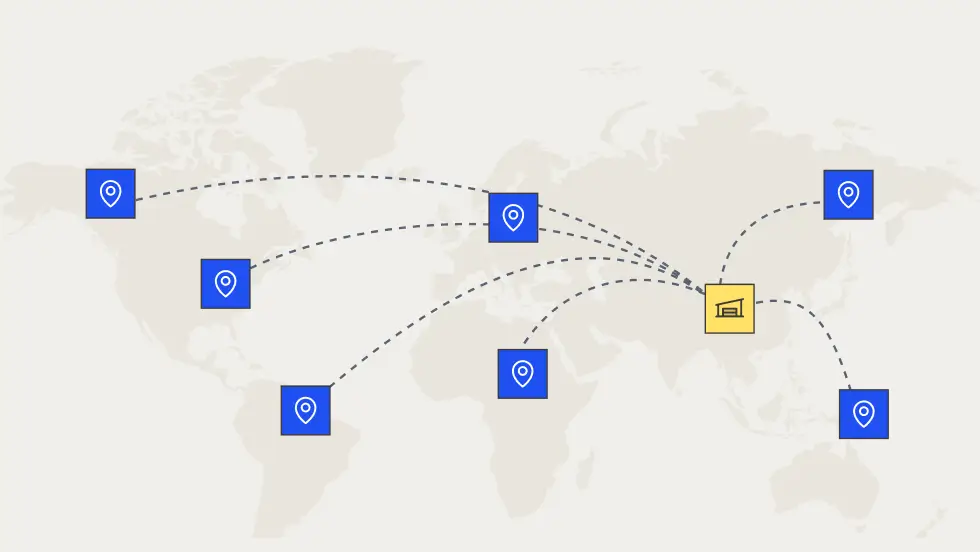
Portless skips the CFS step because we don't move your inventory through bulk ocean freight. Orders ship directly from our fulfillment center in Shenzhen — minutes from the factory — to your customer's door, typically in five to eight days via air freight.
No LCL consolidation. No deconsolidation on arrival. No drayage to a domestic 3PL. No weeks of inventory dwell at a port-adjacent warehouse.
The result for the brands we work with: inventory becomes available for sale within days of leaving the factory, not months. Capital stays free. Demand forecasts get tighter because the planning horizon shortens from a quarter to a week.
Move past the legacy ocean freight model
The CFS is a workaround for a fundamentally slow shipping method. If your products are under 3.5 lbs and you're tired of watching cash sit in containers and consolidation warehouses, direct fulfillment is the alternative. Contact us to see how Portless can replace your ocean freight cycle with five-to-eight-day delivery direct from Asia.
← Back to the Ecommerce supply chain glossary