Balance sheet
A balance sheet is a financial statement that shows what your business owns (assets), what it owes (liabilities), and what's left over for owners (equity) at a single point in time. For Ecommerce brands, it's the document where inventory decisions show up as locked-up capital.
Your balance sheet is the snapshot version of your financial health. Unlike a profit and loss statement that tracks performance over a period, the balance sheet captures a single moment: what you own, what you owe, and what's yours. It follows one equation that always has to hold: assets = liabilities + equity.
For DTC brands manufacturing in Asia, the balance sheet tells a specific story. Inventory is usually the largest current asset, and it's the line item that quietly determines whether you have cash to spend on growth or you're trapped funding stock that hasn't sold yet. Understanding what's on your balance sheet — and how the legacy bulk-import model bloats it — is the difference between a brand that scales and a brand that runs out of runway.
What goes on a balance sheet
A balance sheet has three sections, and each one tells you something different about how your business is structured.
Assets are everything your business owns. They're split into two buckets:
- Current assets: cash, accounts receivable, and inventory — anything you expect to convert to cash within 12 months
- Non-current assets: equipment, long-term investments, intangibles like trademarks, and anything else that holds value beyond a year
Liabilities are everything your business owes:
- Current liabilities: accounts payable, short-term loans, credit card balances, accrued expenses due within 12 months
- Non-current liabilities: long-term debt, deferred tax obligations, lease commitments beyond a year
Equity is what's left over after liabilities are subtracted from assets. It includes paid-in capital from owners or investors and retained earnings — the cumulative profit the business has kept rather than distributed.
The SEC's balance sheet primer breaks this down in detail if you want the formal accounting view.
Why inventory dominates the Ecommerce balance sheet
For a DTC brand doing $1–15M in revenue, inventory typically sits as the single largest line on the asset side. That's not a neutral observation. Every dollar tied up in unsold stock is a dollar you can't spend on ads, hires, product development, or international expansion.
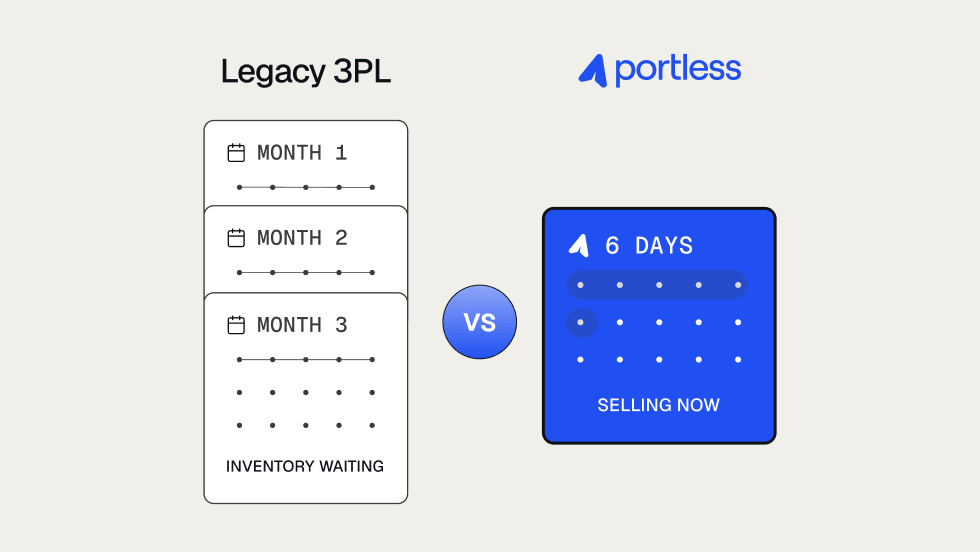
The legacy import model makes this worse by design. You forecast demand six months out, place a bulk order, pay your factory, pay ocean freight, pay duties at the border, and pay a 3PL to store the inventory until it sells. By the time those units are sellable, you've committed cash across four or five line items — all of it sitting as inventory on your balance sheet, none of it generating revenue yet.
According to Hackett Group's 2025 Working Capital Survey, roughly $1.7 trillion sits in excess working capital across the 1,000 largest U.S. public companies, concentrated in inventory and receivables. The pattern at the enterprise level is the same one DTC brands feel acutely: too much capital frozen in stock, too little available to operate.
What a healthy Ecommerce balance sheet looks like
There's no universal benchmark, but a few patterns hold for brands operating efficiently:
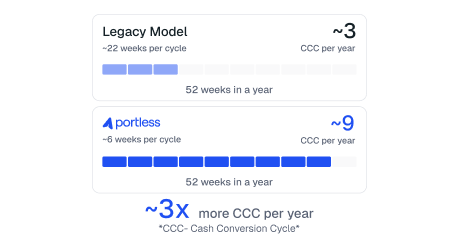
The brands that struggle usually share the opposite pattern: inventory growing faster than revenue, carrying costs eating into margin, and a cash conversion cycle stretched to 90+ days because money is locked up between paying the factory and collecting from the customer.
How direct fulfillment changes the balance sheet
The legacy model forces you to make container-sized inventory bets months before demand is proven. That inventory sits on your balance sheet as an asset, but it's an asset that drains cash flow until it sells — and a meaningful percentage of it never sells at full margin.
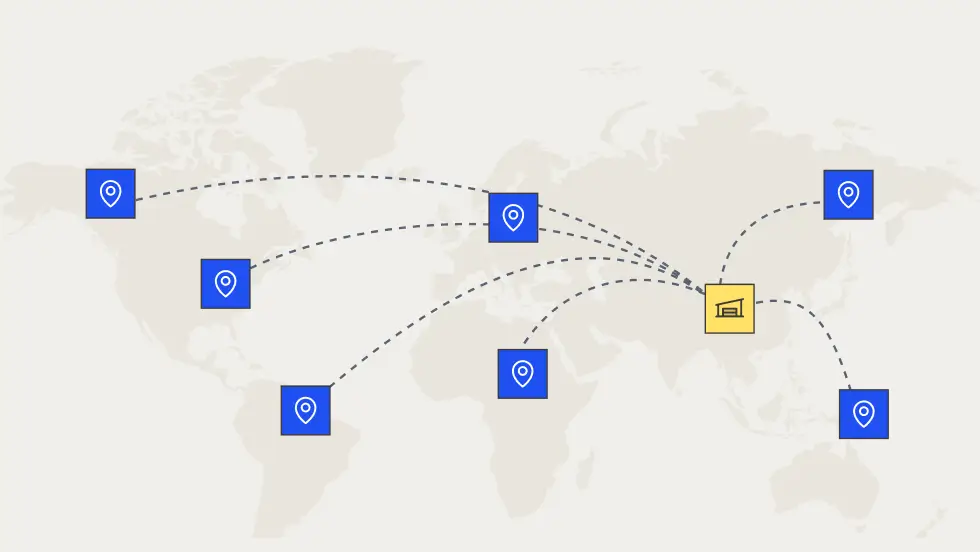
Direct fulfillment changes the timing. Instead of importing six months of stock into a domestic warehouse, you stage inventory near your factories in Asia and ship orders directly to customers as they come in. Production spend converts to cash in six to nine days in key markets, instead of 60 to 90 days. The inventory line on your balance sheet shrinks. Working capital frees up. Cash that was previously frozen becomes available for marketing, product, or expansion.
Foreign Resource is one example of this in practice. After moving to a non-bonded direct fulfillment model, they reached near-negative cash conversion cycles while scaling globally — collecting cash from customers before owing their factory.
How a balance sheet connects to the rest of your financials
The balance sheet doesn't operate in isolation. It's one of three core financial statements, and each one informs the other:
- The P&L shows profitability over a period
- The cash flow statement shows how money moved in and out
- The balance sheet shows what's left standing at the end
If your P&L looks strong but your bank balance feels tight, the balance sheet is where the explanation lives. Most of the time, the answer is inventory: revenue is real, but cash is locked up in stock that hasn't sold yet.
See how direct fulfillment frees the cash trapped on your balance sheet
Inventory shouldn't be the line item that determines whether you can fund your next campaign. Portless ships orders directly from manufacturers in Asia to customers in 85+ countries, which means you commit less cash upfront, hold less inventory, and free up working capital that would otherwise sit frozen on your balance sheet. Contact us to model what that looks like for your brand.
← Back to the Ecommerce supply chain glossary