Days of inventory outstanding (DIO)
DIO is one of the cleanest signals of how efficiently your supply chain converts cash into product and back into cash. For DTC Ecommerce brands sourcing from Asia, it's often the metric that explains why a profitable P&L still leaves you cash-poor. A high DIO means working capital is sitting in boxes — in containers, in 3PL warehouses, in slow-moving SKUs — instead of funding ads, new product launches, or international expansion.
This page breaks down how to calculate DIO, what a good DIO looks like for Ecommerce, why the legacy bulk-import model inflates it, and how to bring it down.
The DIO formula
The standard formula:
DIO = (Average inventory / COGS) × number of days in the period
A worked example for a brand with $2M in COGS over 365 days and $500,000 in average inventory:
- ($500,000 / $2,000,000) × 365 = 91.25 days
That brand holds roughly 91 days of inventory at any given time. Every unit sitting on a shelf represents cash that can't be spent elsewhere until it sells, ships, and gets paid for.
Some teams use ending inventory instead of average inventory. Average is more accurate for businesses with seasonality — which is most Ecommerce brands.
Why DIO matters for Ecommerce brands
DIO directly shapes three things: cash flow, margin, and risk.
Cash flow. Every day of inventory is a day your capital is locked up. According to the JPMorgan Chase Institute, the median small business operates with fewer than 30 days of cash buffer. If your DIO is 90+ days, you're financing three months of inventory on a cash position designed for one.
Margin. Inventory holding costs — warehousing, insurance, capital cost, shrinkage, obsolescence — typically run 20–30% of inventory value annually. The longer DIO stretches, the more those costs compound.
Risk. Long DIO forces early forecasting. You're committing to SKU mixes and quantities months before real demand signals appear. When trends shift, you're stuck with dead stock that ties up cash and eventually gets liquidated at a loss.
What's a good DIO for Ecommerce?
Benchmarks vary by category, but rough ranges for DTC brands:
- Apparel and fashion: 90–180 days, often higher for seasonal lines
- Beauty and personal care: 60–120 days
- Consumer electronics: 45–90 days
- Home goods: 75–150 days
Lower is generally better, but DIO that drops too low can signal stockout risk. The goal isn't to minimize DIO — it's to align it with how fast you can replenish without losing sales.
For comparison, Shein and Temu operate on DIO measured in single digits because their inventory model is built around direct fulfillment from the point of manufacture, not bulk import cycles.
Why the legacy supply chain inflates DIO
Most DTC brands that manufacture in Asia follow the same playbook: large production runs, ocean freight, domestic warehousing, and slow burn-down of inventory. That structure builds DIO into the model.
Here's the typical timeline:
- Day 1: Pay supplier in full
- Day 30–60: Production
- Day 60–105: Ocean freight
- Day 105–115: Customs clearance, drayage, 3PL receiving
- Day 115+: First units available to sell
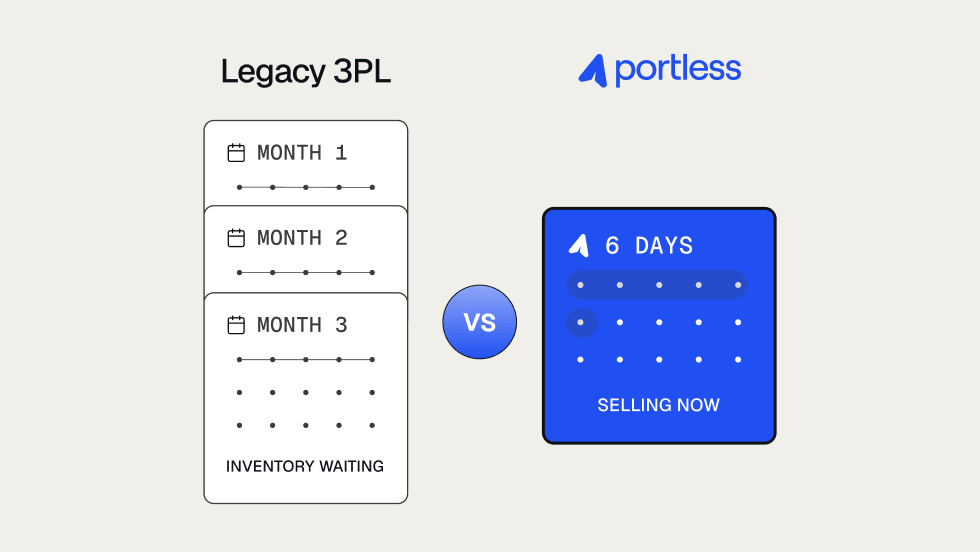
Before a single unit ships to a customer, you've already added 100+ days to your inventory cycle. Then you have to sell through whatever forecast you placed four months ago. This is the root of the cash flow trap that kills most DTC brands.
How to reduce DIO
Five levers, ranked roughly by impact:
- Shorten lead time from production to sale. Air freight and direct fulfillment can compress the production-to-customer timeline from 90 days to under 20. See how decision latency drains DTC margins for the full breakdown.
- Move from bulk forecasting to staged commitments. Test smaller batches, validate velocity, then scale. Covered in detail in why traditional forecasting fails.
- Segment your SKUs. Core heroes, seasonal bets, and tests each deserve different inventory strategies.
- Audit slow-movers monthly. Liquidate, bundle, or repurpose dead stock before it compounds.
- Rethink where inventory lives. Inventory positioned near production is more flexible than inventory locked into a domestic 3PL. See the 2026 inventory model.
DIO vs. inventory turnover
DIO and inventory turnover are two views of the same data.
- Inventory turnover = COGS / average inventory (a ratio: how many times you sold through inventory in the period)
- DIO = 365 / inventory turnover (a duration: how many days it took to sell through once)
If your turnover is four, your DIO is roughly 91 days. If turnover is 12, DIO is about 30 days. Use whichever framing is more intuitive for your team — finance often prefers turnover, ops usually prefers DIO.
How Portless cuts DIO at the structural level
Reducing DIO inside a legacy bulk-and-warehouse model has a floor. You can tighten forecasting, run smaller POs, and chase faster turns — but you're still moving containers across an ocean and storing inventory for months before it sells.
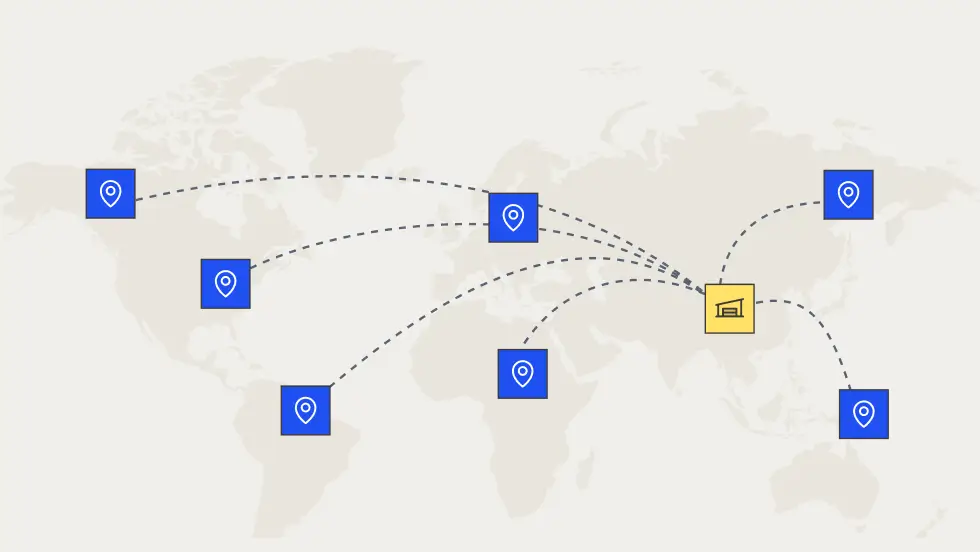
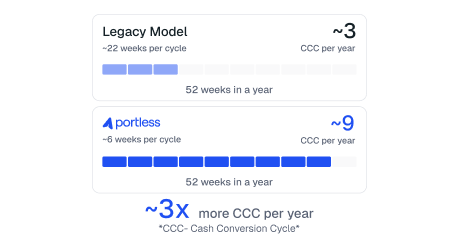
Portless changes the structure. By fulfilling orders directly from manufacturers in Asia to customers in 85+ countries, your inventory becomes available for sale days after production, not months. Duties are paid per order under a DDP model, so you're not capitalizing tariffs on unsold units. Brands using direct fulfillment routinely cut their cash conversion cycle from 79 days to 26.
If you want to model what that looks like for your numbers, contact us.
← Back to the Ecommerce supply chain glossary