Profit and loss statement (P&L)
For an Ecommerce brand, the P&L is the scoreboard. It's where every supply chain decision — what you paid your manufacturer, how you shipped it, where you stored it, what duty rate you hit, how long inventory sat before selling — eventually shows up as either margin or a hole in your margin. Most operators read their P&L top to bottom: revenue at the top, cost of goods sold (COGS) right underneath, then gross profit, operating expenses, and net income at the bottom. Each line tells you something about how the business is running, but the supply chain lines (COGS, fulfillment, shipping, duties) are usually where DTC brands win or lose.
The P&L is also called an income statement, and along with the balance sheet and cash flow statement, it makes up the three core financial statements every business uses to track performance. The SEC requires public companies to file P&Ls quarterly and annually, but for private DTC brands, the P&L is mostly an internal tool — used to find what's working, what's not, and where to cut.
What goes on a P&L
A standard P&L follows a consistent structure. Each line builds on the one above it:
- Revenue: total sales over the period, before any costs are deducted
- Cost of goods sold (COGS): the direct cost of producing or sourcing the products you sold, including manufacturing, inbound freight, and duties
- Gross profit: revenue minus COGS — what's left to cover everything else
- Operating expenses: marketing, payroll, software, rent, fulfillment fees, and other costs of running the business
- Operating income: gross profit minus operating expenses
- Other income and expenses: interest, taxes, one-time items
- Net income: the final profit or loss after everything is accounted for
For a deeper breakdown of how product-level costs roll into COGS, see our guide on product landed costs and how to calculate them.
Why the P&L matters for Ecommerce operators
Most DTC founders look at their P&L and focus on revenue growth. That's the easy number. The harder, more useful work is reading the cost lines and asking what's actually driving them.
A few examples of what the P&L exposes:
- Gross margin compression from rising tariffs, freight surcharges, or supplier price increases
- Fulfillment costs creeping above 15% of revenue, signaling your 3PL is no longer the right fit
- Inventory write-offs from dead stock — the residue of demand forecasts that missed
- Marketing spend climbing faster than revenue, eroding contribution margin
The P&L doesn't tell you why these numbers are moving. It tells you which lines to investigate.
How the legacy supply chain model shows up on your P&L
The legacy model — bulk ocean freight, domestic 3PL warehousing, duties paid upfront on unsold inventory — has specific, predictable effects on a DTC P&L:
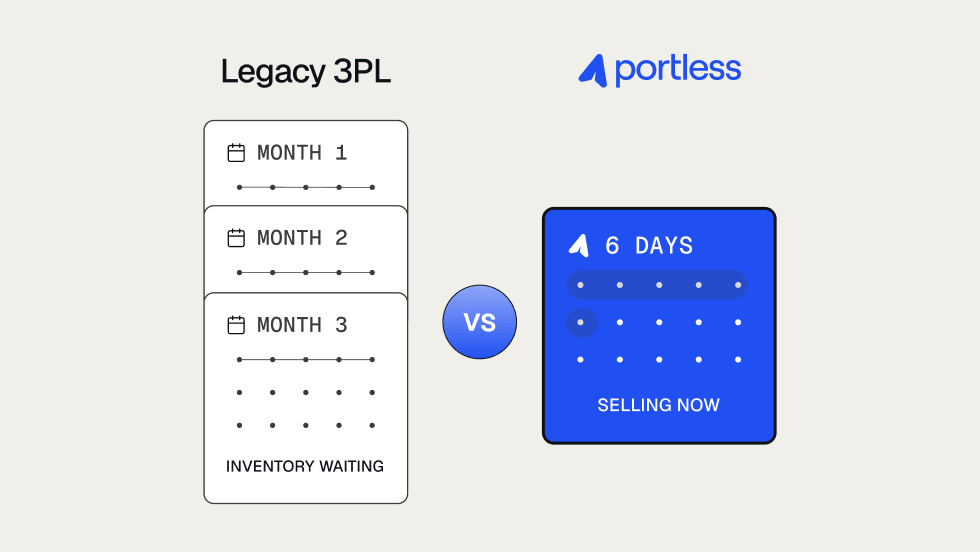
- Higher COGS from full-container duty payments on inventory that hasn't sold yet
- Higher fulfillment expense from 3PL storage fees ($15–$40 per pallet per month) and long-tail inventory sitting for 60–120 days
- Inventory write-downs when demand forecasts are wrong and you're stuck liquidating dead stock at a loss
- Lower operating income because cash is locked in inventory that hasn't generated revenue yet
The damage doesn't always show up on a single line. It compounds. A brand carrying 90 days of inventory pays duties, storage, and capital costs on all of it — whether it sells or not. That's why brands moving 1,000–15,000 orders a month feel margin pressure even when revenue is growing.
For a financial framework on how different fulfillment models hit your P&L, read which fulfillment model maximizes your profit margins.
Key P&L metrics every DTC operator should track
Beyond the line items themselves, a few derived metrics tell you whether the P&L is healthy:
- Gross margin %: gross profit divided by revenue. Most healthy DTC brands target 60%+
- Contribution margin: revenue minus all variable costs per order — the truest measure of unit economics
- Operating margin: operating income divided by revenue. Tells you whether the business model works at scale
- Inventory turnover: how many times inventory cycles through in a year. Higher is usually better
If your gross margin looks fine but operating margin is thin, the leak is usually in fulfillment, warehousing, or marketing efficiency.
P&L vs. balance sheet vs. cash flow statement
The P&L isn't the only financial statement that matters, and it doesn't tell the full story on its own:
- The P&L shows profitability over a period
- The balance sheet shows what you own and owe at a single point in time
- The cash flow statement shows actual cash movement in and out of the business
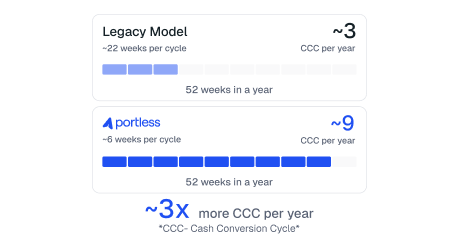
A brand can be profitable on the P&L and still run out of cash. This is the trap most DTC brands fall into: revenue is up, the P&L looks healthy, but inventory is eating every available dollar. That's a cash flow problem, not a profit problem. For more on how to free up working capital tied up in inventory, see turning 2025 inventory into 2026 cash flow wins.
How direct fulfillment changes the lines on your P&L
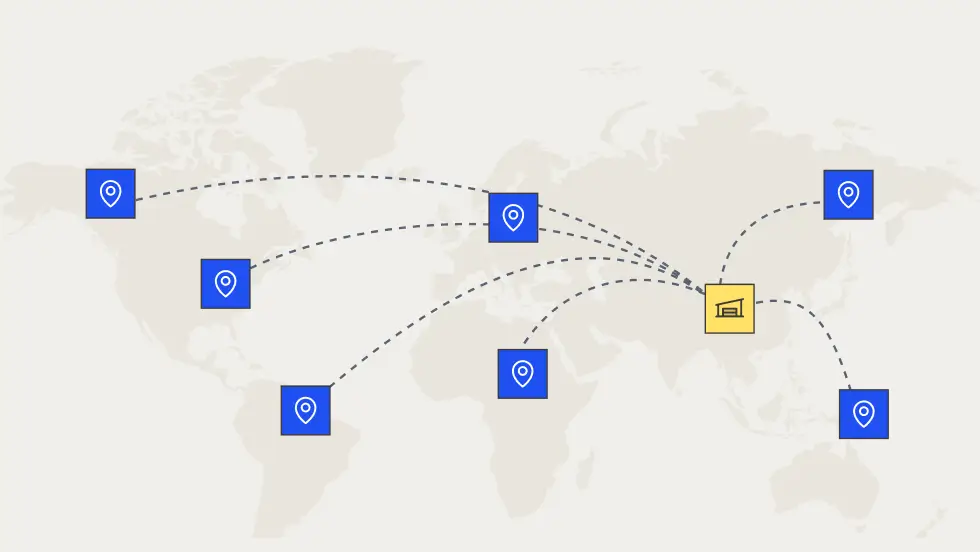
The P&L is where the case for direct fulfillment is easiest to make. By shipping orders directly from manufacturers in Asia to customers in 85+ countries, Portless changes several lines at once: duties are paid only on what sells (not on bulk inventory sitting in a domestic warehouse), storage fees on unsold goods disappear, and capital that was locked in 90 days of inventory becomes available days after production. Brands like Cosara, which grew 10x in revenue after switching to Portless, saw the impact compound — faster cash conversion funded faster growth, and a leaner cost structure kept margins intact as volume scaled.
If you want to model the P&L impact of direct fulfillment on your own numbers, contact our team or run your inputs through the Portless Direct Fulfillment ROI Calculator.
← Back to the Ecommerce supply chain glossary