Direct-to-consumer (DTC)
Direct-to-consumer (DTC) is a business model where brands sell products straight to end customers, bypassing wholesalers, distributors, and retail middlemen. It gives brands full control over pricing, margins, customer data, and the post-purchase experience.
The DTC model rewrote the rules of Ecommerce over the past decade. Instead of relying on retailers to stock shelves and own the customer relationship, brands now sell directly through their own websites, apps, and owned channels. That shift unlocked higher margins, faster product iteration, and direct access to customer behavior — but it also pushed the entire operational burden onto the brand. You own the supply chain, the fulfillment, the returns, and the customer service. Every decision you make about manufacturing, inventory, and shipping shows up in your unit economics.
For founders running $1–50M DTC brands, the model's promise (better margins, direct customer relationships) only holds if the supply chain behind it is built to support it. Most aren't.
What direct-to-consumer means in practice
A DTC brand designs or sources its own products, owns the channel where customers buy them, and controls the experience from checkout through delivery. There's no Walmart buyer dictating shelf space, no Amazon algorithm deciding your visibility, no distributor taking a cut.
In practice, that usually means:
- Selling through your own Shopify, WooCommerce, or custom storefront
- Owning customer data (email, purchase history, browsing behavior) directly
- Setting your own prices without retailer markup pressure
- Handling fulfillment, returns, and support in-house or through partners
- Building brand loyalty through content, community, and post-purchase experience
The model gave brands like Warby Parker, Allbirds, and Glossier the runway to scale without retail gatekeepers. It also gave rise to a generation of category-specific brands in beauty, apparel, electronics, home goods, and supplements that would never have made it onto a Target shelf in year one.
Why DTC margins look better on paper than they often perform
Cutting out the middleman sounds like pure margin upside. In a traditional wholesale model, a brand might sell a $30 product to a retailer for $12, who then sells it to the customer for $30. The brand captures $12. In a DTC model, the same brand captures the full $30 — minus their cost of goods, fulfillment, shipping, and customer acquisition.
That last part is where DTC economics get complicated. Customer acquisition costs (CAC) have climbed steadily as paid social and search platforms have become more competitive. According to industry analysis, CAC has risen roughly 60% over the past five years across consumer categories.
Add to that:
- Working capital tied up in inventory you bought months before selling
- Domestic warehousing fees, even when you're not shipping out the door
- Duties paid upfront on inventory that may never sell
- Reverse logistics costs on returns, especially in apparel
- Shipping costs that eat into margin on every order
The result: many DTC brands operating on paper margins of 60–70% find their actual contribution margin closer to 15–25% once the full landed cost and operational overhead are factored in.
How the legacy supply chain breaks the DTC model
The standard playbook for a DTC brand manufacturing in Asia looks like this:
- Place a bulk purchase order with the factory
- Wait 30–60 days for production
- Ship via ocean freight (another 30–45 days)
- Pay duties upfront on the full shipment when it lands
- Move inventory into a domestic 3PL warehouse
- Pay storage fees while inventory waits to sell
- Pick, pack, and ship individual orders to customers
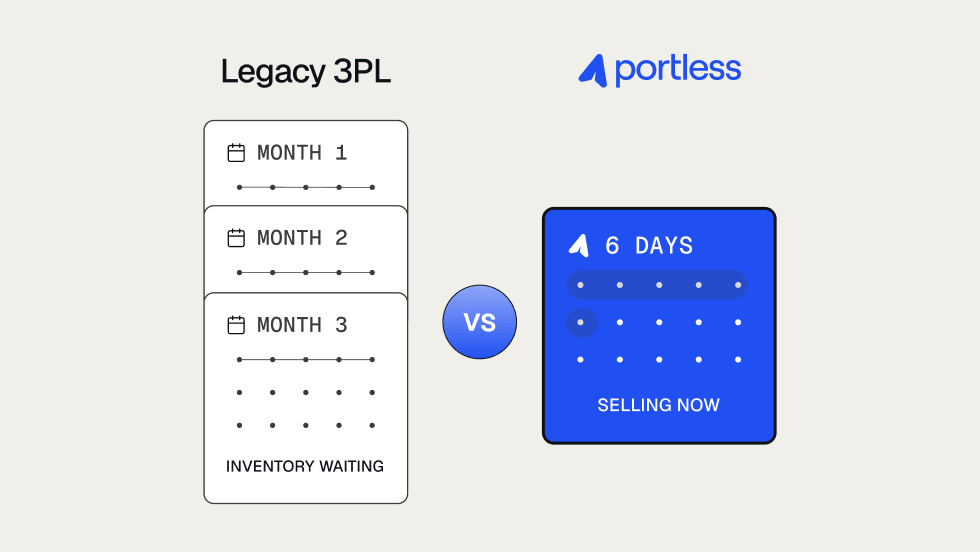
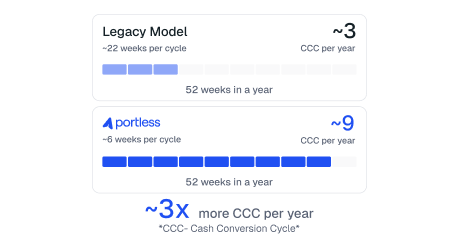
That cycle locks up cash for 90–120 days before the first unit sells. It forces brands to bet on demand forecasts months in advance, and the bet is often wrong. Overstocks turn into discount-driven liquidations. Stockouts mean lost revenue and ranking penalties on platforms like Amazon. Either way, margin gets squeezed.
This is the model Shein and Temu broke. Both brands ship directly from manufacturers in China to end customers, skipping the bulk freight and domestic warehousing steps entirely. The result is faster product cycles, lower inventory risk, and the ability to test demand without committing capital. Their growth trajectories show what's possible when the supply chain is built for the DTC model instead of bolted onto it.
The direct fulfillment alternative
Direct fulfillment shifts the operational model: instead of buying inventory in bulk and warehousing it domestically, you ship orders directly from the manufacturer to the customer as they're placed. Inventory becomes available for sale within days of production, not months. Duties are paid per order on goods that have already sold, not upfront on speculation.
For lightweight DTC products (under 3.5 lbs) in categories like apparel, beauty, electronics, and home goods, this model collapses the cash conversion cycle, reduces inventory risk, and makes international expansion possible without standing up warehouses in every region. You can read more about how this works in Direct fulfillment 101.
What DTC brands should measure
If you're running a DTC brand, the metrics that actually determine whether the model is working aren't revenue or top-line growth. They're:
- Contribution margin per order — revenue minus all variable costs (COGS, shipping, fulfillment, transaction fees, returns)
- Cash conversion cycle — days between paying suppliers and collecting revenue
- CAC payback period — months to recover acquisition cost through gross profit
- Inventory turnover — how many times stock cycles through per year
- Landed cost — total cost to get a product from factory to customer's door
Brands that track these numbers honestly tend to make better operational decisions than brands that focus on GMV alone. Cosara, for example, restructured their fulfillment model to address exactly these economics.
How Portless supports the DTC model
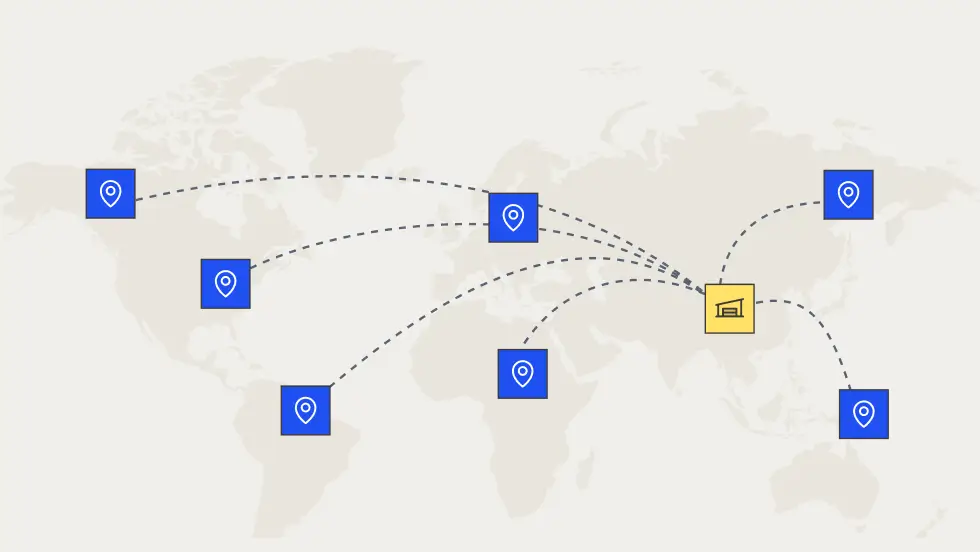
The DTC model only delivers on its margin promise when the supply chain behind it doesn't lock up cash, force speculative inventory bets, or pile on warehousing overhead. Portless ships your orders directly from manufacturers in Asia to customers in 85+ countries, with five to eight day delivery, DDP duty handling, and integration with Shopify and WooCommerce. Inventory becomes available for sale days after production, not months — which is what DTC economics actually need to work.
Contact us to see how direct fulfillment changes the math for your brand.
← Back to the Ecommerce supply chain glossary