Duty drawback
Duty drawback is a refund of up to 99% of customs duties, taxes, and fees paid on imported goods that are later exported or destroyed under CBP supervision. It's a cost-recovery mechanism — not a way to avoid duties at the point of import.
If you're an Ecommerce brand importing goods into the US and then re-exporting some of them — to international customers, to returns processors, or as part of a destroyed/defective batch — you've likely paid duty twice on the same product without realizing it. Duty drawback exists to refund those duties. It's a US Customs and Border Protection (CBP) program that lets importers reclaim up to 99% of the duties, taxes, and fees paid on goods that don't ultimately stay in the US market.
In theory, it's a meaningful margin recovery tool. In practice, it's paperwork-heavy, slow, and structured around a legacy supply chain model that assumes you've already paid duty on bulk inventory sitting in a US warehouse. For most DTC brands shipping under $15M in revenue, the juice often isn't worth the squeeze — unless the duty exposure is significant or the export volume is high.
How duty drawback works
Drawback claims are filed with CBP after the qualifying goods have been exported or destroyed. The importer (or a licensed customs broker filing on their behalf) submits documentation proving:
- The goods were imported into the US and duties were paid
- The same goods, or goods manufactured using imported components, were subsequently exported or destroyed under CBP supervision
- The export occurred within the statutory window — generally five years from the date of import
Once approved, CBP refunds 99% of the duties, taxes, and certain fees originally paid. The 1% retained covers administrative costs. Per CBP's drawback overview, the program has existed in some form since 1789 — making it one of the oldest trade programs in US law.
Types of duty drawback
There are three main categories of drawback claims that DTC and Ecommerce brands typically encounter:
- Unused merchandise drawback: Refunds duties on imported goods that are exported in the same condition, without being used in the US. Common for brands re-exporting inventory to international customers.
- Manufacturing drawback: Refunds duties on imported components that were used to manufacture a finished product, which was then exported.
- Rejected merchandise drawback: Refunds duties on imported goods that didn't conform to specifications, were defective, or were shipped without consent — and were later exported or destroyed.
What drawback doesn't cover
Drawback is narrower than most brands assume. It typically doesn't apply to:
- Section 301 tariffs on Chinese imports in many cases (rules vary by HTS code and product)
- IEEPA-based tariffs — refunds for these are filed through CBP's CAPE system, not the standard drawback process
- Antidumping and countervailing duties
- Merchandise processing fees on certain entry types
- Goods that have been substantially transformed in ways that don't qualify under manufacturing drawback rules
The categories of duties that qualify for drawback have shifted significantly under recent trade actions. Always verify current eligibility with a licensed customs broker before building drawback into your margin model.
The cash flow problem with drawback
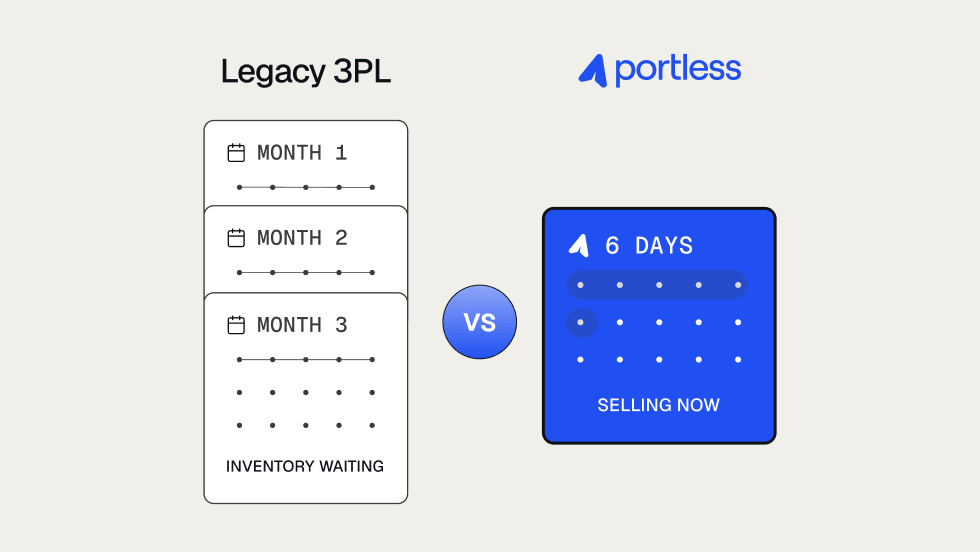
Here's where the legacy supply chain model breaks down. Drawback assumes you've already paid duties upfront on bulk inventory — a container load that arrived at a US port, cleared customs, and went into a domestic warehouse. You then pay to store it, hope it sells, and if part of it gets re-exported or destroyed, you file for a refund.
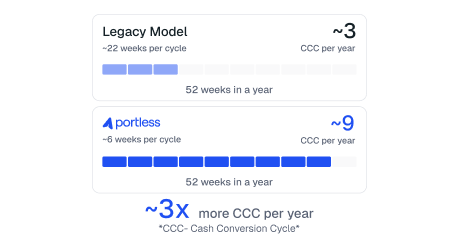
The refund process typically takes 6 to 12 months. So you've:
- Paid duty on every unit, including unsold ones
- Tied up working capital in inventory that may never sell
- Paid storage costs on the warehouse footprint
- Waited up to a year to recover duty on the portion you exported
For a brand doing 5,000 orders a month with a 30% international mix, that's a meaningful amount of cash locked up for an extended period. The drawback refund is real, but it arrives long after the cash flow damage is done.
Drawback vs. duty deferment vs. direct fulfillment
Drawback is a backward-looking refund. Tariff deferment — paying duties later through a bonded warehouse or free trade zone (FTZ) — is a forward-looking timing strategy. Direct fulfillment from the point of manufacture is a structural fix: duty is only paid on units that actually sell, at the moment they ship to a customer.
The three approaches solve different problems:
- Drawback recovers duties already paid on goods you ended up exporting
- Deferment delays the duty payment until inventory clears customs in a bonded facility
- Direct fulfillment eliminates the duty-on-unsold-inventory problem entirely
For brands selling globally from a US warehouse, drawback is one of the only ways to recover duties on international orders. But it's a fix for a structural problem — paying duty on inventory before you know where it's going to be sold.
When duty drawback makes sense for DTC brands
Drawback is worth pursuing if you check most of these boxes:
- You're importing significant volume into the US with paid duties on each entry
- A meaningful share — usually 10% or more — is later exported to international customers or destroyed
- Your duty exposure per export shipment is high enough to justify the administrative overhead
- You have clean documentation linking imports to exports at the SKU level
- You can wait six to 12 months for the refund
For most $1–15M DTC brands, the documentation burden eats into the recovery. Brands with simpler structures often get more margin lift from rethinking the model upstream — through direct fulfillment, DDP shipping, or a multi-node fulfillment strategy that puts inventory closer to where it sells.
How Portless removes the need for drawback in the first place
Duty drawback is a workaround for a broken model. If you're paying duty on bulk inventory months before it sells — and then filing paperwork to claw back duties on the units you ended up exporting — you're operating inside the legacy supply chain that direct fulfillment was built to replace.
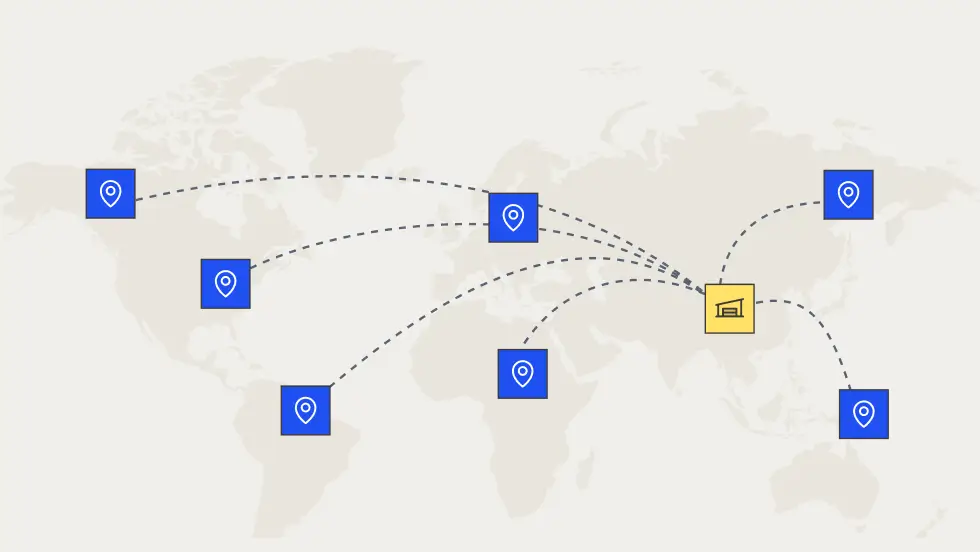
Portless ships orders directly from manufacturers in Asia to customers in 85+ countries. Duty is paid per order, on units that have already sold, in the destination country. No upfront duty on unsold inventory. No drawback claims for re-exported goods. No 6–12 month wait for a refund. Contact us to see how direct fulfillment changes the duty math for your brand.
← Back to the Ecommerce supply chain glossary