First mile delivery
For Ecommerce brands manufacturing in Asia and selling abroad, first mile delivery is where the supply chain either gains or loses days. It covers everything that happens between the moment goods leave the production line and the moment they enter the long-haul freight network — typically a truck ride from the factory to a consolidation point, freight forwarder, fulfillment center, port, or airport. Get it wrong and you've already added weeks of lag and unnecessary cost before a single unit reaches your customer.
What first mile delivery actually covers
The first mile is short in distance but heavy in decisions. It includes:
- Pickup of finished goods from the manufacturer's facility
- Inland trucking to a consolidation hub, warehouse, or freight forwarder
- Inspection, palletizing, and labeling for onward transport
- Handoff to ocean freight, air freight, or a fulfillment partner
In the legacy model, first mile delivery feeds into a 30 to 60 day ocean freight journey, followed by customs clearance, drayage, and inbound at a domestic 3PL. Every day added in the first mile compounds across the rest of that timeline.
Why first mile delivery matters more than brands think
Most operators obsess over last mile delivery because that's what the customer sees. But the first mile is where the biggest structural costs and delays are introduced — and they're harder to recover from later.
Quality control happens here, or it doesn't happen at all. When goods leave the factory uninspected, defects travel with them. By the time a US-based 3PL receives the inventory six weeks later, returning a bad batch to the factory is too expensive to justify. Brands end up scrapping, liquidating, or shipping flawed product to customers.
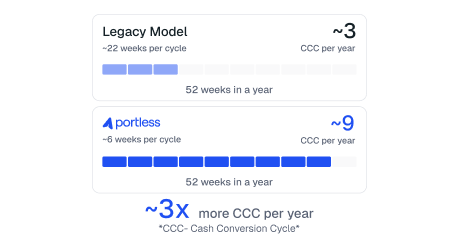
Cash gets locked up the moment goods move. You've paid your supplier. Now your capital is sitting on a truck, then a ship, then in a port queue. According to the Federal Reserve, supply chain timing has direct knock-on effects for working capital intensity. The longer the first mile takes to hand off to long-haul freight, the longer your cash conversion cycle.
Lead time accuracy starts here. A delayed factory pickup or a slow consolidation point pushes back your sailing date, your customs window, and ultimately your in-stock date. Forecasting falls apart when first mile timing is unpredictable.
The legacy first mile is built for bulk, not Ecommerce
The legacy supply chain treats first mile delivery as a freight problem: move pallets to a port, fill a container, get it on a boat. That logic made sense when retail ran on quarterly buys and brick-and-mortar replenishment cycles.
It doesn't fit how Ecommerce works now. Brands need to test SKUs in small batches, replenish based on real demand, and avoid betting capital on forecasts that are stale by the time inventory lands. A first mile designed around 40-foot containers and ocean schedules forces you into MOQs and lead times that punish agility.
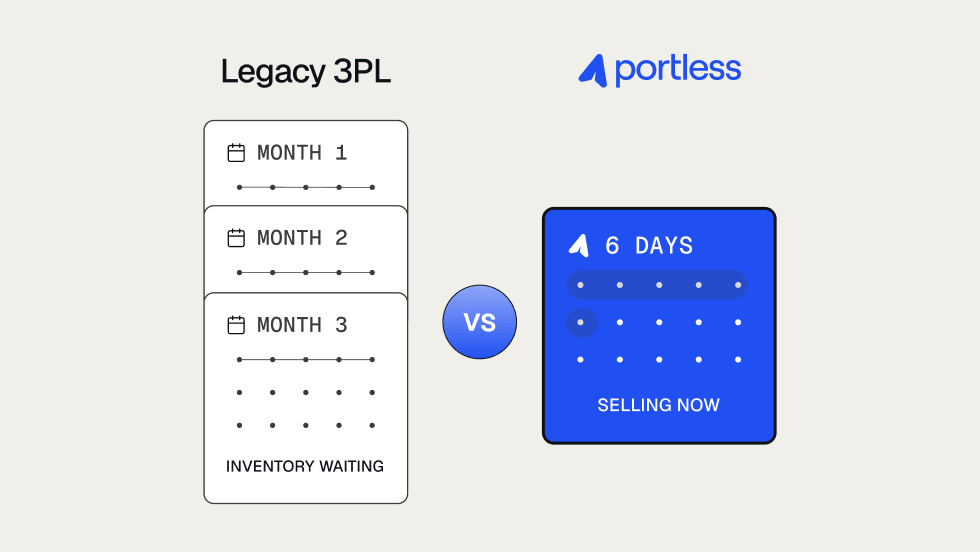
This is why direct-from-factory fulfillment models — used by Shein, Temu, and a growing number of DTC brands — collapse the first mile into hours instead of days. Goods move from the factory to a nearby fulfillment center, get inspected and stored, and become available for sale within days of production.
How direct fulfillment changes the first mile
When your fulfillment center sits within driving distance of your factory, the first mile becomes a same-day or next-day truck ride instead of a multi-stop, multi-handoff freight operation. That shift unlocks:
- Faster defect detection, with QC issues resolved at the factory within 24 to 48 hours
- Inventory available for sale five days after production, not 60
- Smaller, more frequent production runs that match demand instead of forecasts
- Fewer handoffs, fewer points of failure, and tighter inventory accuracy
The first mile stops being a bottleneck and becomes a feedback loop. You learn what's selling, adjust orders, and reorder — all before the legacy supply chain would have even cleared customs on its first shipment.
Common first mile delivery mistakes
Brands scaling between $1M and $15M tend to repeat the same first mile mistakes:
- Treating factory pickup as the supplier's problem and losing visibility once goods leave the production floor
- Skipping pre-shipment inspection because the factory "has it covered"
- Consolidating with a freight forwarder that prioritizes container utilization over your sailing window
- Letting first mile delays push shipments into peak season air freight at five times the cost
Each of these is a margin leak that doesn't show up on an invoice. It shows up as stockouts, write-offs, or expedited freight bills.
First mile delivery sets the ceiling for everything that follows
You can't fix a broken first mile with better last mile carriers or a cheaper 3PL. The decisions made in those first few miles — where goods get inspected, how fast they're consolidated, how quickly they enter the long-haul network — determine your lead times, your cash flow, and your ability to react to demand.
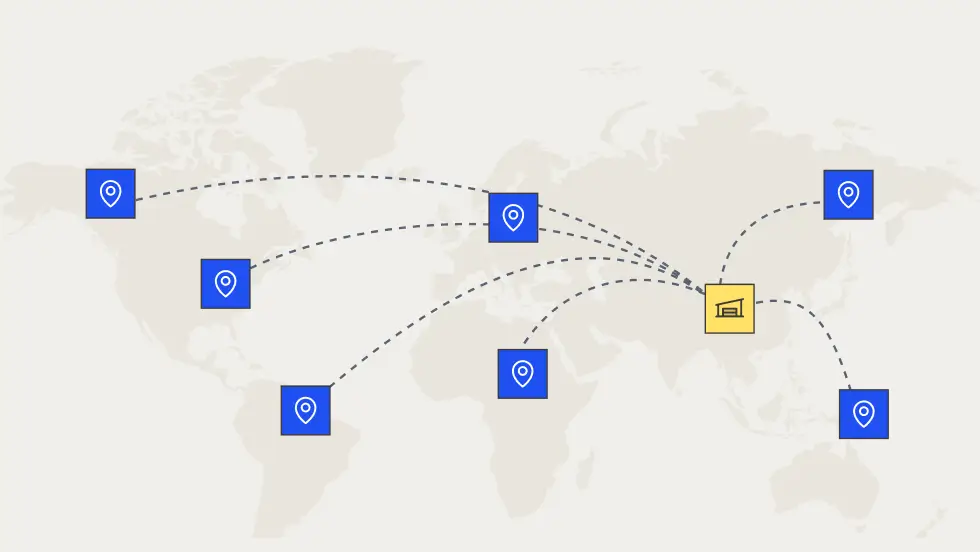
Portless rebuilds the first mile around proximity. Goods move from your factory in Asia to our adjacent fulfillment center within hours, get inspected the same day, and ship direct to customers in 85+ countries within five to eight days. No ocean freight, no domestic 3PL, no 60-day capital lockup. Contact us to see how a shorter first mile changes the rest of your supply chain.
← Back to the Ecommerce supply chain glossary