Inventory holding cost
Inventory holding cost is the total expense of storing unsold inventory over time, including warehouse rent, capital cost, insurance, shrinkage, and obsolescence. It's typically expressed as a percentage of average inventory value and often runs 20–30% annually for Ecommerce brands.
Inventory holding cost — sometimes called carrying cost — is one of the most underestimated line items in Ecommerce. Brands obsess over unit cost and freight rates, then quietly hand back 20–30% of inventory value every year just to keep stock sitting on a shelf. For a brand with $500K in average inventory, that's $100K–$150K a year in expenses that never touch a customer.
The issue isn't just the size of the number. It's what the number represents: cash you've already spent, locked into product that hasn't sold yet, accruing storage and depreciation fees every day it sits. The longer your supply chain, the worse it gets.
What inventory holding cost actually includes
Holding cost is not a single line item. It's a stack of expenses that compound the longer inventory stays unsold. Most brands track one or two of these and miss the rest.
- Capital cost. The opportunity cost of cash tied up in inventory. Money sitting in stock can't fund ads, product development, or new market expansion.
- Storage cost. Warehouse rent, utilities, pallet fees, and any pick-and-pack overhead allocated to idle stock.
- Service cost. Insurance, taxes on inventory, and IT systems used to track and manage it.
- Risk cost. Shrinkage, damage, theft, obsolescence, and forced markdowns on slow-moving SKUs.
Oracle NetSuite breaks these into four standard categories: capital, storage, service, and risk. The exact split varies by category, but the framework holds across most Ecommerce businesses.
How to calculate inventory holding cost
The standard formula is straightforward:
Inventory holding cost (%) = (Total holding costs ÷ Average inventory value) × 100
So if you carry $400,000 in average inventory and spend $100,000 a year across storage, capital, insurance, and shrinkage, your holding cost rate is 25%.
For a more granular view at the SKU level, you can also calculate:
(Landed cost per unit + monthly storage per unit) × months to sell-through = true cash drain per SKU
This is the version that matters for inventory decisions. If 3,000 units of a $9 SKU sit for six months at $0.30 per unit per month in storage, you're tying up $27,000 in COGS plus another $5,400 in storage — about $32,400 in capital and cost on one purchase order. Multiply that across slow-moving SKUs and you'll see why the bank balance feels tight even when revenue is up.
For a working example, see our breakdown on turning leftover inventory into 2026 cash flow wins.
Why holding cost is bigger than it looks in the legacy model
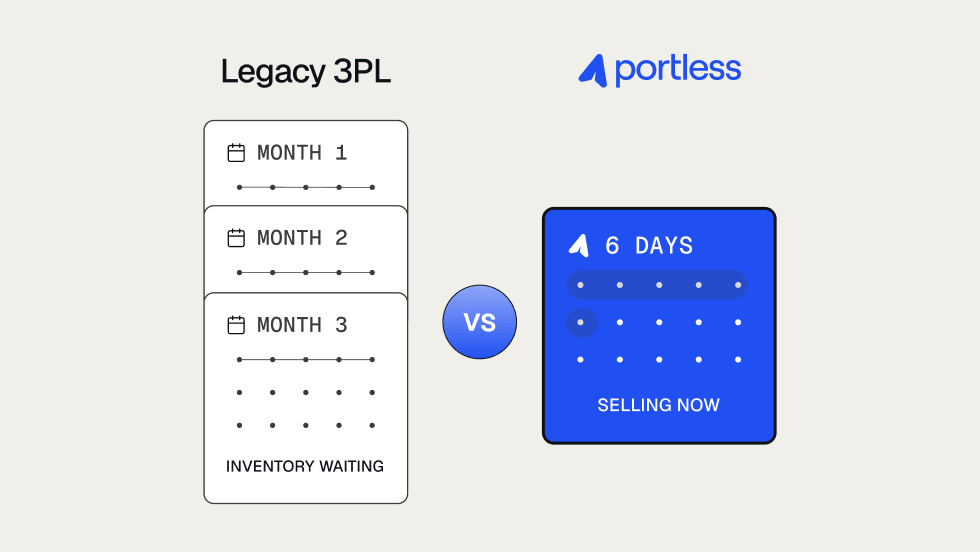
The legacy model — bulk ocean freight into a domestic 3PL — bakes in high holding costs by design. Here's the sequence:
- You pay the factory 60–90 days before goods sell.
- You pay ocean freight, with another 45–60 days of transit.
- You pay duties upfront, on unsold inventory.
- You pay warehouse storage while stock waits to ship.
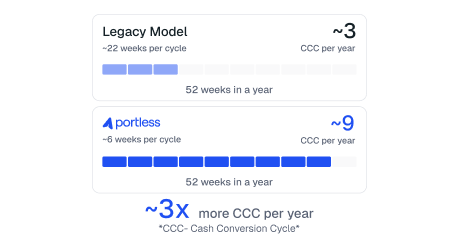
By the time the first unit sells, you've been carrying that inventory for three to four months. Storage fees accumulate. Capital is locked. Quality issues — discovered weeks late — turn into write-offs instead of factory returns. We've covered this dynamic in detail in the 2026 inventory model.
The result: brands over-order to hedge against stockouts, then spend the next two quarters discounting to clear excess. Both ends of the cycle inflate holding cost.
What drives holding cost up
A few patterns consistently push holding cost above the 20–30% baseline:
- Long lead times. The longer it takes to replenish, the more safety stock you carry. More safety stock means more capital and storage tied up.
- Early forecasting. Bulk orders placed four to six months before peak season inflate inventory levels long before demand is proven. Our guide on why traditional forecasting fails breaks down the timing problem.
- Container minimums. Ocean freight only works at volume, which forces brands into MOQ commitments larger than actual demand.
- High SKU count. More variants means more slow-movers, more deadstock risk, and more complexity to manage.
- Seasonal concentration. Brands that build BFCM inventory months in advance often carry leftover stock well into Q1.
How to reduce inventory holding cost
The conventional advice — better forecasting, tighter reorder points, ABC analysis — helps at the margin. But none of it changes the underlying structure: you're still ordering bulk, shipping ocean, and storing months of stock before it sells.
To meaningfully cut holding cost, you have to compress the time between production and sale. That means:
- Smaller, more frequent production runs instead of one or two big bets per season.
- Shorter lead times so safety stock can shrink without raising stockout risk.
- Later commitment on inventory levels, made closer to real demand signals.
- Direct fulfillment from manufacturing so inventory doesn't sit in a domestic warehouse for 60–90 days before its first sale.
This is the same principle Shein and Temu have built their supply chains around: produce in response to demand, not ahead of it. The difference for a DTC brand is that you don't need their scale to apply the model — you just need a fulfillment structure that supports it.
How Portless lowers your inventory holding cost
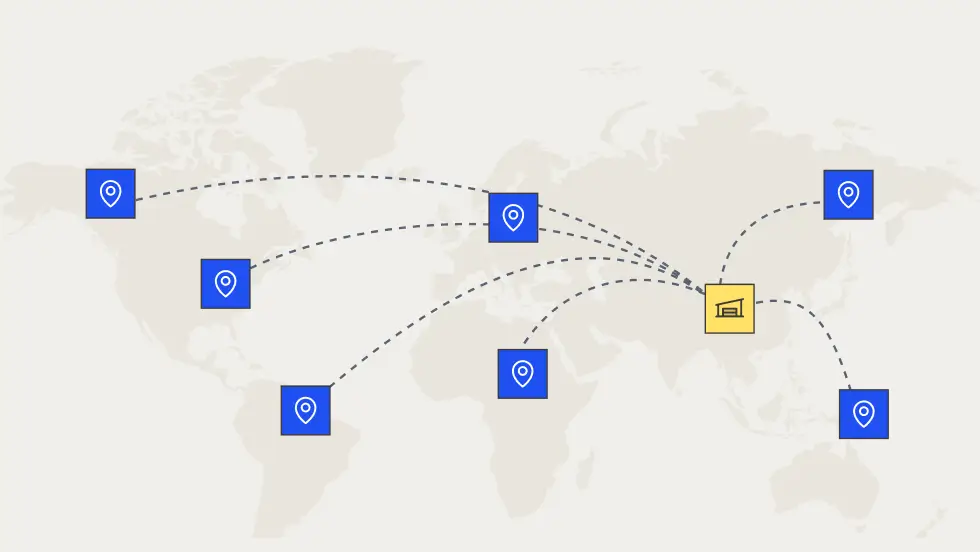
Portless replaces the bulk-freight-plus-3PL stack with direct fulfillment from your manufacturer in Asia to your customer. Inventory becomes sellable days after production, not months. Storage time shrinks. Capital recovers faster. Duties are paid as orders ship, not on unsold stock sitting in a warehouse.
The result is a holding cost structure that's structurally lower than the legacy model — not because we negotiated better warehouse rates, but because there's less inventory sitting still. If you want to see what that looks like with your own numbers, plug them into the Portless ROI calculator or contact us to walk through your supply chain in detail.
← Back to the Ecommerce supply chain glossary