Zone skipping
Zone skipping is a domestic shipping strategy where you consolidate parcels destined for the same region into one line-haul truckload, then inject them into a carrier's network closer to the end customer — bypassing the zones (and zone-based pricing) in between.
Domestic parcel carriers like UPS, FedEx, and USPS price shipments based on distance, broken into zones one through eight. The farther a package travels from its origin fulfillment center, the higher the zone and the higher the rate. Zone skipping is a workaround. Instead of handing each individual parcel to a carrier at your warehouse and paying zone seven or eight rates across the country, you batch thousands of orders headed to the same metro area, truck them as freight to a regional injection point, and hand them off to the carrier there as zone one or two parcels.
It's a legitimate cost-cutting strategy for high-volume domestic shippers. But it's also a workaround for a deeper problem — bulk inventory sitting in a single domestic warehouse, far from most of your customers. Worth understanding before you build your fulfillment strategy around it.
How zone skipping actually works
The mechanics are straightforward. The execution is not.
- Consolidate. You hold parcels at your warehouse until you have enough volume going to a specific region — usually a full truckload, sometimes a partial.
- Line-haul. You ship the consolidated load via FTL or LTL freight to a carrier injection point near the destination region.
- Inject. The parcels are handed off to a domestic shipping carrier at that injection point, where they're scanned in and re-enter the network as local zone one or two shipments.
- Last-mile. The carrier handles last mile delivery to the customer, billed at the lower zone rate.
The savings come from arbitraging the difference between freight rates (cheap per pound when consolidated) and parcel rates (expensive per pound, especially at high zones).
Where zone skipping makes sense
Zone skipping works when three conditions are true:
- You ship enough volume to fill regular truckloads to specific regions
- Your fulfillment center is geographically far from a significant portion of your customers
- You can afford the delay of consolidating parcels before they ship
Most brands that benefit are doing several thousand orders per day from a single domestic warehouse, with concentrated customer demand in regions far from that warehouse. A West Coast 3PL serving a customer base that skews East Coast is the textbook use case.
Where zone skipping breaks down
The strategy has real limits, and Ecommerce operators run into them fast.
It adds transit time. You're holding parcels back to consolidate them, then putting them on a truck for 24-72 hours before they even enter the carrier network. Same-day or next-day shipping is off the table.
It requires volume. If you can't fill trucks regularly to the same region, your per-unit freight cost erodes the parcel savings. Most brands under $15M in revenue don't have the density.
It doesn't solve the upstream problem. Zone skipping is a tactic for moving inventory more cheaply after you've already paid to ship it across an ocean, store it domestically, and pay duties on it upfront. The cash flow drag of the legacy supply chain model is still there.
It's a domestic-only fix. International orders, which are increasingly where DTC growth is happening, get no benefit. According to Capital One's 2025 cross-border data, cross-border now accounts for roughly 18.8% of online sales globally.
Zone skipping vs. direct fulfillment
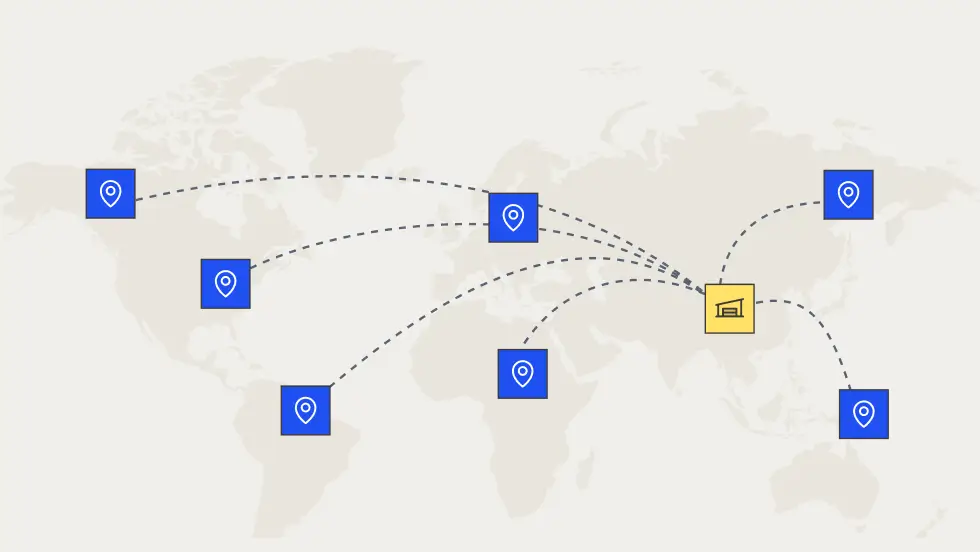
Zone skipping is a way to optimize within the legacy bulk-import, domestic-warehouse model. Direct fulfillment skips the model entirely.
::table
Factor;Zone skipping;Direct fulfillment
Inventory location;Single domestic warehouse;Held near point of manufacture
Upfront duty payment;Paid on bulk import before sale;Paid per order, DDP
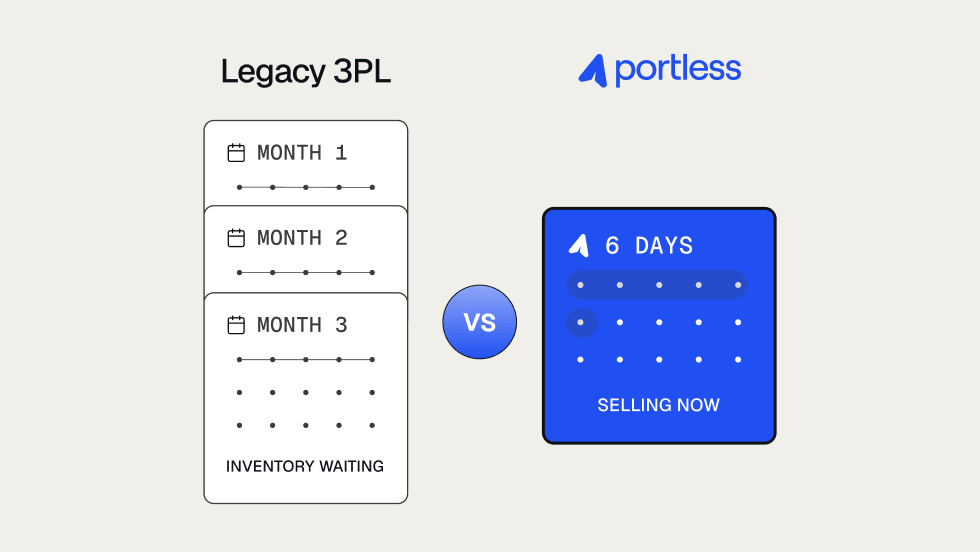
Cash flow;Capital locked in unsold inventory;Inventory becomes sellable days after production
International orders;No benefit;Ships globally to 85+ countries
Transit time impact;Adds 1-3 days for consolidation;Five to eight days door-to-door from China
Volume requirement;High — needs truckload density;None
:table
Zone skipping reduces the cost of moving parcels you've already imported and stored. Direct fulfillment removes the import-and-store step.
What this means for cash flow
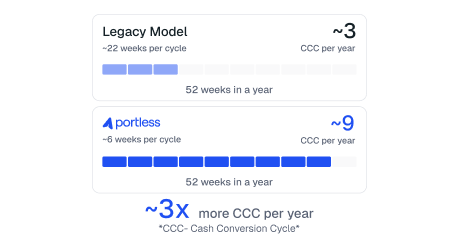
The hidden cost of any domestic-first strategy is what your inventory does to your balance sheet. When you import 90 days of stock by ocean freight, pay duties upfront, and warehouse it domestically, your cash is locked up until that inventory sells. Zone skipping makes the outbound shipping cheaper. It does nothing for the working capital problem.
This is the trap most $1-15M brands fall into. They optimize the legacy model with tactics like zone skipping, multi-node fulfillment, and rate negotiations — when the real lever is rethinking where inventory lives and when duties get paid. Brands like Shein and Temu built their cost structures by shipping directly from manufacturers, not by being smarter about domestic parcel zones.
Why most growing DTC brands don't need zone skipping
If you're under 15,000 orders per month, the volume math rarely works. You won't fill enough trucks to the right regions consistently, and the consolidation delay hurts conversion. The brands that benefit most from zone skipping are the ones least willing to rethink their fulfillment model — they have so much sunk into domestic warehousing that incremental optimization is the only lever left.
For everyone else, the smarter question isn't "how do I cheat the zone system?" It's "why am I paying to ship inventory across an ocean, store it, then ship it again to my customer?"
Skip the zones entirely with direct fulfillment
Zone skipping treats a symptom. Portless treats the cause. By shipping directly from manufacturers in Asia to customers in 85+ countries, we eliminate the bulk import, domestic warehouse, and zone-based last-mile pricing problem in one move. Delivery still lands in five to eight days, duties get paid per order under our DDP model, and inventory becomes sellable days after production instead of weeks. Contact us to see what direct fulfillment looks like for your brand.
← Back to the Ecommerce supply chain glossary