The hidden costs of cheap fulfillment are the ones the quote leaves out. They include extra fees, inventory errors, mistakes your customers notice, shipping costs that rise every year, and cash tied up in stock. A low per-order rate rarely means a low total cost, and the gap usually shows up after you've signed.
Fulfillment costs cover everything you pay to store your products, pack and ship each order, and handle returns.
Why cheap fulfillment looks like a bargain
Low-cost third-party logistics (3PL) providers win on the quote. The per-order rate is low, the monthly minimum is small, and onboarding is quick. At a few hundred orders a month, that can be the right choice.
The problems tend to start as volume grows. A provider that runs lean on staff, stock counts, and software can keep up with a small brand, but every gap gets bigger as order volume rises.
The hidden costs that never make the quote
Fees the quote leaves out
The quote shows the headline rates. Extensiv's 3PL benchmark data, cited in our breakdown of the true cost of a 3PL, puts storage at $15 to $40 per pallet per month and pick and pack at $2 to $5 per order. The invoice then adds fees the quote didn't show, such as receiving fees, extra-item fees, special packaging, inventory adjustments, and storage overages.
The contract can cost more than any single fee. Exit fees and storage charges on slow-moving stock can outweigh what you save on the per-order rate. Liability matters too. According to our guide to choosing a 3PL for Shopify, fulfillment agreements typically cap what a provider owes for a lost or damaged order at the fulfillment fee for that order, so the cost of the product itself usually falls on you.
Inventory counts you can't trust
A provider that skips regular cycle counts or runs on basic warehouse software will lose track of stock. When the count in your store doesn't match the shelf, you oversell products you don't have and miss sales on products you do. Each mismatch can turn into a stockout on a best seller, a cancelled order, and a customer who goes elsewhere.
Mistakes your customers notice
A wrong item or a missing piece usually starts in pick and pack, the step where the warehouse pulls your products off the shelf and packs each order. Each error costs you more than once. You pay for the reship or refund, you pay your team to answer the support ticket, and you can lose the customer's next order.
Ask every provider for its pick-and-pack accuracy rate and how it checks orders before they ship. Portless proudly maintains 99.8% pick-and-pack accuracy.
Shipping costs that keep rising
Where your inventory sits sets your shipping cost. US carriers charge more the farther a parcel travels across shipping zones, so if your stock sits in one warehouse on one coast, you pay more to reach every customer on the other. Our breakdown of the costs your 3PL never invoices found the same 2 lb USPS Priority Mail parcel costs $9.35 in Zone 2 and $14.25 in Zone 8, 52% more for the farther customer.
Carriers also bill on dimensional weight, which charges for the size of the box as well as its weight, so a provider that packs in oversized boxes raises your postage on every order. Carriers raise their rates every year as well, and FedEx and UPS each set an average 5.9% general rate increase for 2026.
Passing those costs on to customers is hard. In a FedEx consumer survey, 75% of consumers said they prioritize free shipping over fast shipping, so higher shipping costs either come out of your margin or cost you sales.
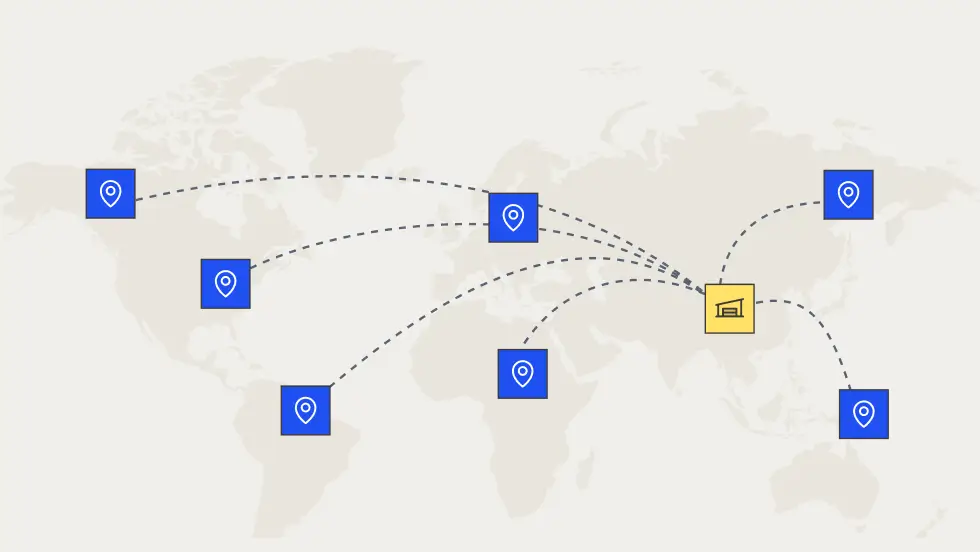
Spreading stock across countries adds its own shipping bill. NATPAT started its global expansion with a separate fulfillment partner in each market and moved stock between countries and fulfillment centers, paying air freight and duty to do it. Once it moved to Portless and shipped everything from one inventory pool, NATPAT stopped those transfers and the costs that came with them.
Support that can't keep up at peak
When a low rate comes with lean support and no dedicated account manager, a small issue sits in a ticket queue until it grows, and your team spends hours chasing updates instead of running the business.
Peak season makes every gap bigger. Understaffed warehouses fall behind in Q4 and during launches, exactly when volume and stakes are highest. Carriers add 15% to 30% per package from early October through mid-January, according to our guide to choosing a 3PL for Shopify, so every reship during peak costs more.
Locked capital is the cost few brands price in
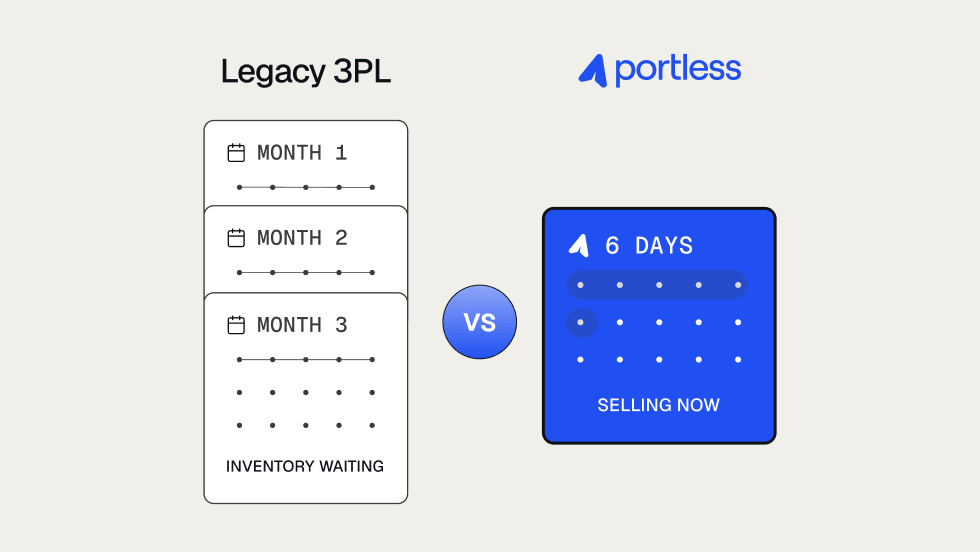
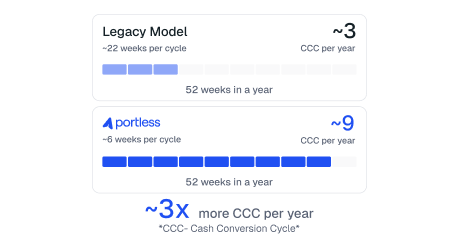
The biggest hidden cost comes from the fulfillment model itself. Under the legacy model, you buy stock in bulk months before it sells, pay for ocean freight, and pay duty on the whole shipment when it lands. All of that cash sits in a warehouse until customers buy, which stretches your cash conversion cycle, or how long your money is out of your hands between paying the factory and collecting from the customer.
Duty timing adds to it. A bulk import pays duty on the full shipment when it clears customs. With direct fulfillment, duty is paid per parcel as each order ships, so you only pay it on stock that has sold.
A cheap per-order rate does nothing about any of this. Before consolidating, memobottle held stock in six warehouses around the world and went 120 days or more before sales returned its cash. Moving to one inventory pool with Portless cut memobottle's cash conversion cycle by more than 100 days. Our post on the cash flow trap covers how pre-buying stock drains working capital.
The real cost of switching later
Choosing a provider on price alone can mean switching within a year or two. A switch means moving inventory, rebuilding integrations, retraining your team, and risking delays while stock is in transit between warehouses.
If you do switch, keep both providers running for a while and start with a small group of products, so you can check the new provider's counts before moving everything.
A quick self-audit for cheap fulfillment
Check your own operation for these signs. If two or more apply, your fulfillment is probably costing more than the invoice shows.
- You reship orders every week because of wrong or missing items.
- Stock counts in your store don't match what the provider reports.
- "Where is my order?" (WISMO) tickets spike after every sale.
- Carrier adjustments and surcharges keep appearing on your invoice.
- Orders arrive in several parcels when they should arrive in one.
- You avoid running promotions because fulfillment can't keep up.
- Returns take weeks to process and refund.
What to evaluate beyond price
Compare providers on total cost. Ask each one for an all-in cost per order, its inventory accuracy rate, how it reports stock and order status, how it integrates with your store, how it handles peak volume, and where it holds your inventory relative to where your products are made. Our checklist to evaluate a fulfillment partner covers each in detail.
::table
Model;Where inventory sits;When you pay duty;Best for
Low-cost domestic 3PL;In a domestic warehouse, after ocean freight;On the whole shipment when it lands;Small catalogs with steady demand in one country
Premium domestic 3PL;In one or more domestic warehouses, after ocean freight;On the whole shipment when it lands;Heavy goods and next-day domestic delivery
Direct fulfillment;At a fulfillment center close to the point of manufacture;Per parcel, as each order ships;Lightweight products made in Asia and sold in several countries
:table
A provider with a higher per-order rate can still cost less overall if it makes fewer mistakes, ships from a better location, and lets you hold less stock. Direct fulfillment goes further by removing the ocean freight and domestic warehouse steps altogether. Our guide to common 3PL problems covers the other issues brands run into as they grow.
See how Portless works
Portless ships direct from the point of manufacture to customers in 85+ countries in five to eight days, so you hold less stock, pay duty only on orders that have sold, and get your cash back sooner. Book a demo to see what your fulfillment really costs today.







.jpg)