“We generated $70K in package protection revenue in a single quarter by adding a simple $4 protection option at checkout — plus an additional $12K from cashbacks. Customers get peace of mind, and we're making a profit on every protected order with zero effort."
“We generated $70K in package protection revenue in a single quarter by adding a simple $4 protection option at checkout — plus an additional $12K from cashbacks. Customers get peace of mind, and we're making a profit on every protected order with zero effort."
Customers don't think about how an order reaches them until something goes wrong. A late parcel, a duty bill at the door, or a refund that takes two weeks suddenly makes the fulfillment behind your store very visible, and your brand is the one that pays for it.
That's why your fulfillment provider should be invisible. A good provider does its job so consistently that customers never have a reason to notice it. A poor one shows up in your reviews, your support inbox, and your repeat purchase rate.
Your brand pays for fulfillment mistakes
Customers don't always blame you for a bad delivery. The AlixPartners 2026 delivery survey found that consumers put most of the blame on the carrier when a delivery fails, but "it is the retailer who absorbs the commercial consequence." More than 85% of the consumers surveyed said a poor delivery experience makes them less willing to buy from that retailer again.
Whoever the customer blames, they can't choose a different carrier next time, but they can choose a different brand. Our post on why brands hit a growth ceiling covers how those lost repeat orders add up.
What an invisible fulfillment provider actually means
An invisible fulfillment provider is one whose work customers never have to think about, because nothing about the delivery surprises them. The parcel arrives when promised, looks like your brand, tracks clearly, carries no extra charges, and is easy to return.
Shoppers judge your delivery and returns promise before they buy. In DHL's 2026 E-Commerce Trends Report, 76% of shoppers across 29 countries said they won't buy from an online retailer if they don't trust its delivery or returns provider. An invisible provider keeps that promise every time, so customers never have a reason to doubt it.
::table
Touchpoint;When the provider is visible;When the provider is invisible
The parcel;Generic box, wrong item, or missing piece;Your branding, the right items, packed well
Delivery date;Arrives after the date shown at checkout;Arrives inside the promised window
Tracking;Unfamiliar carrier, or days without an update;Updates from a carrier the customer recognizes
Duties;A bill from the courier at the door;Paid at checkout, nothing due on delivery
Returns;Slow refunds and unclear instructions;A clear process and a quick refund
:table
When your fulfillment provider becomes visible
A provider steps into your customer's view at specific points between checkout and the end of the return window. Our post on fulfillment mistakes that kill repeat purchases covers what each mistake costs in lost orders.
The box arrives wrong, damaged, or off-brand
The parcel is the one part of fulfillment every customer touches. A wrong item or a missing piece usually starts in the pick-and-pack process. An order that turns up as split shipments, with one box today and another next week, leaves the customer unsure whether the order is complete.
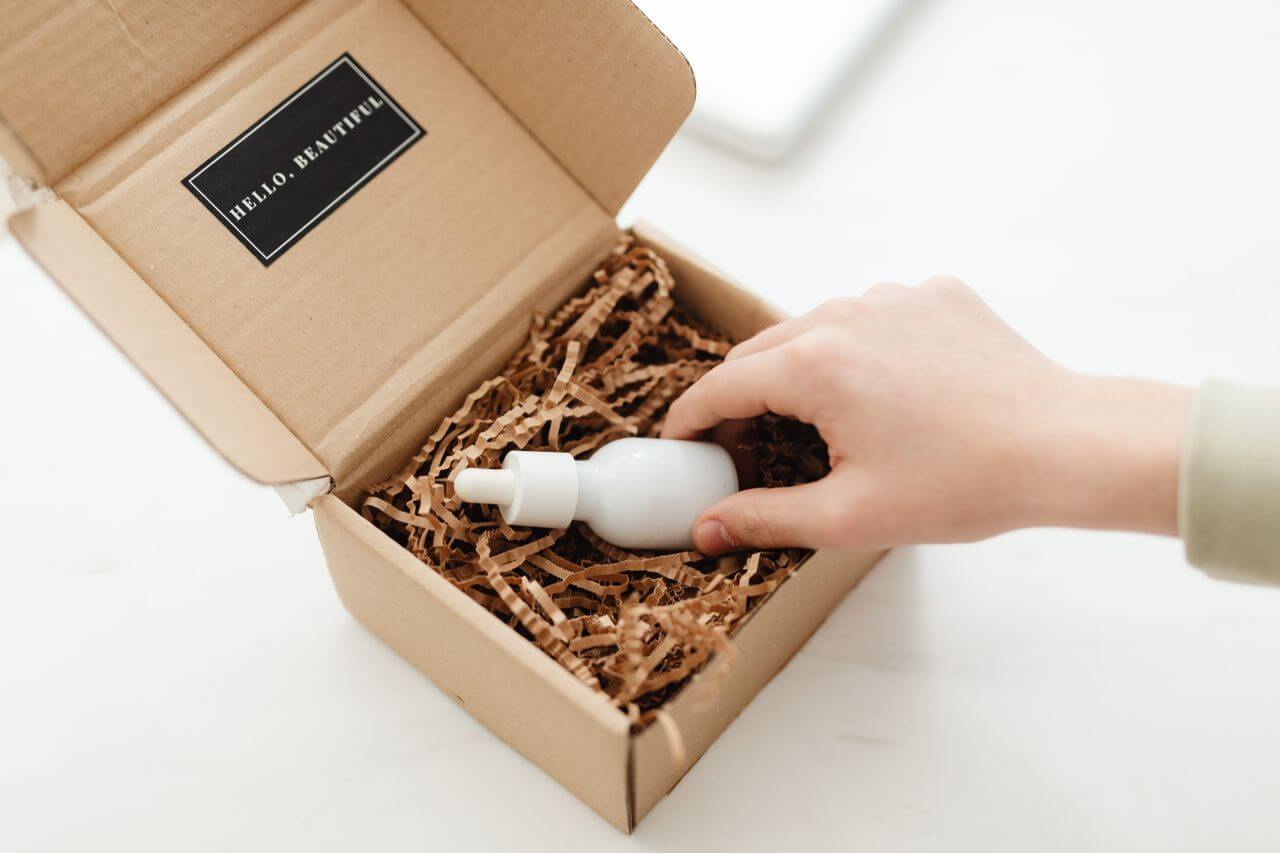
The box itself shapes how customers see you. In a Vistaprint packaging survey of 1,000 US consumers, 96% said packaging quality affects their trust in a brand. Our guide to custom packaging for Ecommerce covers how brands use that moment.
The delivery date slips
Customers compare the arrival date with the one shown at checkout. In a Bringg delivery experience study of 1,000 US online shoppers, 72% rated on-time arrival as an essential part of the delivery experience, ahead of delivery cost.
A provider that hits a realistic window every time stays out of sight. A provider with an unpredictable window gets noticed, even when some orders arrive early. Our post on why reliable delivery beats faster delivery covers how to set a promise you can keep.
Tracking goes dark or looks unfamiliar
Once an order ships, customers want to follow it. A Sifted 2025 consumer survey of 500 US consumers found 63% consider full visibility throughout delivery essential.
Tracking often breaks down on international orders. A parcel that goes days without an update while it crosses a border, or that shows up under a carrier name the customer has never heard of, sends them to your support inbox to ask, "Where is my order?" (WISMO). Handing the parcel to a familiar local last-mile carrier keeps the updates coming, and branded order tracking keeps customers on your own site while they check.
A duty bill shows up at the door
For cross-border orders, a surprise customs charge makes fulfillment impossible to ignore, because the customer has to pay before they can have their order. In an Avalara cross-border survey of more than 8,000 shoppers in eight countries, 75% said they reconsider buying from a business again after surprise customs duties, and 49% said they refuse delivery of a parcel with hidden costs altogether.
Delivered Duty Paid (DDP) shipping prevents it. The customer pays the duty as part of the order total, and nothing is due when the parcel arrives. Our comparison of DDP vs DDU for international sales explains how each affects conversion.
The return drags on
Customers judge your returns before they ever need one. Narvar's post-purchase report found 90% of shoppers check the return policy before they order.
A slow refund or a confusing return puts your provider in view at the end of the relationship. Reverse logistics covers everything from the return label to restocking, and our post on outsourcing customer returns covers what to expect from a partner that handles it.
Invisible to customers, fully visible to you
Your provider should be invisible to your customers, but you need to see everything it does. That means accurate stock counts so you don't oversell, order status for every market, and evidence when something goes wrong. Without that visibility, the first sign of a stockout or a late batch of orders is a customer complaint.
The same data can build trust with customers. Our post on fulfillment data as a trust signal covers how brands show real-time inventory and delivery windows on their own site.
How direct fulfillment keeps cross-border orders invisible
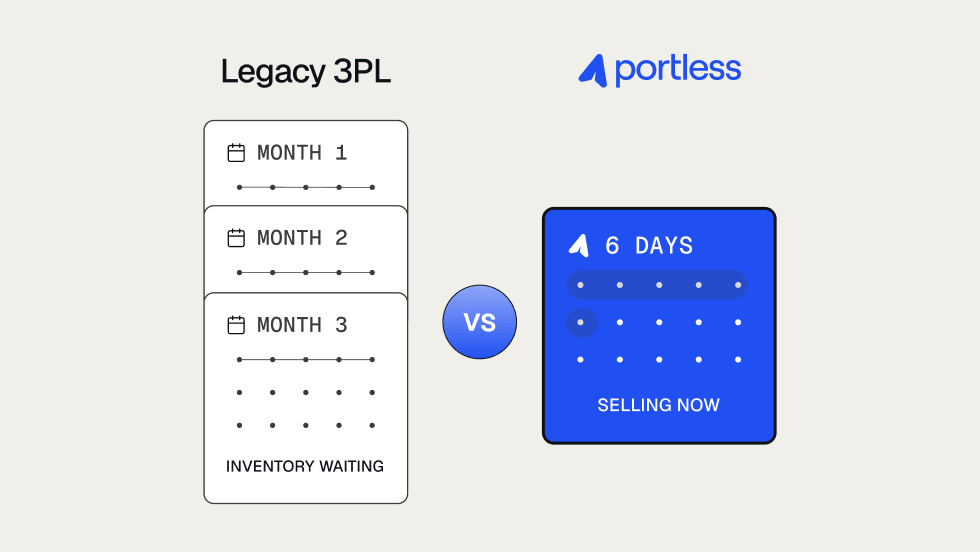
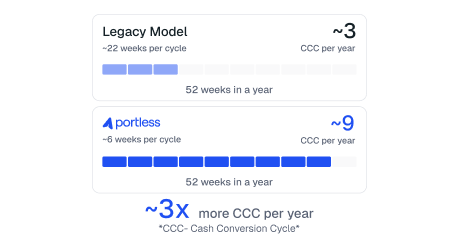
The legacy model adds steps where things can go wrong. Stock travels by ocean freight to a domestic warehouse, waits to be received and stored, and is then shipped by a regional third-party logistics (3PL) provider. Each step is another chance for a delay, a stockout, or a duty charge the customer didn't expect.
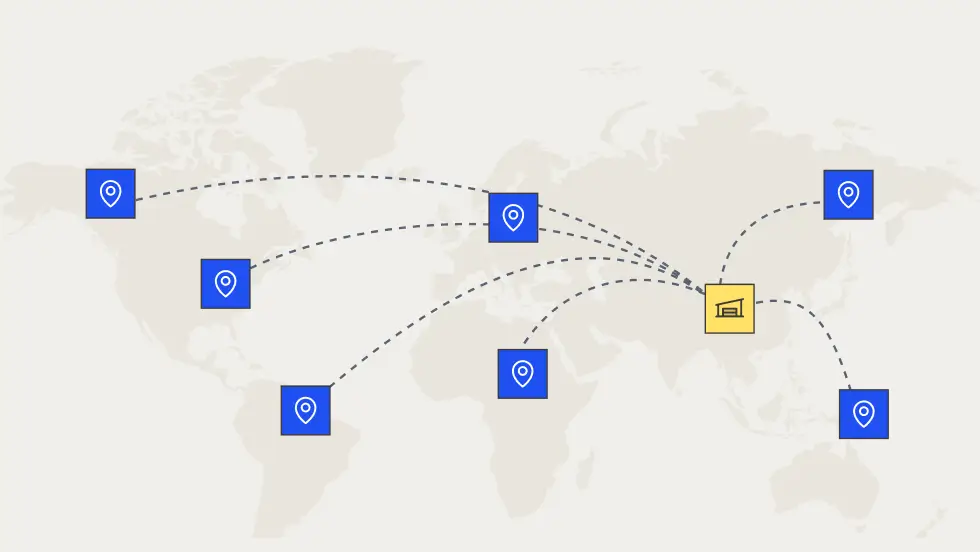
Direct fulfillment removes most of those steps. Portless ships each order from its own fulfillment center in China, close to the point of manufacture, straight to the customer.
Packing: Orders go out in your custom packaging, with branded boxes, tissue, and inserts. Cameras monitor every packing station, and weight checks flag a parcel that weighs less than expected before it leaves the facility. Portless reports 99.8% pick-and-pack accuracy.
Duties: Under DDP, the customer pays duty at checkout and Portless pays it per parcel as each order ships, so nothing is due at the door.
Tracking: When a parcel lands in the destination country, it gets a local last-mile tracking label and moves into a familiar local carrier's network through direct injection. To the customer, it looks and feels like a domestic delivery.
Visibility for you: Every item is scanned as it moves, and inventory, order status, and delivery tracking update in real time in your Portless dashboard.
Portless delivers to 85+ countries in five to eight days.
How to tell if a fulfillment partner will stay invisible
Judge a partner on two things at once, what your customer will see and what you'll be able to see. Our 3PL evaluation checklist goes deeper on pricing, integrations, and location.
::table
Area;What the customer sees;What you should see;Question to ask
Packaging;Your branding, packed well;Packing standards and photos or footage when needed;Can you pack in our custom packaging and inserts?
Order accuracy;The right items in one parcel;Pick-and-pack accuracy rate;How do you check orders before they ship?
Delivery window;Arrival inside the promised date;On-time rate by market;What delivery window can you hit consistently in each country?
Tracking;Updates from a familiar carrier;Status for every order;Who handles the last mile, and when does tracking start?
Duties;Nothing to pay at the door;Duty cost per order;Do you ship DDP, and how is duty collected?
Returns;A clear process and a quick refund;Return status and condition;Where do returns go, and how fast are they processed?
Peak capacity;No delays in Q4 or launches;Capacity plans and staffing;What happened to your on-time rate last peak season?
:table
See how Portless works
Customers judge your brand by the parcel they receive. Portless ships direct from the point of manufacture to customers in 85+ countries, in your packaging, with duty paid before the parcel arrives and tracking from a local carrier. Book a demo to see how it would work for your brand.
Frequently asked questions
Heading
Lorem ipsum dolor sit amet, consectetur adipiscing elit. Suspendisse varius enim in eros elementum tristique. Duis cursus, mi quis viverra ornare, eros dolor interdum nulla, ut commodo diam libero vitae erat. Aenean faucibus nibh et justo cursus id rutrum lorem imperdiet. Nunc ut sem vitae risus tristique posuere.
Get operator-level supply chain insights
Thank you! Your submission has been received!
Oops! Something went wrong while submitting the form.







.jpg)
.jpg)