“We generated $70K in package protection revenue in a single quarter by adding a simple $4 protection option at checkout — plus an additional $12K from cashbacks. Customers get peace of mind, and we're making a profit on every protected order with zero effort."
“We generated $70K in package protection revenue in a single quarter by adding a simple $4 protection option at checkout — plus an additional $12K from cashbacks. Customers get peace of mind, and we're making a profit on every protected order with zero effort."
Your WooCommerce store is growing, and fulfillment is starting to hold it back. You're packing orders at night, or your third-party logistics (3PL) provider's invoice keeps climbing, and you need to decide who should store and ship your products.
WooCommerce fulfillment affects your cash as much as your costs. The model you pick decides how much stock you buy ahead, how long your cash sits in it, and what customers pay at checkout. Shipping costs matter to shoppers too. In Baymard Institute's research, 40% of shoppers who abandoned a cart said extra costs like shipping, tax, and fees were too high.
What is WooCommerce fulfillment?
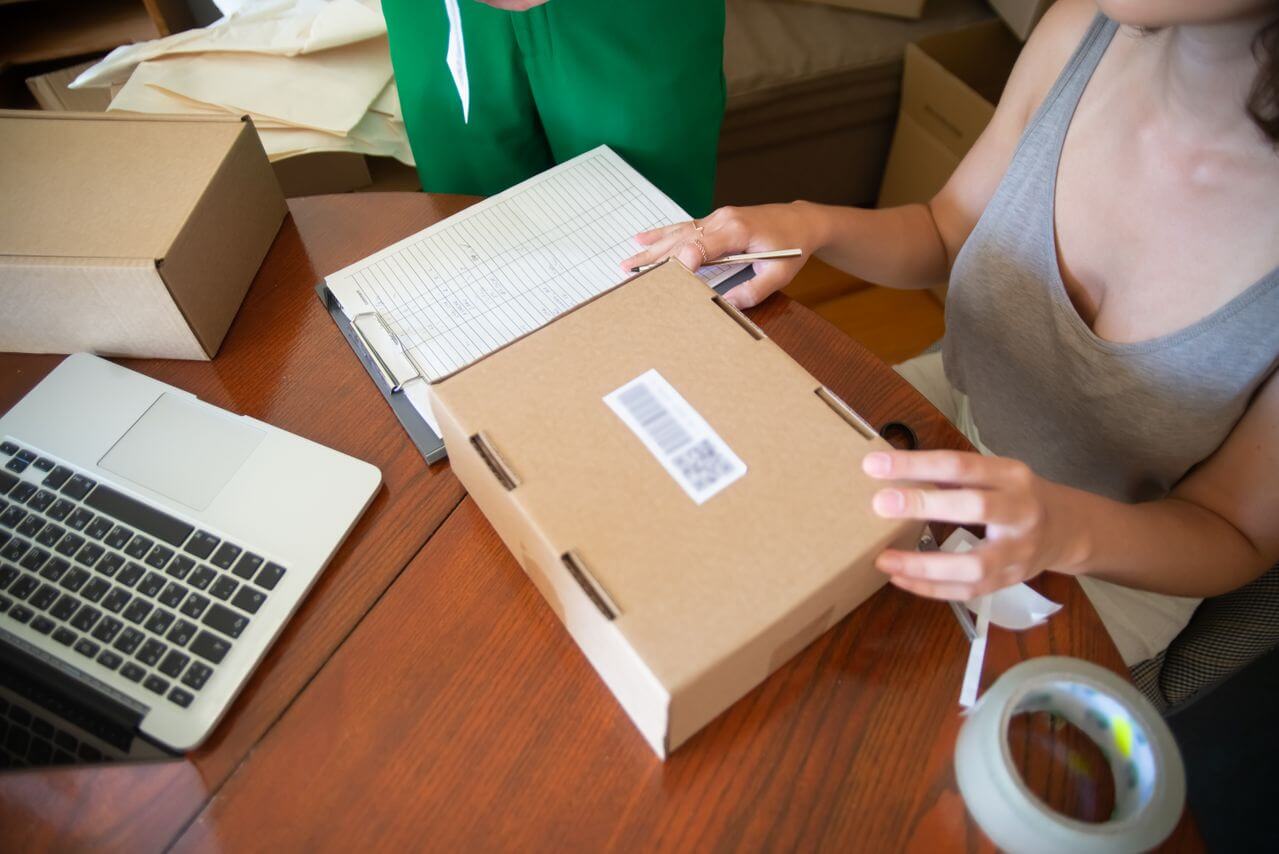
WooCommerce fulfillment is the process of storing your products, then picking, packing, and shipping them to customers after they order on your WooCommerce store, plus handling returns. This is usually done through an outsourced fulfillment service or 3PL that physically holds your stock and ships your orders.
How WooCommerce fulfillment works, from order to doorstep
When a customer checks out, the order passes from WooCommerce to your fulfillment provider. The provider ships it and sends the tracking number back to your store, which passes it to the customer.
How a fulfillment service connects to your WooCommerce store
Most providers connect through a WooCommerce plugin or an API. Once connected, new orders reach the provider automatically, stock levels update in your store as items ship, and tracking numbers flow back to the order. Ask any provider whether the connection is native or runs through a third-party tool, and how often stock levels sync.
The steps of fulfillment
Receive: Your stock arrives at the fulfillment center and is counted.
Store: Inventory sits on shelves or pallets until it sells.
Pick and pack: Staff find the items for each order and pack them for shipping.
Ship: The parcel goes to a carrier, and tracking goes back to your store.
Return: Returned items are received, checked, and restocked or written off, which is the job of returns and reverse logistics.
WooCommerce fulfillment models compared
WooCommerce works with all three common fulfillment models. What changes is where your stock waits and how an order gets from your store to the shelf it ships from.
::table
Model;Where your stock waits;How orders get there from WooCommerce;Best for
In-house;Your own space;You see them in your dashboard and pack them yourself;Small catalogs at low volume
Domestic 3PL;The 3PL's warehouse, after a bulk import by sea;A plugin or API sends each order to the 3PL;Heavy goods, steady demand, and next-day domestic delivery
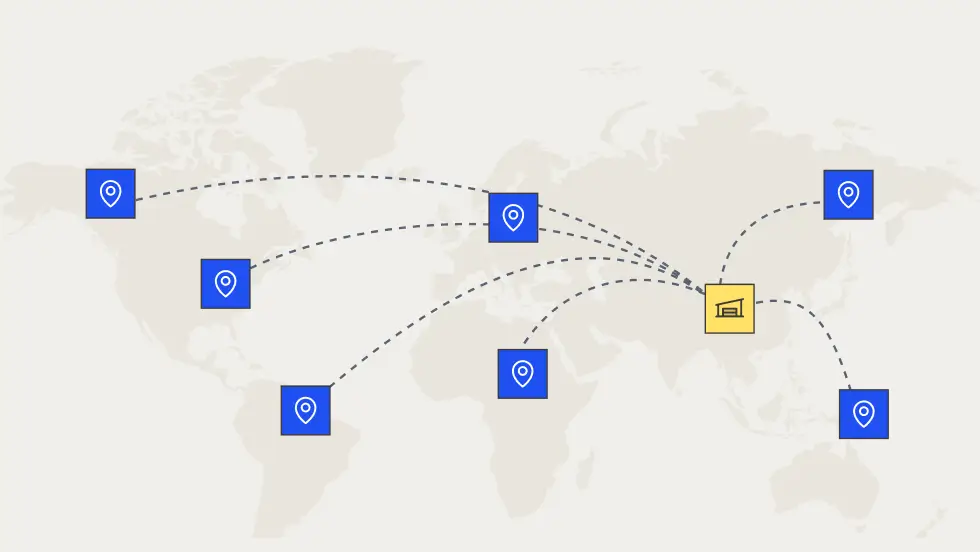
Direct fulfillment;A fulfillment center close to the point of manufacture;An integration sends each order to that fulfillment center, which ships it direct to the customer;Lightweight products made in Asia and sold in several countries
:table
A domestic 3PL needs your stock imported, paid for, and duty-cleared before the first order ships. Direct fulfillment ships from near the factory as orders arrive, so stock never makes the trip in bulk.
What WooCommerce fulfillment costs
A fulfillment invoice is made up of several fees.
Receiving: Charged when stock arrives, by the pallet, carton, or hour.
Storage: Usually charged per pallet or bin each month, typically $15 to $40 a pallet, based on the Extensiv benchmark in our guide to typical 3PL fulfillment costs.
Pick and pack: Charged per order, often with extra fees for each additional item, typically $2 to $5 an order on the same benchmark.
Shipping: Postage to the customer, which depends on weight, size, and distance.
Returns: Charged per return for receiving, inspecting, and restocking.
Minimums and setup: Some providers charge onboarding fees or a monthly minimum spend.
Shipping is the fee customers notice. In Ryder's Ecommerce Consumer Study, nearly three-quarters of shoppers said they add items to their cart to qualify for free shipping, so your free-shipping threshold shapes how much customers spend, and your shipping cost decides what that threshold can be.
Where your inventory sits changes that cost. A single domestic warehouse is close to some customers and far from others, and US carriers charge by distance. A 2 lb USPS Priority Mail parcel costs about $9.35 to the nearest zone and $14.25 to the farthest, a 52% difference, according to our breakdown of the hidden costs of a domestic 3PL.
The biggest cost doesn't appear on the invoice at all. Under the legacy model, you buy stock months before it sells and pay for ocean freight and duty upfront, so a large share of your working capital sits in a warehouse. That's why it's worth comparing landed cost per unit and the time your cash is tied up, rather than the per-order fee alone. Our post on the cash flow trap covers how that plays out.
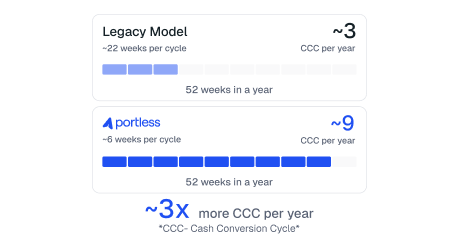
The number of days your cash spends in stock, from paying the factory to collecting from the customer, is your cash conversion cycle. Craft Club cut its cash conversion cycle from more than 22 weeks to six after moving to direct fulfillment, and its revenue grew 3x.
How to choose the best WooCommerce fulfillment service
The best fulfillment service for WooCommerce is the one that fits where you manufacture, where your customers are, and how much cash you can tie up in stock. A domestic 3PL suits brands that sell mostly in one country and need next-day delivery or ship heavy products. Direct fulfillment suits brands that manufacture in Asia, sell lightweight products in several countries, and want to hold less inventory.
Check every provider against these criteria.
WooCommerce integration: Orders, stock levels, and tracking should sync automatically.
Delivery window: Ask what window the provider can meet consistently in each market you sell to.
Where inventory sits: It decides your shipping costs by zone and how much stock you have to buy ahead.
Pricing you can predict: Ask for an all-in cost per order, including storage, receiving, returns, and surcharges.
Peak capacity: Ask how the provider staffed last Q4, what its on-time rate was, and how it passes on holiday carrier surcharges.
Order accuracy: Ask for the provider's pick-and-pack accuracy rate and how it checks orders before they ship.
Returns: Ask where returns go and how quickly they're processed.
Customs and duties: If you sell across borders, ask who pays duty, when, and whether customers ever get a bill on delivery.
How direct fulfillment from China changes the math
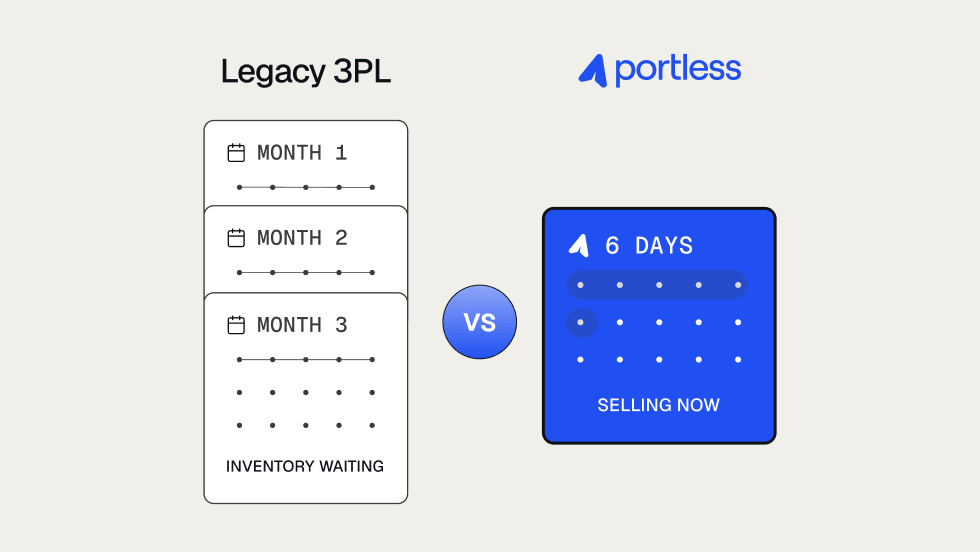
If you manufacture in China, you can skip the bulk import and domestic warehouse. Portless holds your inventory at its own fulfillment center in China, close to the point of manufacture, and ships each order by air direct to the customer. That removes four to six weeks of ocean freight, so products can go on sale within days of production instead of weeks after a sailing.
Reach: Portless ships to 85+ countries from one inventory pool, with deliveries in five to eight days.
Duties: Under Delivered Duty Paid (DDP), duty is paid per parcel as each order ships, so you don't pay an upfront duty bill on stock that hasn't sold. Now that the US has suspended its de minimis exemption for most low-value parcels, those parcels pay duty as well, so when you pay it affects your cash. Our glossary entry on de minimis explains the threshold.
WooCommerce: Portless picks up orders from WooCommerce in real time, along with Shopify, SellerCloud, and X-Cart.
Support: Each brand gets a dedicated account manager, plus options for custom packaging and product photography.
Direct fulfillment isn't the right fit for every product. It isn't built for next-day domestic delivery, and it doesn't suit low-margin, heavy items, where shipping each order by air changes the unit economics.
When should you outsource WooCommerce fulfillment?
Outsource when packing and shipping orders takes time your team should spend on growth. If you manufacture in Asia, past about 1,000 orders a month direct fulfillment becomes a realistic option, according to our guide to choosing a 3PL for Shopify. The platform you sell on doesn't change that math.
Volume isn't the only trigger. It's worth outsourcing sooner if you sell in more than one country, if cash is tight and buying stock ahead is the problem, or if peak season overwhelms your team.
See how Portless works
If you manufacture in China and sell worldwide, the right fulfillment model can free up the cash your current setup keeps in stock. Portless connects to your WooCommerce store and ships direct from the point of manufacture to customers in 85+ countries in five to eight days. Book a demo to see what it would mean for your store.
Frequently asked questions
Heading
Lorem ipsum dolor sit amet, consectetur adipiscing elit. Suspendisse varius enim in eros elementum tristique. Duis cursus, mi quis viverra ornare, eros dolor interdum nulla, ut commodo diam libero vitae erat. Aenean faucibus nibh et justo cursus id rutrum lorem imperdiet. Nunc ut sem vitae risus tristique posuere.
Get operator-level supply chain insights
Thank you! Your submission has been received!
Oops! Something went wrong while submitting the form.







.jpg)
.jpg)