“We generated $70K in package protection revenue in a single quarter by adding a simple $4 protection option at checkout — plus an additional $12K from cashbacks. Customers get peace of mind, and we're making a profit on every protected order with zero effort."
“We generated $70K in package protection revenue in a single quarter by adding a simple $4 protection option at checkout — plus an additional $12K from cashbacks. Customers get peace of mind, and we're making a profit on every protected order with zero effort."
For growing Ecommerce brands, expanding into new markets can be a profitable decision, helping them reach new customer bases and increase sales. So, why do so many brands struggle to get started?
Cross-border trade isn't as simple as shipping products physically across borders anymore. Shifting trade rules add a layer of complexity, and traditional fulfillment models can make those changes more expensive to navigate. For emerging brands, expanding to new international markets can feel like a risky and costly decision.
But that doesn't mean international expansion is off the table. It just requires a different approach. With the right fulfillment model, brands can test in new markets with less risk, lower infrastructure investment, and fewer cash-flow restrictions.
In this article, we'll explain how cross-border trade works, unpack the latest regulatory changes across key markets, and explore the strategies DTC brands are using to expand internationally and profitably.
How cross-border trade works
Cross-border trade involves selling units to customers in countries other than where your brand is based. For customers, it's as simple as placing an order online. For brands, it's a bit more complex.
Here's how it typically works under a traditional fulfillment model:
A product shipment is sent from its manufacturing origin to a storage facility in a country where the brand sells. When the shipment crosses the border, it passes through customs, where duties, taxes, and documentation are processed. When an order is placed, a product is then released from the facility for local delivery.
Every step, from manufacturing the product to delivering it, adds up. Combined, these costs make up your landed cost. It includes:
Product cost
Shipping
Customs duties
Import taxes
Customs clearance fees
When brands calculate landed cost up front, customers can pay the full amount at checkout and avoid unexpected charges and delivery delays.
Selling to international markets can be costly and complex, which is why so many DTC brands hesitate. But operating only in your domestic market has its own risks, especially as tariffs and regulations continue to change.
Let's say you're a US company sourcing sun hats from China and selling only to US customers. If tariffs on importing those sun hats to the US go up, your costs increase overnight. With no other market bringing in revenue, there's little to offset the impact.
However, if you expand into different regions, you create new potential revenue streams while reducing your reliance on a single market. In our 2025 Tariffs Benchmark Report survey, 71.4% of respondents reported that tariffs had either accelerated their international expansion or prompted them to consider it.
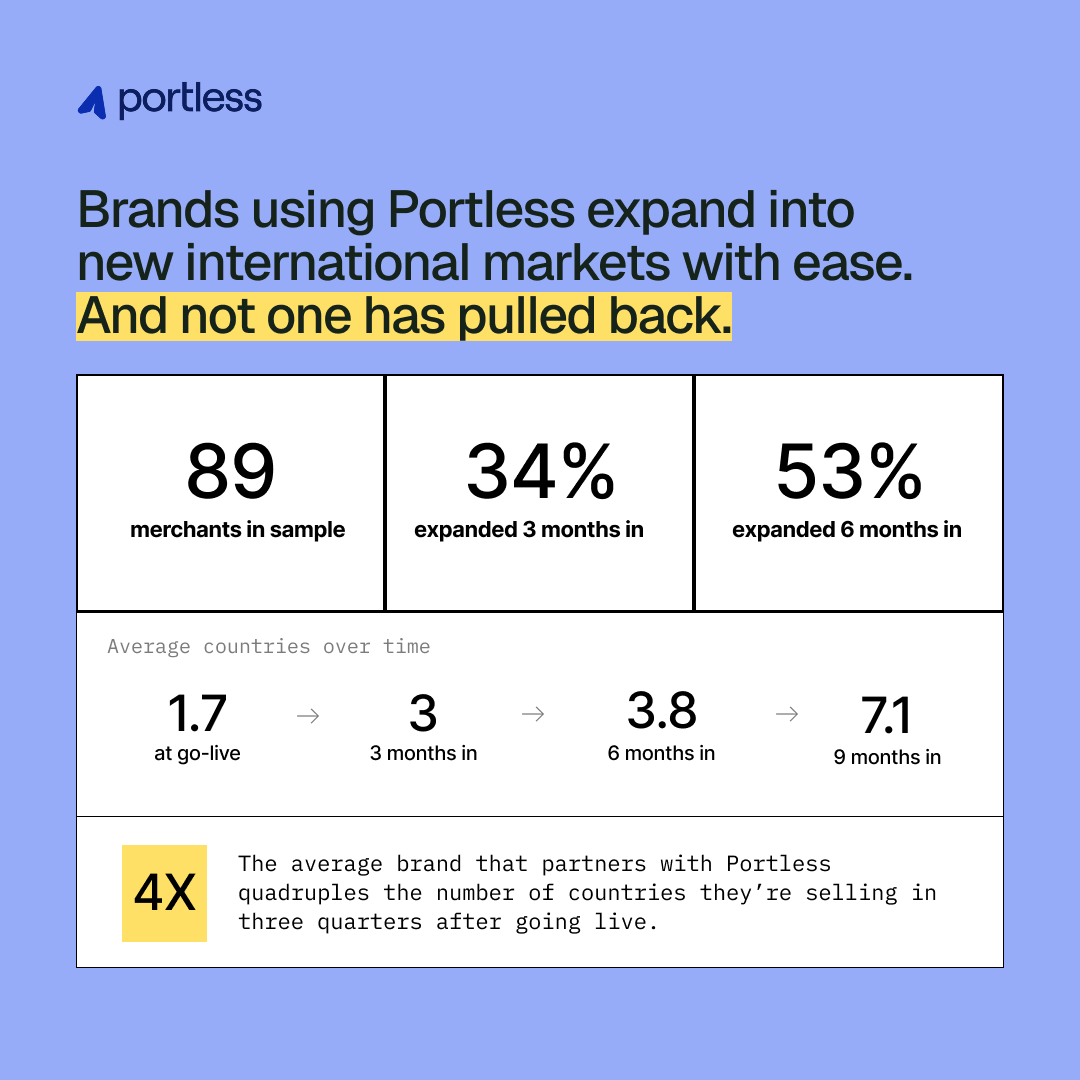
A direct fulfillment model gives brands the agility to expand faster and with more ease. We analyzed close to 100 merchants on our direct fulfillment platform that expanded internationally and found that more than a third entered new countries within three months, while none exited a market several months later.
Why? Because brands that keep inventory in one location and ship directly to customers across the globe don't need to set up regional warehouses before customer demand is proven.
Instead of investing in physical infrastructure, brands looking to expand globally can focus on ways to improve sales in those new markets, such as competitive analysis, digital marketing, localization, and tax compliance.
Choosing the right market to test first
Before you start investing in a new market, start by understanding who you'd be competing against. Look at what similar brands offer, what their prices are, and where your brand can stand out. If you can't see a clear way to compete, it may be worth testing in a different market first.
If you're looking to start expanding beyond your borders, take a look at our playbook for evaluating international markets. It covers everything from customer acquisition and localization to compliance.
Cross-border trade looks very different today compared to just a few years ago. The end of US de minimis, new EU and UK rules, and ongoing tariff uncertainty all affect margins and cash flow.
Here's a breakdown of what you need to know.
The end of duty-free imports in the US
The biggest change in the US is this: every shipment now carries costs that many brands didn't have to account for before. The Section 321 de minimis exemption, which previously allowed shipments valued at $800 or less to enter duty-free with simplified clearance under Type 86, has been removed.
With the $800 threshold gone, every commercial shipment entering the US now pays applicable duties, regardless of the unit value.
For brands shipping containers to domestic warehouses before selling the inventory, this means those costs sit locked in unsold stock. Under a legacy fulfillment model, and without low-value duty-free treatment, Ecommerce brands either absorb the costs and reduce their margins or pass them on to customers and risk reducing conversions.
Where a $50 unit shipped from China to the US entered duty-free, it now carries the Section 301 base tariff plus any reciprocal rate. That can add anywhere from $7 to $25 per unit, depending on the HTS classification, before processing fees. For 10,000 monthly orders, that could potentially add $250,000 in new monthly duty exposure.
Why tariffs keep changing
Tariffs aren't the same as standard duty rates. Many tariffs are additional duties imposed through trade policy, which means they can change multiple times within a given year, often with little notice.
Recent tariff reversals, such as the IEEPA tariffs and Section 122 tariffs, show how quickly trade policy can shift, making it risky to build your import strategy around today's situation.
And different countries are subject to different tariff structures. For example, China-origin goods generally carry more layered duties, such as Section 301 tariffs and MFN tariffs, compared to countries like Vietnam, making the country of origin another factor in your landed costs.
Some duty rate strategies can help reduce the amount you pay. One of the biggest opportunities for Ecommerce brands is in the timing of your duty payments, and this is where the type of fulfillment model you use starts to matter.
Traditional fulfillment models are under pressure
Trade uncertainty is forcing brands to rethink not just where they fulfill orders, but also where they manufacture, source, and store inventory. In our survey, 60.9% reported carrying more inventory as a buffer against disruptions.
In a traditional fulfillment model, brands import bulk inventory into regional warehouses before it's sold. That means paying duty on the entire shipment up front, even though some (or all) of that inventory may sit in the warehouse for months, or never sell at all.
Testing a new market also means setting up warehouse space, local carrier contracts, and customs processes before you know what the demand is.
This model relies on DTC brands making choices and paying suppliers based on forecasted costs rather than real customer demand. In a new region and with ever-changing tariffs, this becomes an increasingly risky bet.
If the market doesn't work out, the expansion becomes a very real, very expensive experiment, with inventory locked in a regional warehouse. That's why many DTC brands delay international expansion until they're confident demand exists. That's also why they struggle to start in the first place.
How direct fulfillment simplifies cross-border trade
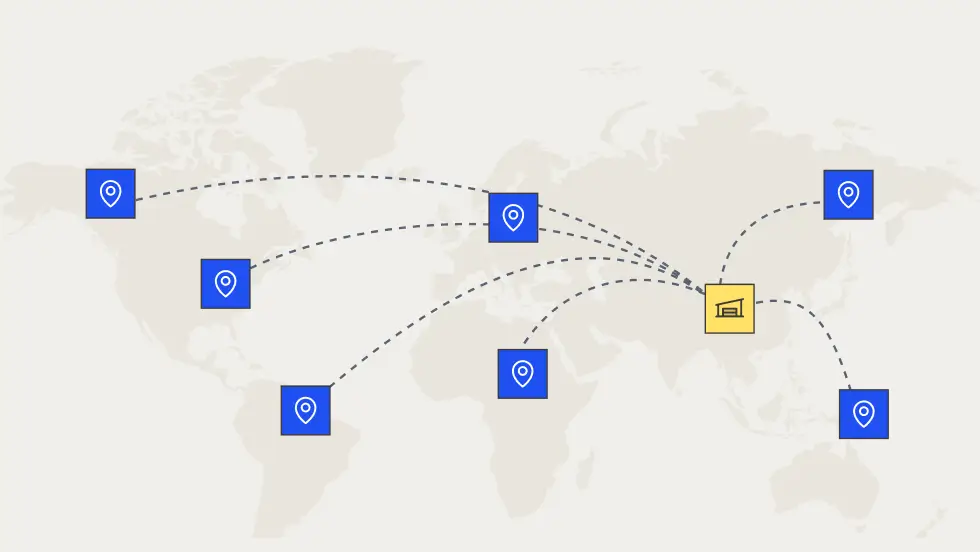
Direct fulfillment changes when and where you commit your capital. It offers a more cost-effective and flexible approach for DTC brands looking to expand into new markets or defer tariffs and duties. In this model, inventory stays centralized near production, with items shipped directly to customers when an order is placed.
This means duties are triggered on individual orders rather than an entire shipment, so you're paying landed costs on a single item that has sold instead of bulk inventory that might take longer to sell.
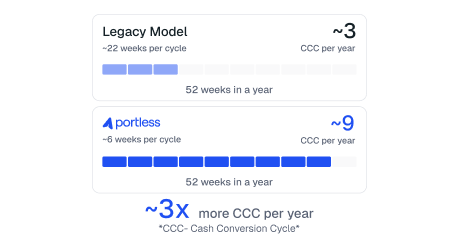
Why centralized inventory improves cash flow
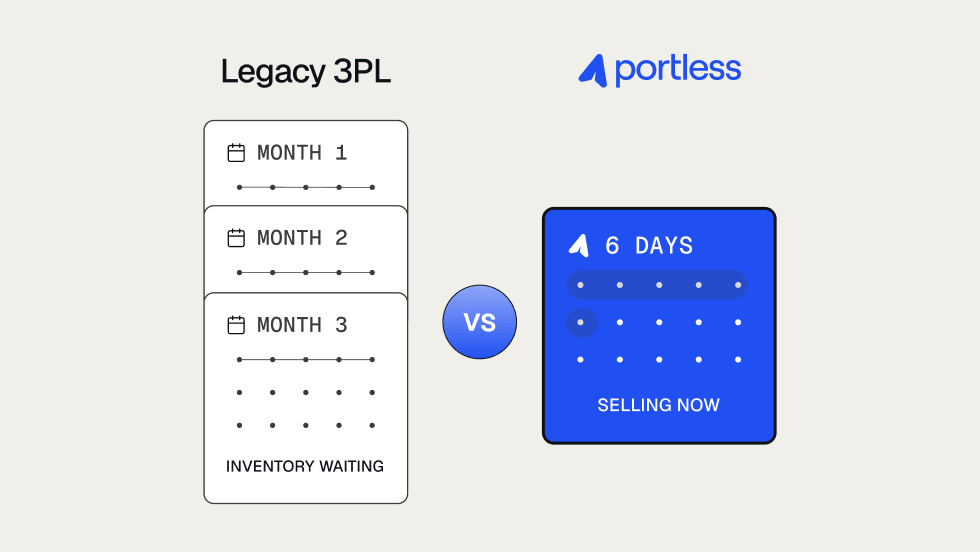
Here at Portless, inventory is held in a single fulfillment center in China and shipped to customers in 85+ countries within 6–8 days.
Without regional warehouse setups or carrier contracts to negotiate, brands can test real markets with real orders before committing to any warehouse infrastructure, freeing up cash to increase ad spend, invest in localization, and respond faster to demand.
Direct fulfillment changes the timing of landed costs by aligning import costs with customer orders, as opposed to bulk inventory. When paired with the right customs and duty strategies, brands can further reduce unnecessary costs.
Five strategies to reduce landed costs with direct fulfillment
The direct fulfillment model doesn't eliminate duty, but when you add it to these five strategies, it can help to improve your cash flow.
Tariff deferment helps brands delay paying import duties and taxes until after a unit is sold, rather than paying up front. Direct fulfillment is a tariff deferment by default. Here's why.
The First Sale rule helps brands lower the value of items by basing duty on factory price, not retail value. Here's when it applies.
Three traditional cross-border trade habits that make expansion more expensive
Traditional fulfillment was built for a more predictable trade environment. As tariffs, customs rules, and landed costs become harder to forecast, some of those trade-offs become clearer for brands testing new markets.
Here are three ways traditional fulfillment can make international expansion more expensive than it needs to be and how direct fulfillment changes the equation.
1. Committing inventory before demand is proven
Traditional fulfillment often requires brands to ship inventory into regional warehouses before demand in the area has been proven. If sales fall short of expectations, or items don't sell at all, cash can stay locked up in that static inventory.
With a direct fulfillment model like Portless, inventory stays in a central location until a customer places an order. This model lets you validate the demand first, then decide whether it's worth investing in regional inventory.
2. Paying duty before inventory generates revenue
Under a traditional fulfillment model, duty is paid on bulk inventory that's shipped to regional warehouses before it's sold. This ties up cash and relies on brands selling every item, which in a new market is a tough guarantee to make.
With a direct fulfillment model, products are shipped only after an order is placed, so duty is triggered on sold items instead. This helps to align duty payments with revenue and improve cash flow.
3. Missing opportunities to lower landed costs
Duties aren't always a fixed cost. Many emerging brands miss opportunities to reduce landed costs through strategies like tariff engineering and First Sale valuation, both of which can lower the duty you pay, where eligible.
When combined with a direct fulfillment model, these strategies can further improve your cash flow, protect your margins, and reduce landed costs.
Every cross-border trade resource you'll need
Whether you're planning your first market expansion or trying to understand how new tariffs relate to your landed costs, here's where to go next.
Cross-border trade is complex, but that doesn't mean Ecommerce brands can't profitably look to expand into new markets.
With a direct fulfillment model and a clear understanding of your landed costs, you can test new markets and scale internationally without committing to warehouse infrastructure or paying upfront duties before you know your market.
If you manufacture in Asia and you're looking for a more flexible way to grow your business, we help Ecommerce brands with direct fulfillment and delivery to countries around the globe. Do you want to know how our model can help your brand? Request a demo today.
FAQ
What is cross-border trade for DTC brands?
Cross-border trade is when a DTC brand sells its products to customers in other countries. It involves more than just shipping the products. It also means understanding customs, taxes, tariffs, and fulfillment model options, and how these factors affect your landed cost.
How do tariffs affect international Ecommerce margins?
Tariffs increase the cost of importing products, which directly affects your landed cost and profit margin. Brands can either absorb the costs or pass them on to customers.
Frequently asked questions
Heading
Lorem ipsum dolor sit amet, consectetur adipiscing elit. Suspendisse varius enim in eros elementum tristique. Duis cursus, mi quis viverra ornare, eros dolor interdum nulla, ut commodo diam libero vitae erat. Aenean faucibus nibh et justo cursus id rutrum lorem imperdiet. Nunc ut sem vitae risus tristique posuere.
Get operator-level supply chain insights
Thank you! Your submission has been received!
Oops! Something went wrong while submitting the form.







.jpg)
.jpg)
.jpg)